Monday, July 21, 2014

Summer food: Estonian milk and vegetable soup

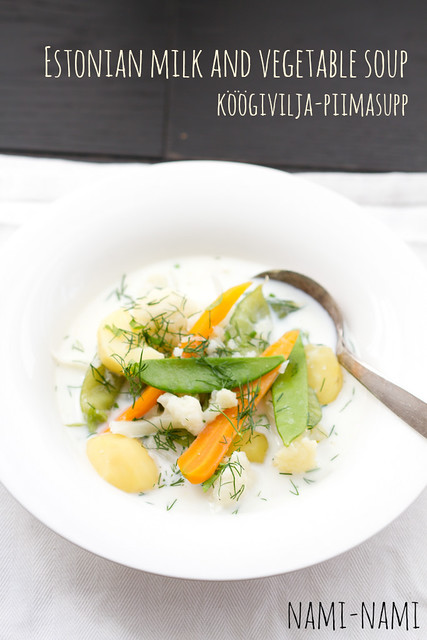
Köögivilja-piimasupp. Kesäkeitto. Estonian milk and baby vegetable soupl

It's mid-July, which here in Estonia means the peak of summer. We're having a beautiful summer here, with lots of sun and not much rain. It's the end of the wild strawberry season, it's the height of chantarelle mushroom season (but too early for most other wild mushrooms), and it's the start of the beautiful local vegetable harvest season. Here's a traditional milk soup that glorifies those early tiny vegetables that are still crisp and sweet. I bought the cauliflower and potatoes - simply because I don't grow these, but the carrots and snap peas were from our own little back yard.

Although the soup is part of the Estonian traditional cuisine, it's not just Estonian. Our Northern neighbours, the Finns, eat a similar soup, called kesäkeitto or summer soup (I've provided links to several recipes at the end of the post). The Swedish name for the soup is snålsoppa or sommarsoppa.

The soup is best served with some buttered dark rye bread. It's best on day one, though it reheats well. However, be careful not to burn the milk. There's nothing worse than burnt or simply overcooked milk soup, trust me :)

Estonian milk and vegetable soup
(Köögivilja-piimasupp)
Serves four to six
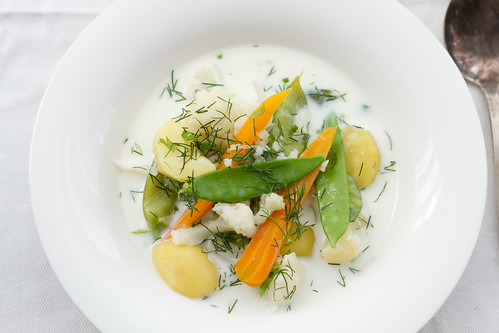
Piima-köögiviljasupp. Kesäkeitto. Estonian milk and vegetable soup.

a handful of baby carrots
1 small head of cauliflower or white cabbage
a large handful of (sugarsnap) peas
a large handful of new potatoes
500 ml (2 cups) water
1 tsp salt
2 Tbsp butter
1 litre (4 cups) full-fat milk
fresh dill, finely chopped

Scrub the carrots and potatoes clean, then cut the potatoes into small chunks and the carrots into slices about 3-4 mm thick (if you've got pretty slim carrots, then you can also halve or quarter them lengthwise instead, see the photos). Divide the cauliflower into small florets, or shred the cabbage into small thick slices. Pod the peas, if using regular green peas.

Place carrots, potatoes and cauliflower/cabbage into a medium saucepan. Add water, season with salt and butter. Bring into a boil. Half-cover with the lid and simmer for about 15-20 minutes, until the vegetables are almost cooked. Add the peas and cook for 5 more minutes.

Now pour in the milk. Bring slowly into a boil, stirring gently. Remove from the heat, add the dill and season to taste. Serve and enjoy.
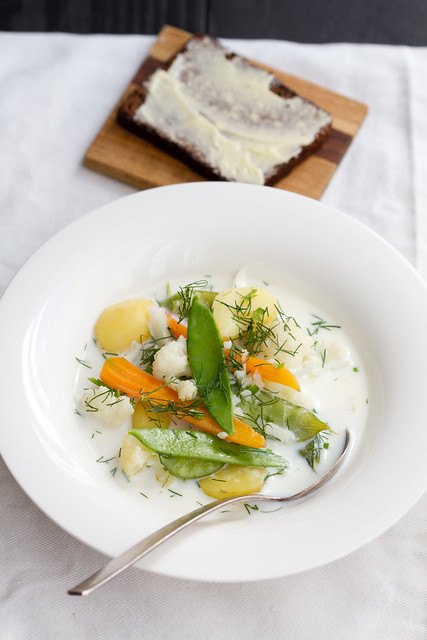
Piima-köögiviljasupp. Kesäkeitto. Estonian milk and vegetable soup.

Similar recipes:
Finnish summer soup by Alanna @ Kitchen Parade
Kesäkeitto by Wendy @ A Wee Bit of Cooking
Summer soup (kesäkeitto) by Lakshmi @ Pure Vegetarian (no recipe, but, oh, the photos!)
Finnish summer soup @ The Kitchn
Summer Soup by Mia @ Cloudberry Quark
Summer soup (snålsoppa) by Katarina @ Hovkonditorn: Passion for Food and Baking

Sunday, July 06, 2014

Festival food: Estonian Song and Dance Celebration 2014

Laulupidu 1

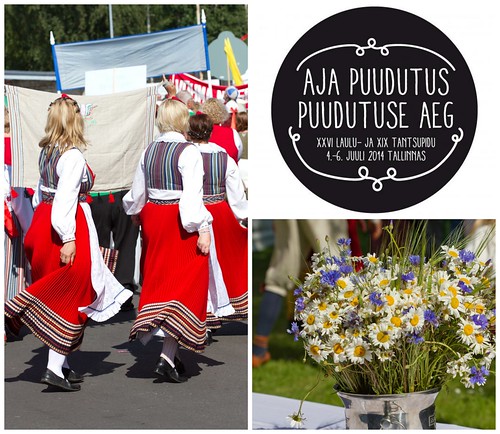
This is a very special weekend for Estonia - our 26th Song Celebration and 19th Dance Celebration takes place. You'll get all the necessary information on this website, I'll focus on food here ;)

It's a huge festival - with about 100 000 people gathered at the Song Festival Square, among them over 20 000 singers! You can imagine the amount of food you need to feed all those people during the weekend :)

Festival food isn't usually known for its gastronomic finesse and wonderful flavour, but the food I saw yesterday at the Tallinna Lauluväljak (Song Festival Square) was pretty interesting. Here's a short overview for you, should you head to the celebrations today.

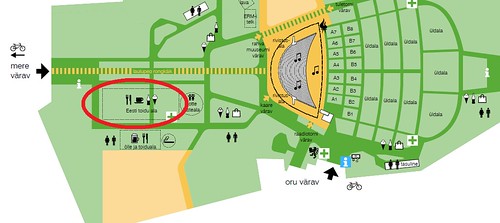
The main eating area is marked with the red circle on the map below. "Merevärav" marks the "sea entrance" on Pirita road, so in case you're hungry, you should head to the right after entering the Song Festival grounds:

kaart

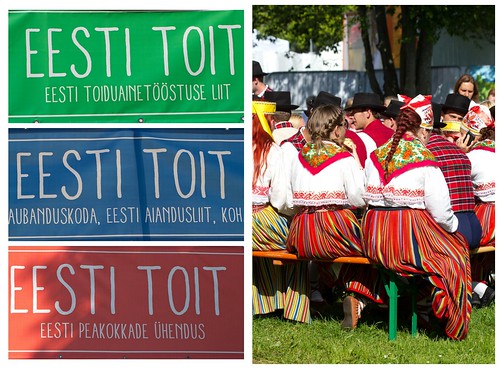
It's also where the EESTI TOIDU VÄLJAK aka Estonian Food Court is located. This consists of three large tents, marked by coloured signs. The Green sign marks the tent that represents the Estonian Food Industry Association.  The tent with a Blue sign hosts the local small producers, Estonian Horticultural Association and the Estonian Chamber of Agriculture and Commerce. The Red signs marks the Estonian Chefs Association.
laulupidu5

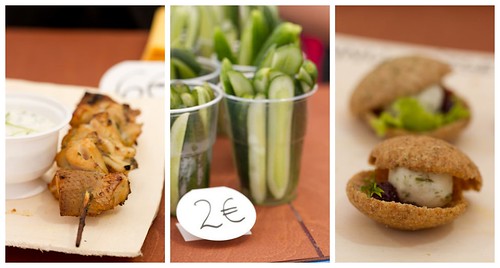
Let start with the "Blue" tent (well, the tent is white, the sign is blue :)), hosting the small/artisanal/local producers. You could feast on "haugišašlõkk" (pike shashlik, type of white fish), "soolakurgid" or fresh salted cucumbers, or small goat cheese and rye crisp "burgers":

Untitled

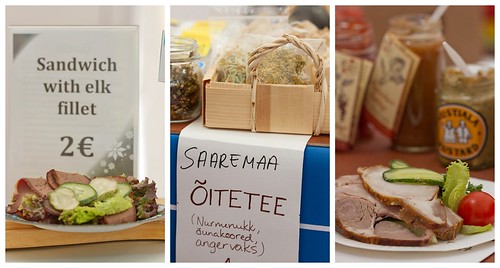
Saaremaa is the biggest island in Estonia and they're increasingly becoming big players on the culinary scene as well. What about sandwich with elk fillets, a floral tea mixture (primrose, apple and meadowsweet), or smoked pork and rye sandwich?
saare

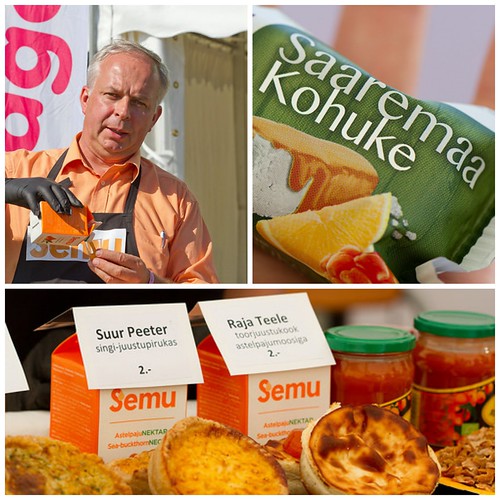
The "Green" tent hosted several big food producers, including Saaremaa Delifood that introduced their new "kohuke" (curd cheese bar, top right) with cloudberries and lemon as well as Semu with their really nice sea-buckthorn drinks.
astelpaju

Finally, the "Red" tent, hosting the representatives of Estonian Chefs Association. There were three catering companies present, Tervise Catering, Event Catering and House Gourmet. Some of the festival food items were flatfish terrine with roasted vegetables (lestavorm röstköögiviljadega); pulled lamb with wild-garlic pearl barley (rebitud lammas karulaugu-odrakruubiga); hot smoked perch with tomato-cucumber salad (suitsuahven tomati-kurgisalatiga):

epy1C

 Pike fishcakes with curd cheese and cucumber dressing (haugikoogid kohupiima-kurgikastmega, below left). You could also a buy a selection of six dishes for 6 Euros (below right):

epy2c

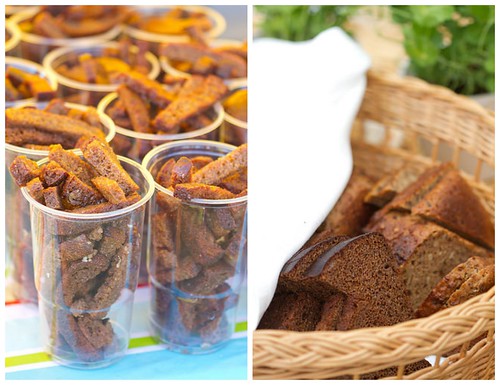
This being Estonia, black rye bread was served everywhere - either fresh (below right) or as garlic bread (below left; yes, that's what you'd get if you ask for garlic bread (küüslauguleib) in a pub in Estonia).

leibC

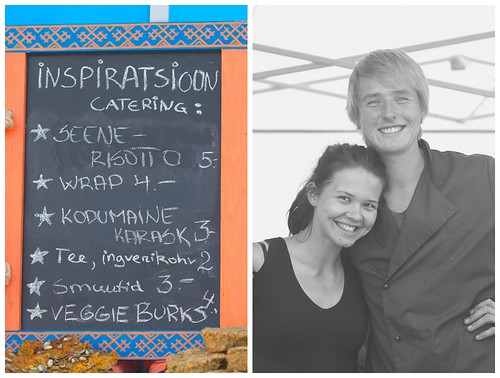
There's food outside the Estonian Food Court as well. I spotted these happy people from soon-to-be-opened Inspiratsioon Catering, serving vegetarian, vegan and gluten-free food:

Inspiratsioon @ Tallinna Lauluväljak

I didn't have a chance to look into the big "beer and food" area, where many food stalls were located, but overall I can say the food was pretty decent for a festival food :)

What type of food did you have last time at a music festival?

Saturday, June 14, 2014

Recipe for torta della nonna, or Tuscan ricotta cake with pinenuts or almonds

Case Vecchie, Sicily

I am still in Sicily, still enjoying the hospitality of Anna Tasca Lanza’s cookery school in Case Vecchie, near Vallelunga. I’ve just got back from the most amazing garden party I’ve ever attended - just under 200 guests seated around a huge long table, set under an elegant makeshift canopy built in the middle of a vegetable patch :) 

Who knows, we may have lingered at the table for another few hours, sipping one of the extremely “quaffable” wines from Tasca d’Almerita, if it weren’t for the thunder and rain that suddenly appeared. Not really out of nowhere - the skies were threatening with rain already yesterday - but apparently heavy showers are pretty much unusual in this part of Sicily in this part of the year. In any case, I use the thunderstorm as an excuse to retreat to my room for a short while and finish another blog post. Being in the company of all those bloggers mentioned yesterday - David, Rachel and Johanna - as well as some others I met today (Elizabeth, Elisia, Alec, Anissa, Linda) - has certainly been very inspiring :)

Filippo and his ricotta.

We arrived at Case Vecchie on Wednesday evening, just in time to have dinner overlooking Fabrizia’s (she’s the owner of the cooking school) gorgeous herb garden. On Thursday morning, just after the breakfast, we ventured out to visit a local shepherd, Filippo at Azienda Agricola Rivitera. We were shown his sheep - 400 in total, milked by hand twice a day, to produce about 800 litres of sheep’s milk during peak times (winter, usually). The milk is turned into wonderfully tasty and fresh ricotta and flavoursome picurinu sicilianu or pecorino siciliano right there, at the small dairy at the premises. We were privileged to watch Filippo making the cheese, and get to taste freshly made tuma and ricotta.


Just before dinner at the courtyard of Case Vecchie (Instagram)

Back at the Case Vecchie, the location for the Anna Tasca Lanza’s cooking school, we perused some of the wonderful products at the Natura in Tasca’s produce range. I chose to bake a cake from my latest cookbook, Torta della Nonna. It’s a typical cake from Tuscany, and while the pâtisseries would fill the cake with thick custard, then at homes the grandmothers (nonna stands for grandmother in Italian :)) would use ricotta cheese. I couldn’t resist the chance to bake this cake with sheep’s milk ricotta, as it’s supposed to be. Back at home in Estonia, I’ve made it with cow’s milk ricotta or goat’s milk ricotta. It’s still lovely, though much milder in flavour. 


The Tuscan ricotta cake I baked at the Case Vecchie (Instagram)

Torta della Nonna or Tuscan ricotta cake
(Toscana ricotta-kook)

Serves eight to ten

Pastry:
100 g butter, at room temperature
85 g caster sugar (100 ml/7 Tbsp)
1 large egg
180 g all-purpose flour (300 ml/1 cup + 3 heapedTbsp)
0,5 tsp baking powder
a pinch of salt

Filling:
500 g fresh ricotta 
85 g caster sugar (100 ml/7 Tbsp)
1 lemon, juiced and zested
2 Tbsp all-purpose flour
3 large eggs
75 g pinenuts or almonds

Butter a 24 or 26 cm (9 or 10 inch) springform pan and/or line with a parchment paper. Preheat the oven to 180 C/375 F. 

First, prepare the pastry. Put the butter and sugar into a mixing bowl and cream with a wooden spoon or a mixer fitted with the blade. Add the egg, then the dry ingredients (mix these first). Spoon the dough into the springform pan and using your hands, spread the dough at the bottom and halfway up the sides - the dough is pretty soft and sticky, so you’re almost pasting it to the bottom and sides. (You may be tempted to add more flour - go ahead, if you wish, but the cake base will be somewhat denser and harder then). 

Place the springform pan into the fridge to wait, while you make the filling

(You may use the same bowl you made the dough in). Mix the ricotta, sugar, the juice and finely grated rind of the lemon, flour and eggs in a bowl until combined. Stir in about two-thirds of the pine nuts or almonds. 

Take the cake pan out of the fridge, pour in the ricotta filling. Sprinkle the remaining pine nuts or almonds on top.

Carefully transfer the pan to the pre-heated oven and bake in the middle of the oven for about 45 minutes, until the cake is lovely golden brown on top. 

Take out of the oven, and let it cool till room temperature before cutting into slices and serving. 


Torta della Nonna and ricciarelli cookies. Photo by Juta Kübarsepp for Nami-Nami.