Showing posts with label Cuisine: Estonian. Show all posts

Tuesday, April 16, 2019

Dyeing Easter Eggs with Onion Skins, Estonian style

This was originally posted in 2011. You'll find all my Easter recipes here. 

Easter eggs / Lihavõttemunad

We don't really 'do' chocolate eggs for Easter here in Estonia, but real, chicken eggs. Dyeing eggs for Easter is very popular, and using onion skins is probably the most popular method. Using onion peels gives you most beautiful dyed eggs, each one unique and special. Here are some photos of the process that I took few years ago.

Pille, onion skins

Here's what you need to do:

* Few weeks before Easter start collecting onion peels. Yellow ones are better than red onion skins, as they give a nice colour.

* You need white eggs for doing this (this gives the shops a chance to sell specially packaged white eggs for a much higher price before the festivities).

Dyeing Easter eggs

* Take an egg and neatly put few onion peels around it:

Dyeing Easter eggs

* Take a piece of mesh/muslin/kitchen foil or even an old nylon stocking and wrap it around the egg to keep the onion peels on place. I used foil here:

Dyeing Easter eggs

* Boil as usual. Cool, then unwrap and unpeel.

Here's the result - each egg is unique and gorgeous:

Easter eggs / Lihavõttemunad

Natasha describes a similar, though less complicated way of dyeing eggs with onion peels that's popular in Russia and Ukraine: Russian Easter Eggs. My 91-year old grandmother uses the same method - she says she's too old to "play around" with the onion peels too much :)

Sunday, July 08, 2018

Estonian layered curd cheese cake (kihiline kohupiimakook)

The photo is from January 2008 


We love our curd cheese cakes in Estonia - and you'll find at least five curd cheese cake recipes here on my blog. This particular one is one of the most common curd cheese cakes out there. It uses a shop-bough yellow cake mix ("Juubeli tordipulber" or "Jubileum cake mix"), making it super-quick to assemble, and many Estonian cooks would have a packed somewhere in the kitchen drawer, just in cake. I'm an avid baker, love baking from scratch, and I do, just in cake :)

I'm posting it here, as someone was looking for the English recipe and I realised I hadn't shared it yet.

It's lovely when enjoyed lukewarm, with a glass of cold milk, but it's also really nice when completely cooled and accompanied with a cup of coffee or tea or cacao.

Layered curd cheese cake

(Kihiline kohupiimakook)
Feeds 6 to 8

400 g creamy curd cheese
200 g sour cream (20% fat content is perfect)
4 eggs (L)
4 Tbsp caster sugar
1 yellow cake mix (450 g)
50 g butter
a handful of seedless raisins (optional)

Break the eggs into the mixing bowl, add sugar and whisk until thick, pale and frothy. Gently fold in the curd cheese and sour cream (and raisins, if using).

Butter a Ø 26 cm (10 inch) cake tin or springform tin.

Sprinkle 1/3 of the cake mix (still dry, in its powder form!) onto the base, then scatter small dots of butter on top.

Gently pour or spoon half of the wet mixture into the tin. Now scatter half of the remaining dry cake mix into the tin, cover with the rest of the wet mixture and then the rest of the dry cake mixture. Scatter the remaining butter on top.

Bake in the middle of a pre-heated 200 C oven for 35-40 minutes, until the cake is golden brown and cooked through.

Let it cool before serving.

Monday, December 19, 2016

Traditional Christmas roast (oven-baked pork shoulder with honey, mustard and rosemary)

From the recipe archives (originally posted in December 2012. Still my favourite Christmas roast). My traditional Christmas roast / Traditsiooniline jõulupraad
Photo by Juta Kübarsepp for the December issue of Kodu ja Aed magazine, 2012 

What's your traditional Christmas roast (assuming you're eating meat)? Turkey? Goose? Duck?

In Estonia it's definitely pork, though roast poultry has become more popular during recent years. I've been flirting with roast goose and actually served duck leg confit on Christmas Eve this year. It was delicious.

However, for years I've been serving pork roast - a pork shoulder (kaelakarbonaad in Estonian) in a mustard-honey-garlic-rosemary marinade, to be more precise. I love that it's a pretty fool-proof recipe, simple to make, with lots of flavour. And - as an added bonus - any leftovers are excellent on top of rye bread on the days after the party, or as part of a salad. So if you're not making it for a big family feast, you can still make the same amount and simply make several meals out of it.

So here you go. Nami-Nami's traditional Christmas roast. On the photo above, it's accompanied by black pudding ('blood sausages') - another traditional Christmas dish.

Wish you all a lovely festive season!!!

Traditional Christmas roast
(Ahjupraad karbonaadist)
Serves about 10

2 kg boneless pork shoulder (Boston butt)
3-4 Tbsp honey
3-4 Tbsp Dijon mustard or Estonian Põltsamaa mustard
2-3 fresh rosemary sprigs (leaves only)
3 large garlic cloves
2 tsp sea salt

Finely chop garlic cloves and rosemary leaves, then mix with honey and mustard until combined.
Season the meat generously with salt, then spread the mustard-honey mixture all over the pork shoulder and massage into the meat.
Place the pork shoulder into a large ovenproof dish, cover with foil and place into a fridge or cold larder for 1-2 days.
Bring back to the room temperature about an hour before you plan to cook the meat.
If you have a meat thermometer, then stick it into the thickest part of the meat (you can do this through the kitchen foil).
Roast the meat in a pre-heated 160 C / 320 F oven for about 2,5 hours or until the meat thermometer has reached 82-85 C/ 180-185 F.
If you plan to serve gravy with your meat, then pour a cup of hot water into the baking tray half-way through the cooking. 
When the meat is cooked, remove the foil, season the meat once more lightly with salt and then bake for another 10-15 minutes at about 200-220 C/ 390-425 F, just to brown the meat  a little.

Remove the roast pork from the oven, cover again with a kitchen foil and leave to rest for 20-30 minutes before carving into thin slices.

This recipe was also included in my latest cookbook, Jõulud kodus ("Christmas at Home"), published in Estonian in November 2011. 
I also included the recipe in the December 2012 issue of Kodu & Aed magazine. 

Tuesday, February 09, 2016

It's not Pancake Day, it's Shrove Tuesday cream bun day soon ;)

Vastlakuklid 2014
Photo by Juta Kübarsepp for the March 2014 issue of Kodu ja Aed magazine. 

It's time for semlor or lenten cream buns again soon - February 9th, to be precise. Remember, instead of pancakes, in Estonia and other Nordic countries cream-filled buns are eaten (semlor in Swedish, vastlakuklid in Estonian, laskiaispulla in Finnish). I've got three different recipes here on Nami-Nami, all delicious :)

Recipe for classic lenten buns
Recipe for chocolate lenten buns
Recipe for raspberry and marzipan lenten buns

So, are you having pancakes or cream buns next week? ;)

Friday, December 12, 2014

Layered Vegetable Salad with Smoked Salmon

(From the Nami-Nami recipe archives.)

Layered smoked salmon salad / Suitsulõhega kasukas

"Kasukas" - "fur coat" - is a name for a layered vegetable salad that is very popular here in Estonia, especially during the cold and dark season. The salad has chopped cured herring as the bottom layer, topped with layers of grated or chopped beets, carrots, potatoes and other vegetables and "glued together" with thin layers of mayonnaise. The recipe - or rather an alternative way to serve the popular "rosolje" salad - came to Estonia from Russia in the second half of last century. In Russia "fur coat" aka "shuba" is still one of the most popular salads on the festive table (here's a lovely English-language blog post about the traditional "cured herring under fur coat"), and the un-layered "rosolli" is also a must on Finnish Christmas tables). Whereas I love beets, I dislike cured herring, so I tend to skip that salad on buffet tables. When making this at home, I'd usually make a double portion and divide the salad between two glass bowls - one with herring and the other without. Until I came across a version using smoked salmon in Natasha's Kitchen blog. That was about a year and a half ago, and since then I've made this salad over and over again and converted many kasukas-haters into kasukas-lovers.

Traditionally this salad is made and served in a big glass bowl that proudly shows off all the layers, and then it's spooned into serving plates (rather like a trifle). For a neater presentation, you may want to use individual glass bowls instead (see top photo). A note to my Estonian readers - I like making this with külmsuitsulõhe aka cold-smoked salmon (Pepe Kala makes a wonderful one!), rather than with kuumsuitsulõhe aka hot-smoked salmon.

Suitsulõhega kasukas

Layered Smoked Salmon and Vegetable Salad
(Suitsulõhega kasukas)
Serves about 6 to 8

Kasukas suitsulõhega

200 g smoked salmon
400 g potatoes
1 small onion, peeled and finely chopped
200 g cooked beetroot (roasted, steamed or boiled)
250 g carrots
about 300-400 g good-quality mayonnaise
2 eggs

Boil (unpeeled!) carrots and potatoes until soft, but not mushy. Drain, cool a little, then peel.
Hard-boil the eggs, then cool and peel.

To compose the salad:
1. Cut the salmon into small pieces and scatter evenly at the bottom of a 2-litre (approximately 2-quart) glass bowl.
2. Grate the potatoes coarsely, scatter over the salmon.
3. Scatter chopped onion over the potato layer.
4. Gently spread about half of the mayonnaise over the onion layer.
5. Grate the beetroot coarsely, scatter over the mayonnaise layer.
6. Grate the carrots coarsely, scatter over the beetroot layer.
7. Spread rest of the mayonnaise over the beetroot layer.
8. Finely grate the eggs, scatter over the mayonnaise layer.

NB! As the mayonnaise is seasoned already, there is no need to season any of the layers with salt and pepper!

Cover the bowl with clingfilm and put into the fridge for a few hours for the flavours to combine (and the beetroot colour to stain the other layers :)) The salad can be happily made on a previous day as well, as it keeps rather well.

This recipe was also included in my latest cookbook, Jõulud kodus ("Christmas at Home"), published in Estonian in November 2011.

Thursday, November 06, 2014

Estonian lamb soup with cabbage


Time for soup! Earlier this year I came across a recipe for Islandic lamb and cabbage soup in the blogosphere. Lovely soup and justifiably popular - and almost identical to the Estonian way of making lamb and cabbage soup. Not surprising, giving the fact that both Iceland and Estonia are "up North" and the range of vegetables traditionally available is pretty similar.

It's a simple and rustic soup, as many Estonian soups are. Hope it'll become as well and widely known as the Icelandic one ;)

Note that it's even better on the next day, so feel free to make it a day or two in advance.

Lamb soup with cabbage
(Kapsasupp lambalihaga)
Serves 6 or more as a main dish

500-750 g of lamb on the bone (shank, neck, ribs)
2 l (8 cups) water
salt and black pepper
1 medium head of cabbage
2 medium sized onions, chopped
a handful of pearl barley, soaked (optional)
3-4 carrots, sliced
5-6 potatoes, cut into chunks
fresh dill, finely chopped


Place the meat into a large saucepan, pour in enough cold water to cover. Bring into a rolling boil, let boil for a few minutes. Then drain the whole lot over a colander. Rinse the saucepan thoroughly, return to the hob.

Rinse the meat under a cold running water to remove any impurities. Return to the saucepan. Add 2 litres of water and bring slowly into a boil.

Add the peppercorns and a generous pinch of salt. Bring into a boil, then reduce heat and simmer on a low heat for about 1,5-2 hours, until the meat is really tender and easily falls off the bones. (Skim off any fat or scum that appears at the top of the soup with a slotted spoon). Remove the meat from the soup, put aside.

Now add the onions and shredded cabbage into the pot, and simmer for about 30 minutes (if using pearl barley, then add it alongside onions and cabbage). Add carrots and cook for 15 minutes. Add potatoes and simmer until carrots and potatoes are cooked.

While the vegetables are cooking, remove the meat from the bones and cut the lamb into small pieces. Return the meat into the broth and re-heat thoroughly. Season to taste, sprinkle with dill and serve.

Similar recipes:
Icelandic lamb soup @ TastyTrix
Icelandic lamb soup @ Diary of a Tomato
Irish lamb stew with a twist @ Simply Recipes
Scotch broth @ Milk and Mode
Lambalihasupp aedviljadega @ KÖÖK (recipe in Estonian)

Saturday, October 11, 2014

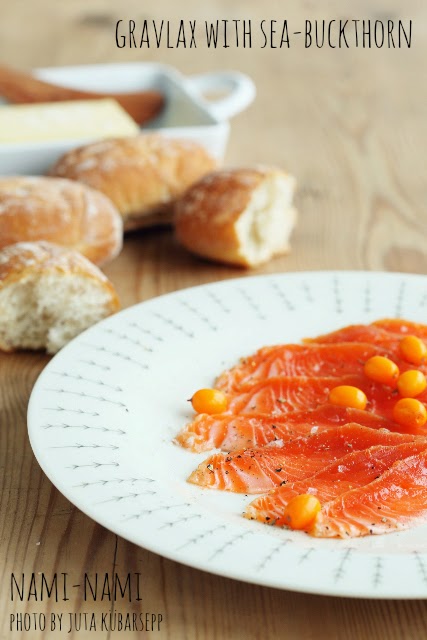
Gravlax with sea-buckthorn berries


Sea-buckthorn is a popular autumn berry here in Estonia. I'm afraid it's not so widely known in the US where most of my blog readers are based. However, given that Doctor Oz has been touting sea-buckthorn as one of the superberries, this may change :) 

Sea-buckthorn berries have a pleasant, but very tart flavour. They can be used instead of lemons - and here sea-buckthorn juice is used as a replacement for lemon juice in curing some nice salmon. 

Use highest quality fresh fish to make this dish. 

Gravlax with sea-buckthorn
Serves four to six

500 g fresh salmon filet
2 Tbsp natural/unsweetened sea-buckthorn juice
2 Tbsp kosher salt or Maldon sea salt flakes
1 Tbsp caster sugar
1 tsp freshly ground black or white peppercorns
handful of sea-buckthorn berries

Remove any bones with pliers. Brush with sea-buckthorn juice. 
Combine salt, sugar and pepper, spread the curing mixture over the fish and rub it gently in. Cut the filet into two even chunks, place them together, flesh sides touching. 

Wrap the salmon tightly with plastic wrap and refrigerate for at least 24 hours or up to 48 hours. 

Unwrap salmon, discarding the curing mixture (rinse quickly, if necessary, and pat thoroughly dry). 

Tp serve, place gravlax skin side down on a cutting board. Cut the gravlax into thin slices with a fileting-knife (a long, narrow-bladed knife), cutting against the grain, and slightly diagonally. 

Other sea-buckthorn recipes:
Mulled sea-buckthorn drink @ Nami-Nami
Sea-buckthorn jelly with kama mascarpone mousse @ Nami-Nami
Sea-buckthorn and Amaretto cheesecake @ Nami-Nami
Sea-buckthorn and apple tart @ Nami-Nami
Sea-buckthorn sorbet @ Nami-Nami
Cardamom panna-cotta with sea-buckthorn and apricot compote @ Nami-Nami
Sea-buckthorn juice @ Russian Season
Sea-buckthorn @ Real Epicurean
Gelbe grütze @ Küchenlatein
Coconut cream custard on sanddorn mirror @ Vegalicious Recipes
Sea buckthorn curd with raspberries @ Swedish Food
Sea-buckthorn cheesecake @ Bumpkin Mag
Sea-buckthorn mousse @ Andie's Veggies
Sea-buckthorn kissel with Greek yoghurt @ Suvi sur le vif

    Friday, September 12, 2014

    Whipped semolina pudding with apples and black aronia berries

    Aroonia-õunamannavaht & arooniasmuuti / Black aronia smoothie and black aronia and apple pudding
    Recipe by Pille @ Nami-Nami. Above photo by Juta Kübarsepp for the October 2012 issue of Kodu ja Aed ("Home and Garden", an Estonian monthly magazine. I've been their food writer since October 2012). 

    Back in July 2013, The Wall Street Journal touted the slightly astringent and tart black aronia as possibly the next superberry. While WSJ listed it alongside other health-giving berries, Fox News wrote more directly: Aronia: The North American super berry with cancer-fighting properties., calling aronia the "King Kong of antioxidant berries" (other than that, it's actually a pretty good and informative article). In a word - it's a great berry that's very good to you!

    Black aronia berry has been popular here in Estonia for decades - it makes a beautiful hedge plant, especially in the autumn:

    Black aronia / Must aroonia

    See what I mean? The aronia plant has most beautiful dark red leaves in the autumn!

    Usually the berries are used to make cordial, though they can be used in so many other ways. I often throw a handful of berries into my smoothie, and I've provided links to various recipes below. Here's a simple autumnal pudding, using apples, aronia berries and cream of wheat/semolina.

    Black aronia and apple whipped semolina pudding
    (Aroonia-õunavaht)
    Serves 4 to 6

    1 l (4 cups) water
    500 ml (2 cups) of cleaned black aronia berries and apple chunks
    100 g caster sugar
    a pinch of salt
    200 ml semolina/cream of wheat (wholewheat or spelt semolina is fine, too)

    Put the aronia berries and chopped apples into a saucepan, pour over the water. Bring into a boil, then reduce heat and simmer for about 15 minutes, until the aronia berries have softened.

    Take a bowl (or another saucepan) and cover with a sieve. Pour the cooked apples and black aronias - and their boiling liquid - onto the sieve and using the back of a wooden spoon, press as much of the fruit through the sieve. Season the mixture with sugar and a pinch of salt. Bring into a boil.

    Pour semolina quickly into the boiling mixture, stirring vigorously to avoid any lumps. Then reduce the heat and simmer gently for 10-15 minutes, stirring every now and then, until semolina - and the pudding - thickens. Remove the pan from the heat and leave to cool for about half an hour. Whisk until fluffy and light - this is best done with an electric mixer.

    Serve with milk.

    More recipes using black aronia berries aka chokeberries:
    Black aronia muffins @ Nami-Nami
    Black aronia and kefir smoothie @ Nami-Nami
    Aronia jam @ Blooms 'n' Food
    6 recipes @ Deep Roots
    Aronia jam @ Sto kolorow kuchni (recipe in Polish)
    Black aronia soda @ ferdakost
    Vispipuuro omenasta ja marja-aroniasta by Riikka @ (recipe in Finnish)
    Vispipuuro marja-aroniasta @ Omenaminttu (recipe in Finnish)
    Vispipuuro marja-aroniasta ja mustaherukasta by MariMaalla @ Lily (recipe in Finnish)
    Aroniaglögi @ Omenaminttu (recipe in Finnish)
    Aronia-omenakisselli @ Omenaminttu (recipe in Finnish)
    Aronia and rye foam by Malitsu @ Mämmi

    (From the recipe archives: this post was originally posted in September 2013)

    Wednesday, September 10, 2014

    Quark and pumpkin pudding cake

    Kõrvitsa-kohupiimavorm. Pumpkin and curd cheese.

    Recipe by Pille @ Nami-Nami. Above photo by Juta Kübarsepp for the October 2013 issue of Kodu ja Aed ("Home and Garden", an Estonian monthly magazine. I've been their food writer since October 2012). 

    Pumpkin or winter squash dessert, anyone?

    There's a popular old-school dessert here in Estonia, called kohupiimavorm. It consists of curd cheese (also known as quark), sugar, (whisked) eggs, and some add-ons, usually raisins or pieces of fruit. It's not really a cake (too soft), nor a soufflé (no custard base), so after some research I've decided to translate it as pudding cake :) Pudding cake is a cake you need to eat with a spoon, and it's rather difficult to cut it into neat shapes when still warm.

    Here's a version using that autumn staple, winter squash or pumpkin. For once, this is a recipe that's very versatile - if you cannot find curd cheese (try looking for 'tvorog' at your nearest Polish/Russian/international shop), you could use drier ricotta or even farmer's cheese. As for pumpkin, any yellow-fleshed winter squash would work. I like using butternut squash here, as this gives the dessert a lovely dark orange hue. Considering the amount of flour in the recipe, you could easily make this wheat-free or gluten-free by using different types of (gluten-free) flours.

    You could eat it as it is, or with a dollop of thick yoghurt or sour cream on the side. It's lovely with a kissel or fruit soup (this cranberry kissel would work brilliantly here). I actually prefer this pumpkin version to the traditional version, as it's softer and moister.

    Oh, and if you were wondering what those cookies on the top right corner of the photo were, you'll be pleased to know these contain pumpkin/squash as well. You'll find the recipe for those wonderful pumpkin cookies here.

    Curd cheese and pumpkin pudding cake 
    (Kõrvitsa-kohupiimavorm)
    Serves 6

    800 g butternut squash or pumpkin (cleaned weight)
    100 g caster sugar
    500 g curd cheese
    4 large eggs, separated
    1 lemon, juiced and zested
    2 Tbsp all-purpose flour
    100 g dried cranberries (craisins) or seedless raisins
    a pinch of salt
    butter
    breadcrumbs

    Pre-heat the oven to 200 C/400 F.

    Peel the pumpkin, cut into large wedges. Remove the soft core and seeds, and cut the flesh into large cubes. Weigh the pumpkin cubes - you need about 800 g (just under 2 pounds). Place the cubes into a large saucepan, add a cup of water and simmer over a low heat until pumpkin is tender. Drain thoroughly, then place into a bowl and mash with a fork.

    Add lemon juice and grated zest, curd cheese, flour, (c)raisins.

    Separate the eggs. Whisk the egg yorks with sugar until creamy, add to the rest of the ingredients. Finally, whisk the egg whites with a pinch of salt until stiff peaks forms. Fold 1/3 of the egg whites into the rest of the ingredients, then gently fold in the remaining egg whites.

    Butter a large (round) oven dish - about ∅ 26-30 cm is excellent -  and sprinkle with fine breadcrumbs. Spoon the pumpkin and curd cheese mixture into the dish, smooth the top.

    Bake in the pre-heated 200 C/400 F oven for about 40 minutes, until it's lovely golden brown, and just a wee bit wobbly in the middle.

    Let cool either completely or serve at room temperature.

    (From the recipe archives: this post was originally posted in October 2013)

    Similar recipes:

    Wednesday, August 27, 2014

    Creamy chantarelle sauce recipe (aka creamy girolle sauce)


    My regular readers all know about my love for wild mushrooms. We had a long and hot and dry summer here in Estonia - not the time for forageing for wild mushrooms. However, the autumn rains have arrived, so soon I'll be heading to our regular mushroom forests to fill up the baskets (yes, the basket and my pink wellies are already in the boot of the car, waiting :))

    Until then, I have to do with the fresh chantarelle/girolle mushrooms that are widely available at this time of the year. They actually appeared at the market stalls in early June, but were gone for a short while because of the heatwave. I'm glad they're back, for sure!

    I make a popular Estonian dish - kukeseenekaste - quite regularly. It's a simple creamy chantarelle sauce that can be made either with fresh cream (then a spoonful of flour is often added for thickening) or sour cream. I prefer the latter these days, so the recipe is for that. While it's a typical dish in Estonia, it's not exclusively Estonian. The Finns make the same dish, calling it kantarellimuhennos. What is perhaps unique to Estonia is that we serve the chantarelle sauce as a dish on its own right - not as a delicious sauce alongside a steak or grilled elk or pan-fried fish or something along those lines. Kukeseenekaste is a perfectly satisfying meal on its own. (But then we're funny like that here in Estonia. We can also have a pile of _brilliant_ potatoes as the centrepiece of a meal - just read Alanna's overview about her trip to Estonia ;))

    Chantarelle sauce
    (Kukeseenekaste)
    Serves 4 to 5

    400 g fresh chanterelle/girolle mushrooms
    1 Tbsp butter
    1 yellow onion, finely chopped
    200 g sour cream
    salt and pepper
    handful of chopped herbs (dill, parsley, spring onions)

    Carefully clean the mushrooms, then chop coarsely and set aside.
    Melt the butter on a large frying/skillet pan over medium heat. Add the onion and sauté gently for about 5-7 minutes, until just slightly golden.
    Increase heat and add the mushrooms. Season with salt and pepper, then fry for about 5 minutes, stirring every now and then, until the mushrooms have wilted.
    Add the sour cream, stir and just heat through.
    Fold in the herbs and serve with boiled or mashed potatoes.

    More chantarelle recipes:
    Chantarelle pesto
    Carrot and chantarelle quiche
    Chantarelle bruschetta
    Beef stroganoff with chantarelle mushrooms

    Saturday, August 02, 2014

    Simple, yet decadent fish supper: pan-fried vendace

    Praetud rääbised / Pan-fried whitefish and tomato salad

    This was originally posted in August 2012. I reposted this in late June, when the catching season for Lake Peipus vendace began and fresh and smoked vendace was again available, if pricey (going rate for a kilogram of smoked fish was about 20 Euros in June. But, oh so worth it). Now the Finnish vendace - slightly smaller, but just as delicious - has hit the market stalls, and we had pan-fried vendace for dinner tonight. Hence the reposting :)

    Vendace is a wonderful freshwater whitefish that you'll find all over the northern continental Europe. The Latin name is Coregonus albula, and although it looks quite similar to the Estonian "national fish" Baltic Herring (räim aka Clupea harengus membras) that belongs to the herring family, then vendace is actually part of the salmonidae family alongside salmon, char, trout, graylings and other freshwater whitefishes.You're most likely to come across vendace (also called European cisco) in the lakes of Finland, Sweden, Russia and Estonia, as well as some lakes in the UK, Poland and Northern Germany. When I say the lakes of Estonia, I mean Lake Peipus - and must sadly admit that vendace has been scarce in the local waters during the last years.

    Imagine my excitement when I saw beautifully fresh vendace at the local farmer's market yesterday morning! I immediately bought some hot-smoked vendace for lunch, and almost a kilogram of fresh vendace for dinner. It's such a delicate and excellent fish that doesn't need much messing around. A quick bath in a seasoned rye flour, followed by frying in hot butter or oil - you'll find the "recipe" below. I served the fried vendace with a fresh tomato salad, and the meal was enjoyed by all, including the small kids.

    A note on vendace roe. The dark orange-coloured vendace roe (rääbisemari/löjrom) is a true delicacy, and Kalix löjrom from  the Swedish Botnia Bay archipelago has even been granted a PDO (protected designation of origin) status by the European Union, just like Prosciutto ham from Tuscany or Parmigiano-Reggiano cheese from Lombardy and Emilia-Romagna. When the rather excellent roe of common/European whitefish (Coregonus lavaretus) cost 799 SEK (Swedish crowns) in a supermarket in Stockholm back in early June, then the vendace roe was almost double the price, 1490 SEK:


    Sorry for the photo quality - it was a quick snap with my mobile phone.

    Names in other languages: rääbis (Estonian), muikku (Finnish), ryapushka (Russian), löj (Swedish), corégone blanc/la petite marène (French), Kleine Maräne (German).

    Pan-fried vendace
    (Pannil praetud rääbised)

    Praetud rääbised / Pan-fried whitefish

    fresh vendace (calculate about 2-3 fish per person)
    rye flour or oatmeal
    salt
    freshly ground black pepper
    fresh dill, finely chopped
    oil and butter for frying

    Season the flour with salt and pepper, then roll the fish in the flour until evenly covered. Heat some butter and oil (or just one or the other) in a heavy frying pan over medium heat. Add the fish and fry for a few minutes on one side until dark golden brown, then carefully turn over and fry the other side for a few minutes again.

    Garnish with a sprinkling of dill and serve with boiled new potatoes or potato mash, and perhaps a dollop of good home-made mayonnaise (be sure to click on the link if you haven't seen the cool Nami-Nami video recipe yet).

    Monday, July 21, 2014

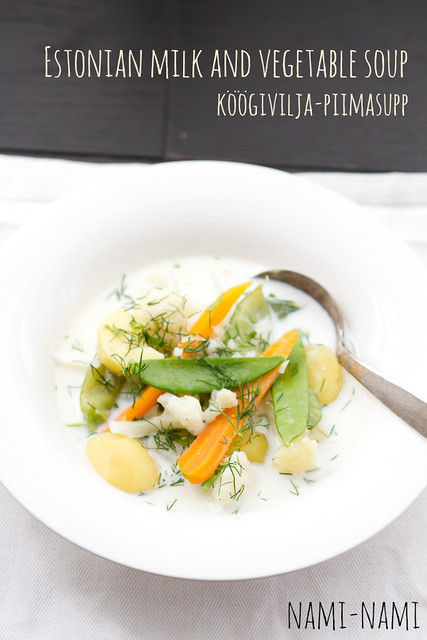
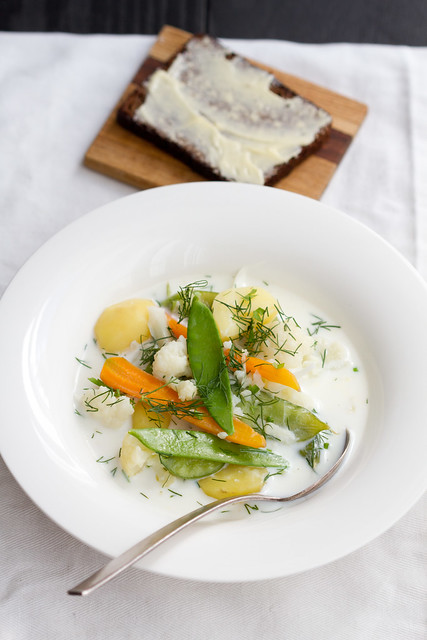
    Summer food: Estonian milk and vegetable soup

    Köögivilja-piimasupp. Kesäkeitto. Estonian milk and baby vegetable soupl

    It's mid-July, which here in Estonia means the peak of summer. We're having a beautiful summer here, with lots of sun and not much rain. It's the end of the wild strawberry season, it's the height of chantarelle mushroom season (but too early for most other wild mushrooms), and it's the start of the beautiful local vegetable harvest season. Here's a traditional milk soup that glorifies those early tiny vegetables that are still crisp and sweet. I bought the cauliflower and potatoes - simply because I don't grow these, but the carrots and snap peas were from our own little back yard.

    Although the soup is part of the Estonian traditional cuisine, it's not just Estonian. Our Northern neighbours, the Finns, eat a similar soup, called kesäkeitto or summer soup (I've provided links to several recipes at the end of the post). The Swedish name for the soup is snålsoppa or sommarsoppa.

    The soup is best served with some buttered dark rye bread. It's best on day one, though it reheats well. However, be careful not to burn the milk. There's nothing worse than burnt or simply overcooked milk soup, trust me :)

    Estonian milk and vegetable soup
    (Köögivilja-piimasupp)
    Serves four to six

    Piima-köögiviljasupp. Kesäkeitto. Estonian milk and vegetable soup.

    a handful of baby carrots
    1 small head of cauliflower or white cabbage
    a large handful of (sugarsnap) peas
    a large handful of new potatoes
    500 ml (2 cups) water
    1 tsp salt
    2 Tbsp butter
    1 litre (4 cups) full-fat milk
    fresh dill, finely chopped

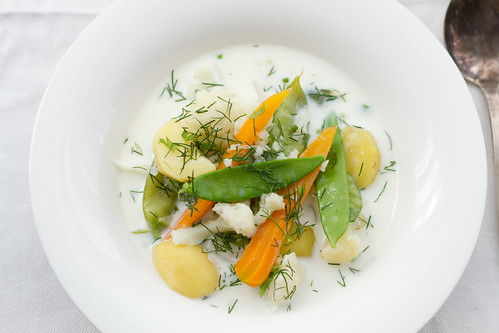
    Scrub the carrots and potatoes clean, then cut the potatoes into small chunks and the carrots into slices about 3-4 mm thick (if you've got pretty slim carrots, then you can also halve or quarter them lengthwise instead, see the photos). Divide the cauliflower into small florets, or shred the cabbage into small thick slices. Pod the peas, if using regular green peas.

    Place carrots, potatoes and cauliflower/cabbage into a medium saucepan. Add water, season with salt and butter. Bring into a boil. Half-cover with the lid and simmer for about 15-20 minutes, until the vegetables are almost cooked. Add the peas and cook for 5 more minutes.

    Now pour in the milk. Bring slowly into a boil, stirring gently. Remove from the heat, add the dill and season to taste. Serve and enjoy.

    Piima-köögiviljasupp. Kesäkeitto. Estonian milk and vegetable soup.

    Similar recipes:
    Finnish summer soup by Alanna @ Kitchen Parade
    Kesäkeitto by Wendy @ A Wee Bit of Cooking
    Summer soup (kesäkeitto) by Lakshmi @ Pure Vegetarian (no recipe, but, oh, the photos!)
    Finnish summer soup @ The Kitchn
    Summer Soup by Mia @ Cloudberry Quark
    Summer soup (snålsoppa) by Katarina @ Hovkonditorn: Passion for Food and Baking

    Sunday, July 06, 2014

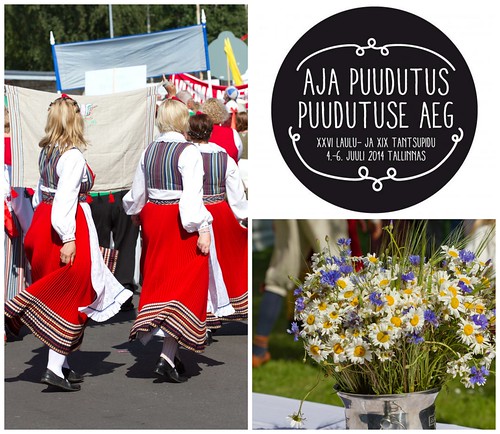
    Festival food: Estonian Song and Dance Celebration 2014

    Laulupidu 1

    This is a very special weekend for Estonia - our 26th Song Celebration and 19th Dance Celebration takes place. You'll get all the necessary information on this website, I'll focus on food here ;)

    It's a huge festival - with about 100 000 people gathered at the Song Festival Square, among them over 20 000 singers! You can imagine the amount of food you need to feed all those people during the weekend :)

    Festival food isn't usually known for its gastronomic finesse and wonderful flavour, but the food I saw yesterday at the Tallinna Lauluväljak (Song Festival Square) was pretty interesting. Here's a short overview for you, should you head to the celebrations today.

    The main eating area is marked with the red circle on the map below. "Merevärav" marks the "sea entrance" on Pirita road, so in case you're hungry, you should head to the right after entering the Song Festival grounds:
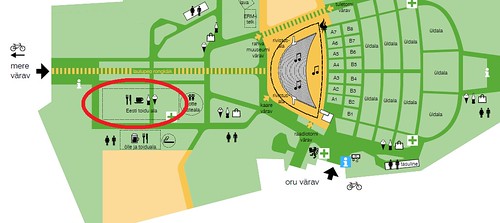
    kaart

    It's also where the EESTI TOIDU VÄLJAK aka Estonian Food Court is located. This consists of three large tents, marked by coloured signs. The Green sign marks the tent that represents the Estonian Food Industry Association.  The tent with a Blue sign hosts the local small producers, Estonian Horticultural Association and the Estonian Chamber of Agriculture and Commerce. The Red signs marks the Estonian Chefs Association.
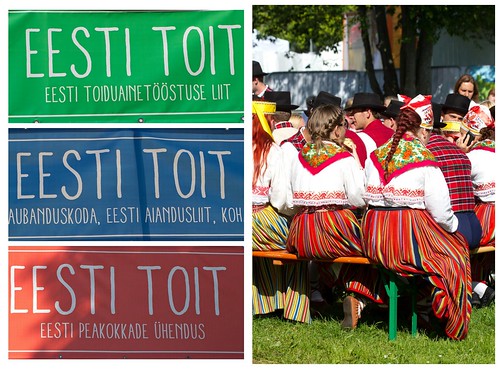
    laulupidu5

    Let start with the "Blue" tent (well, the tent is white, the sign is blue :)), hosting the small/artisanal/local producers. You could feast on "haugišašlõkk" (pike shashlik, type of white fish), "soolakurgid" or fresh salted cucumbers, or small goat cheese and rye crisp "burgers":
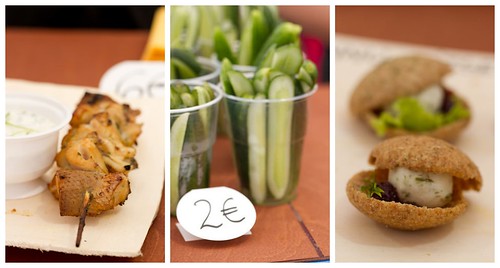
    Untitled

    Saaremaa is the biggest island in Estonia and they're increasingly becoming big players on the culinary scene as well. What about sandwich with elk fillets, a floral tea mixture (primrose, apple and meadowsweet), or smoked pork and rye sandwich?
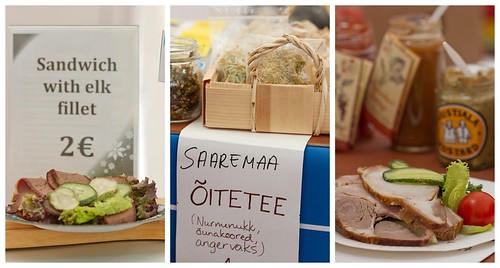
    saare

    The "Green" tent hosted several big food producers, including Saaremaa Delifood that introduced their new "kohuke" (curd cheese bar, top right) with cloudberries and lemon as well as Semu with their really nice sea-buckthorn drinks.
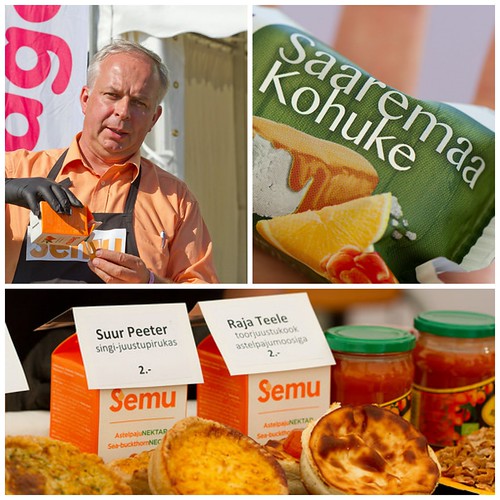
    astelpaju

    Finally, the "Red" tent, hosting the representatives of Estonian Chefs Association. There were three catering companies present, Tervise Catering, Event Catering and House Gourmet. Some of the festival food items were flatfish terrine with roasted vegetables (lestavorm röstköögiviljadega); pulled lamb with wild-garlic pearl barley (rebitud lammas karulaugu-odrakruubiga); hot smoked perch with tomato-cucumber salad (suitsuahven tomati-kurgisalatiga):

    epy1C

     Pike fishcakes with curd cheese and cucumber dressing (haugikoogid kohupiima-kurgikastmega, below left). You could also a buy a selection of six dishes for 6 Euros (below right):

    epy2c

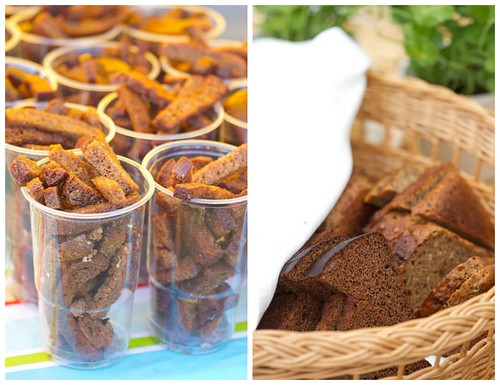
    This being Estonia, black rye bread was served everywhere - either fresh (below right) or as garlic bread (below left; yes, that's what you'd get if you ask for garlic bread (küüslauguleib) in a pub in Estonia).

    leibC

    There's food outside the Estonian Food Court as well. I spotted these happy people from soon-to-be-opened Inspiratsioon Catering, serving vegetarian, vegan and gluten-free food:
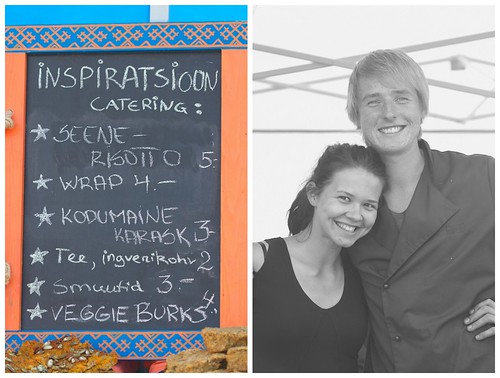
    Inspiratsioon @ Tallinna Lauluväljak

    I didn't have a chance to look into the big "beer and food" area, where many food stalls were located, but overall I can say the food was pretty decent for a festival food :)

    What type of food did you have last time at a music festival?

    Saturday, June 07, 2014

    Equal rhubarb cake


    I've got a new favourite to-go rhubarb cake recipe. Just because it's one that can be memorized in seconds. Actually you just need kitchen scales and the list of ingredients. No amounts, imagine :)

    Here's how it works. I call it equal rhubarb cake, because you need equal weighed amounts of all the main ingredients. I usually take four eggs, chicken or duck, to make this cake. 

    Rhubarb sheet cake

    eggs
    butter, at room temperature*
    caster sugar 
    all-purpose flour
    rhubarb, thinly sliced 

    Topping:
    demerara sugar and cardamom

    Line a baking sheet with a parchment paper/baking paper (if the eggs are large, you can use a large baking sheet, say 35x40 cm, if the eggs are smaller, I tend to use 25x35 cm).  Put aside. 

    Put a bowl onto your kitchen scales, switch the scales on and break eggs into the bowl. Weigh the eggs - and remember the number. Put the eggs aside, take another bowl. 

    Now, remember the weight of eggs? Add the same amount of butter into the mixing bowl, then the same amount of sugar. Mix the butter and sugar until pale and creamy.

    Now add the eggs, one at a time, and mixing thoroughly after each egg. Fold in the same amount of flour. 

    (So if your eggs weighted, say, 250 grams, you'll also need 250 g butter, 250 g sugar, 250 g flour and about 250 g rhubarb). 

    Now spread the dough mixture onto the baking sheet. Spread the rhubarb evenly across the cake, then sprinkle with demerara sugar and ground cardamom. 


    Now bake at 200 C/400 F for about 20 minutes, until cooked and nicely golden. Let cool a little, then cut into squares, dust with icing sugar and serve. 


    Keeps well for a day or two, covered.

    Wednesday, May 14, 2014

    An easy breakfast: ahjusoojad kohupiimasaiad aka Curd Cheese Toasts


    I'm reposting this post from February 2007, as it was listed as one of the 50 of the world's best breakfast dishes over at the hotelbookers.com few days ago. Although I'm trying not to eat too much white bread these days, I stopped at the local supermarket on the way back home from my firstborn's violin class, bought a bloomer, and made these at home. Being an Estonian, I obviously - and rather conveniently - already had some curd cheese at the fridge. And the kids - all three of them - loved these!

    Here's an Instragram short of the toasts (you can follow my daily food related pics here):


    And here's the original post from all those years ago:

    I was flipping through the pages of a tired thin Estonian cookbook called "Kohupiimatoidud" the other day, looking for some nostalgic recipes. The cookbook was published in 1973, a year before I was even born, and is full of recipes utilising curd cheese, one of the very popular ingredients in Estonian kitchen (frequently featured here on Nami-nami blog, as you can see from the long list of curd cheese recipes at the end of this post). One of the recipes that caught my eye was for curd cheese toasts - something my mum used to make quite often to me and my sister. As I still had some white bread left after making Estonian tomato toasts, I decided to make my childhood recipe from the book for breakfast today. Creamy and sweet topping with a hint of vanilla, hot and crispy base - what more can one ask from a breakfast toast!? Of course, this would work just as well as a weekday dessert, especially if there are children in the house..

    If you cannot find curd cheese (ask for tvorog in Russian and Polish shops), then try ricotta or fromage fraiche instead. As far as the bread is concerned, then try to get hold of wheat bloomer.

    Estonian Curd Cheese Toasts
    (Ahjus küpsetatud kohupiimasaiad)
    Makes 6 toasts


    250 grams curd cheese
    3-4 Tbsp sugar
    1 egg
    vanilla extract or vanilla sugar, to taste
    1 Tbsp sour cream or yogurt
    6 slices of white bread (bloomer or brioche)

    Mix curd cheese with sugar, vanilla, sour cream and egg.

    Lay bread slices on a baking sheet, spoon the curd cheese mixture over:


    Bake at 200 C for about 15 minutes, until the curd cheese mixture is slightly golden.
    Serve warm with a cup of coffee, tea or glass of milk.

    Here's a version with raisins: Ahjus küpsetatud kohupiimasaiad / Oven-baked curd cheese toasts

    Other curd cheese recipes @ Nami-nami:
    Curd Cheese Cake with Grated Apples (November 2006)
    Curd Cheese & Apple Souffle (September 2007)
    Easter Pashka (April 2006)
    Lemony Curd Cheese Cake (May 2006)
    Lemony Curd Cheese Tart (March 2006)
    Milk Curd Cream with Blueberries (March 2006)
    Sõrnikud alias curd cheese patties (plain or with carrots) (January 2006)
    Vareniki dumplings with curd cheese filling, served with home-made apricot jam & pistachios (July 2007)

    Saturday, March 08, 2014

    Sibulaklops aka Estonian Onion Steak aka Pan-Seared Steak and Onions

    Sibulaklops. Estonian onion steak.
    Photo by Juta Kübarsepp for the February issue of Kodu ja Aed magazine. 

    Time for another Estonian classic! There are two lovely-sounding dishes in Estonia, kooreklops and sibulaklops. The first one is pan-fried steak simmered in creamy gravy, the other is the kooreklops with a generous amount of fried onions. I've come across recipes for those dishes in Estonian cookbooks from almost a century ago, and they're still popular among Estonian home cooks. They've obviously stood the test of time.

    The creamy gravy, thickened with flour and seasoned with smetana or sour cream (crème fraîche would work in a pinch) is an important element of the dish, and makes it different from your regular pan-fried steak and onions.

    Cooked potatoes, potato mash, cauliflower or green vegetables would all work as a side dish.

    Pan-fried steak and onions
    (Sibulaklops)
    Serves 6

    600-800 g good-quality beef (boneless sirloin steak, entrecôte)
    oil and butter, for frying
    4 to 5 large onions
    salt and freshly ground black pepper

    2-3 Tbsp butter
    3 Tbsp all-purpose flour
    500 ml (2 cups) beef bouillon or water
    100 - 150 g smetana/sour cream/crème fraîche

    Cut the beef into 1 cm (just under half an inch) slices, then gently pat them thinner, trying to give them an oblong oval shape. Season with salt and pepper. In a large skillet, heat a tablespoon of butter and a tablespoon of oil over medium high heat. Add the beef slices and fry until golden brown on both sides, turning once. Transfer the meat onto a place and put aside.

    If neccessary, add another spoonful of butter onto the skillet. Add flour and cook for a minute, stirring carefully. Now and the hot bouillon or water and stir, until you've got a thin gravy. Return the meat into the pan and simmer for 10-15 minutes, until the meat is cooked. NB! If you're not using proper beef ("lihaveis" in Estonian), but meat from a dairy cow, the meat will require considerably longer time to reach the tender stage, so to test for doneness.

    When beef is tender, then use a slotted spoon to remove them from the pan and keep warm on a plate, covered with a piece of foil.

    Add the sour cream to the sauce, cook for a few minutes, then season to taste with salt and pepper.

    While the beef is cooking, prepare the onions. Peel the onions, halve lengthwise and then cut into thin slices. Melt another spoonful of butter and a spoonful of oil in a large skillet over medium heat. Add the onions and cook, stirring occasionally, until golden. This will take about 10-15 minutes.

    To serve: spoon the gravy onto a plate, top with a slice or two of beef and garnish with a very generous amount of fried onions. It is an onion steak after all :)

    Sibulaklops on other foodblogs:
    Tuuli @ Ise tehtud, hästi tehtud (recipe in Estonian) 

    Wednesday, February 26, 2014

    Estonian meatballs aka hakk-kotletid aka kotletid aka hakklihakotletid

    Estonian meatballs. Hakk-kotletid, täitsa tavalised.

    Here's a posting I didn't think I'd be doing - after all, kodused kotletid are such a humble comfort food and they're not exactly the runner-up for the "Most Photogenic Food" title. Yet I've recently understood that there is something wee bit unique about the typical Estonian hakk-kotlet - namely, the main ingredient. Of course, that's minced meat, but majority of Estonians would use a mixture of beef and pork, 50:50 ratio. And while it's perfectly acceptable to go and buy a packet of one (say, beef) and a packet of another (pork), then more often than not we simply reach out and buy one of the mixes. I'm not talking about seasoned sausagemeat or some other minced meat mixes here, but about a 50:50 mix of pure minced beef and pure minced pork. Here's one by Atria (you can choose between 300 g and 500 g), but all Estonian meat producers have this product in their portfolio:
    Kodune_hakkliha

    I hadn't really given this much thought, but at a recent press event a local meat and BBQ guru, Enn Tobreluts claimed that this type of minced meat product is pretty untypical outside the Baltic region, and indeed, I don't think I ever came across it while living in Scotland. Of course, there are plenty of Estonian cooks who make meatballs - flat or round - with just beef or just pork or even just lamb, but a mix of beef and pork is most popular for making this humble dish. We even have a special name for this type of minced meat mix - kodune hakkliha aka domestic minced meat :)

    What's your choice of meat for making meatballs? Can you get "domestic minced meat" at your country of residence? I'd love to hear your comments!

    Estonian meatballs  
    (Lihtsad hakk-kotletid)
    Serves 4 to 6

    Estonian meatballs. Hakk-kotletid, täitsa tavalised.

    100 ml (about 7 even Tbsp) dry breadcrumbs
    200 ml liquid (water, single cream, milk, sour cream)
    1 onion, finely chopped
    500 g minced meat (preferably a mixture of pork and beef, see above)
    1 egg
    1 tsp fine salt
    0,5 tsp freshly ground black pepper

    Mix breadcrumbs and the chosen liquid in a mixing bowl and let stand for about five minutes.

    If you don't like the harshness of raw onion, then sauté it gently in a bit of oil until translucent.

    Fold the (fried) onion, the meat, egg and seasoning into the breadcrumb mixture and stir until thoroughly combined.

    Using wet or oily hands, form the mixture into meatballs or patties. Fry in hot oil or batter on both sides for a few minutes, until golden brown and thoroughly cooked.

    PS I LOVE cold meatball, halved, on my rye bread, so these are also perfect for a lunch box!

    Sunday, January 26, 2014

    Sauerkraut with pork and barley (Mulgi kapsad)

    IMG_7957.jpg

    Mulgi kapsad aka mulgikapsad is a traditional dish from Southern Estonia, consisting of pork, sauerkraut and barley (either pearl barley or barley groats). It doesn't sound much - but it's another one of those dishes that tastes much more and better that you'd imagine when looking at the (short and rather bland) list of ingredients. It's also cheap, filling and substantial, a perfect winter dish, which deserves attention outside Estonia as well. Hence this blog post.

    You'll need fresh sauerkraut for this dish. When I say "fresh sauerkraut", I mean the uncooked, fermented and unpasteurized sauerkraut. Look for "barrel cured" sauerkraut, not the "wine cured", and find it either in Eastern European stores or in your local health food store. Or ferment your own! :)

    * PS This dish is wheat-free. If you want a gluten-free version, then feel free to use porridge/pudding/risotto rice instead of barley. 

    Sauerkraut with pork and barley
    (Mulgikapsad)
    Serves 6 to 8

    1 kg fresh sauerkraut
    0,5-1 kg fatty pork (belly or Boston butt/shoulder)
    200 g pearl barley, rinsed and drained
    about 500 ml (2 cups) water
    salt, to taste
    sugar, to taste (optional)

    Cut the meat into bite-sized pieces.

    Spread the sauerkraut at the bottom of the pot, then top with meat cubes, and scatter barley on top:
     IMG_7940.jpg

    Now sprinkle with salt (about half a teaspoon should be enough in most cases) and pour over enough water to barely cover the ingredients. Cover with the lid, bring into a boil. Reduce heat and simmer gently for about 2-3 hours, until the food is done. NO NEED TO STIR IT, though you may want to peek under the lid couple of times and add a little water, if it seems too dry. (You can also cook it in the moderate oven, if you prefer).

    This is how it'll look like when done - the pearl barley has swollen and the meat is tender:

    IMG_7953.jpg

    It's only now that you're supposed to give it a good stir, so the sauerkraut, barley and pork would be nicely and evenly distributed:

    IMG_7956.jpg

    Taste for seasoning - if you need, add a bit more salt. Some people add a bit of sugar as well, but I don't - it all depends on the flavour of your sauerkraut. Mulgi kapsad is not supposed to be sweet-and-sour, but you may need some sugar to balance the acidity, if your cabbage is very sour.

    Serve with boiled potatoes, with a good dollop of nice thick sour cream on the side, if you wish.

    IMG_7959.jpg

    Other bloggers writing about mulgikapsad:
    Kiilike köögis (recipe in Estonian)
    kokkama.blogspot.com (recipe in Estonian)
    The Kitchen Mouse (recipe in English)
    Estonian Cooking and Eating (recipe in English; some helpful comments there)
    Emmanuel Wille (recipe in Estonia; slightly fancier "restaurant-style" version)
    Talerka (recipe in Russian)
    Suhkrusai (recipe in Estonian)
    Ave köök (recipe in Estonian)
    Sille toidublog (recipe in Estonian, she uses turkey)
    Minu kodunurk (recipe in Estonian)
    Silgud ritta (recipe in Estonian)
    Igapäevane kokakunst (recipe in Estonian)