Showing posts sorted by relevance for query jerusalem artichokes. Sort by date Show all posts

Sunday, October 30, 2011

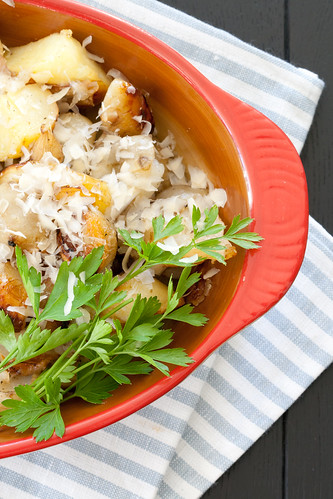
Roasted Jerusalem artichokes (sunchokes) with lemon, Parmesan cheese and parsley

Baked Jerusamel artichokes / Baked sunchokes /Röstitud maapirnid

Jerusalem artichoke (Helianthus tuberosus), also known as sunchoke, sunroot, topinambur, earth apple (and curiously, 'earth pear' or maapirn in Estonian) is a great and flavoursome vegetable to grow. Once the tubers are in the ground, they need no attention from you, and you can leave the new crop in the ground until you want to use them. We were shovelling snow and digging out fresh Jerusalem artichokes throughout the last winter and as late as in April were awarded with young and fresh sunchokes looking like this - they're were frost-tolerant:
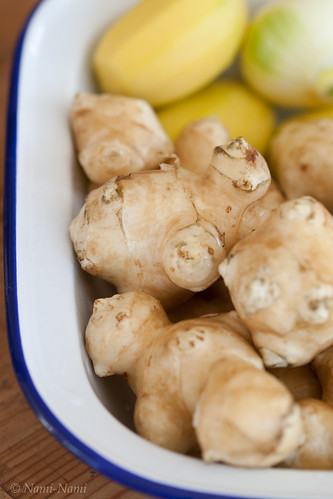
Yesterday's crop of sunchokes

It's invasive, however, so be careful to allocate it a spot where it can take over and grow in peace!

The recipe for lemon-roasted Jerusalem artichokes is from Nigel Slater, with some minor changes. A lovely alternative to your regular roast potatoes - and a great option for Meatless Monday.

Lemon-roasted Jerusalem artichokes with Parmesan and parsley
(Röstitud maapirnid sidruniga)
Serves 4 to 6
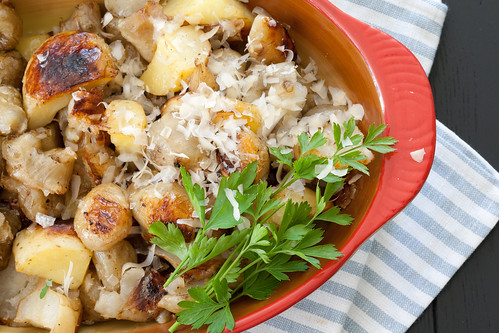
Baked Jerusamel artichokes / Baked sunchokes /Röstitud maapirnid

750 g Jerusalem artichokes/Sunchokes
250 g (new) potatoes
1 lemon
olive oil
sea salt and freshly ground black pepper
Parmesan cheese
fresh parsley

Preheat the oven to 220C/450F. Drizzle some olive oil in a roasting tin, set aside.

Scrub your vegetables really well. Do not peel, but cut in halves or quarters depending on their size. Par-boil or steam for about 10 minutes, until crispy tender. (Drain thoroughly, if par-boiling).
Tip the steamed or par-boiled vegetables into the roasting tin, stir gently. Cut the lemon in half and drizzle the lemon juice over the vegetables. Season generously with salt and pepper.
Place the roasting tin into the oven and roast for about 35 minutes. Give the vegetables a good stir once or twice during that time.
Scatter grated cheese and chopped parsley on top and serve immediately.


More recipes using Jerusalem artichokes @ Nami-Nami:
Jerusalem artichoke gratin with cheese
Silky Jerusalem artichoke and mushroom soup

Thursday, December 10, 2009

One very knobbly Jerusalem artichoke, one very silky mushroom soup


Have you ever seen a recipe for Jerusalem artichoke/Sunchoke/Topinambur-something that begins with "Wash and peel the Jerusalem artichokes". I have. While I obviously understand the washing bit, then I'm a bit unsure about the peeling. See the specimen above? That's just one example of an artichoke I had to deal with earlier today, when preparing lunch for K's mum who came to visit her grand-daughter (who's doing splendidly, by the way:)). Have you ever seen such a knobbly Jerusalem artichoke before? It was beautiful - crisp and fresh, but had I attempted to peel it, there wouldn't have been much left. So I gave it a very good wash and scrub, and simply chopped it. And that's what I'll do from now on - I'll only buy Jerusalem artichokes with thin and beautiful skin, so I can omit that tricky "peel the artichoke" bit...

The inspiration for combining mushrooms and Jerusalem artichokes came from one Estonian monthly, but I've changed the process and proportion so considerably so there's no need to credit anything specific :)

Jerusalem artichoke and mushroom soup
(Maapirni-seenesupp)
Serves 4

250 g Jerusalem artichokes (aka topinambur aka Sunchokes)
250 g mushrooms
1 medium yellow onion
2 Tbsp butter
600 ml water
400 ml whipping/heavy cream (use single/light cream, if you prefer)
salt
freshly ground black pepper
fresh thyme, to garnish


Wash and peel (or not :)) the Jerusalem artichokes. Peel the onions. Clean the mushrooms. Chop all into small chunks.
Heat the butter in a heavy saucepan, add the artichokes, onion and mushrooms and sauté for about 5 minutes. Season with some salt.
Add hot water, bring to the boil. Reduce heat, cover and simmer for 10-15 minutes, until the Jerusalem artichokes are softened.
Transfer into a blender and purée until smooth.
Return to the saucepan, add cream and reheat. Season with salt and pepper (and some dried porcini or chantarelle powder, if you wish), garnish with fresh thyme and serve.
Some shaved Parmesan cheese would also be nice.

Friday, January 29, 2010

Cheesy Jerusalem Artichoke Gratin


Remember my recipe for a silky Jerusalem artichoke & mushroom soup? I made another delicious sunchoke dish back in December, but never got around to blogging about it. Seeing the yummy-looking roasted sunchokes on Anne's blog today reminded me of the gratin I made - and will be definitely making again. I loved the slightly nutty and sweet flavour the Jerusalem artichokes gave to the dish. We enjoyed this with a simple green salad, but it would also make an excellent side dish to something meaty.

Cheesy Jerusalem Artichoke Gratin
(Maapirnisupp juustuga)
Serves 4

500 g Jerusalem artichokes / Sunchokes
500 g potatoes
butter
100 g cheese, grated
400 ml single or whipping cream
salt and black pepper

Peel the potatoes and Jerusalem artichokes, cut into very thin slices (kitchen mandoline is very helpful here).
Layer potatoes, Jerusalem artichokes and half of the grated cheese into a buttered oven dish, season layers with salt and pepper.
Scatter the rest of the cheese on top, pour the cream over.
Bake in a pre-heated 200 C oven for about 40-60 minutes, until the vegetables are cooked (the length of baking depends on the thickness of the vegetable slices).

Sunday, July 10, 2011

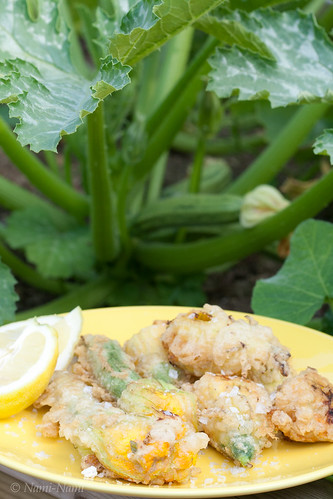
Crisp stuffed courgette flowers aka zucchini blossoms

Stuffed courgette flowers / Täidetud suvikõrvitsaõied

From all the vegetables we're growing in our garden, zucchini/courgette thrives best (closely followed by Jerusalem artichokes). And whereas the fruit might need another few days to be ready, zucchini blossoms are perfect already. Previously I've made zucchini blossom fritters and zucchini blossom frittata, this year I tried to stuff them. I came across two more or less identical recipes - one by Lucas Hollweg in the UK Sunday Times, the other by Jamie Oliver. A bit of tweaking here and there (who uses self-rising flour!?!?), and I came up with this version that we all LOVED.

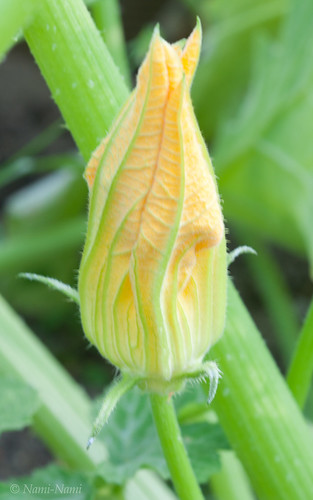
You can use both male and female zucchini blossoms for this dish, as I did. (How can you tell them apart? The female blossoms have a tiny zucchini attached to them; the male blossoms just have the stem). I usually just use the male blossoms, as the female are the ones providing us with tasty courgettes later on. The male blossoms look like this:

Courgette flower / Zucchini blossom / Suvikõrvitsaõis
Male courgette flower/zucchini blossom

However, if you don't need so many proper zucchinis, you can pick the female blossoms as well - it'll give you a more substantial dish.

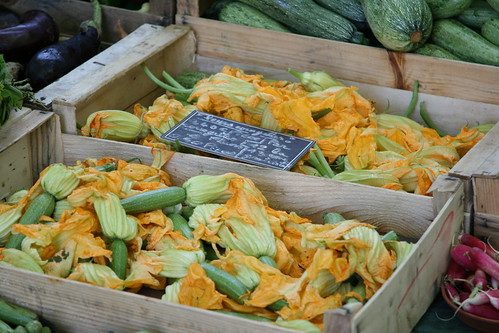
Courgette flowers / Zucchini flowers / Suvikõrvitsaõied
Courgette flowers @ Lyon Market, France, August 2009. Female blossoms are at the front, male blossoms at the back.

What's your favourite way to stuff courgette flowers/zucchini blossoms?

Deep-fried stuffed courgette flowers
(Frititud täidetud suvikõrvitsaõied)

Stuffed courgette flowers / Täidetud suvikõrvitsaõied

12 large and fresh zucchini blossoms/courgette flowers
vegetable oil, for frying

Filling:
250 g ricotta cheese
25 g freshly grated Parmesan cheese
finely grated zest of half a lemon
a small handful of fresh mint, finely chopped
a generous pinch of freshly grated nutmeg
salt anf freshly ground black pepper

Batter:
120 g all-purpose/plain flour (about 200 ml)
0.5 tsp baking powder
a pinch of salt
250 ml (a cup) of sparkling water/mineral water

To serve:
sea salt flakes and lemon wedges

Make the filling. Mix ricotta, Parmesan, lemon zest and mind leaves. Season generously with salt, pepper and nutmeg. Form the mixture into 12 small balls.
Prepare the zucchini blossoms - I avoid rinsing, if at all possible, and neither do I remove the
filaments from the female flowers. (You're welcome to do so, if you prefer). Make sure there are no little critters hiding inside the blossoms! Using your fingers, gently open each blossom and place one small stuffing ball inside. Gently close the blossom around the filling - either just folding the petals over the stuffing, twisting the petals or using a chive to tie the petals tightly together.
Mix the ingredients for the batter - it should have the consistency of a thin crepe batter.
Heat 4-5 cm (about 2 inches) of oil in a small saucepan. The temperature is about right when a little peeled potato cube or bread cube begins to sizzle and turns into nice golden brown when you drop it into the oil.
Now, working with couple of zucchini blossoms at the time, dip them into the batter, then lower them into hot oil. Fry for about 2-3 minutes, then gently turn them over and let them brown on the other side as well.
Using a slotted spoon, transfer them into a double layer of kitchen paper to drain off the excess oil.
Fry the rest of the stuffed zucchini blossoms in a similar fashion.

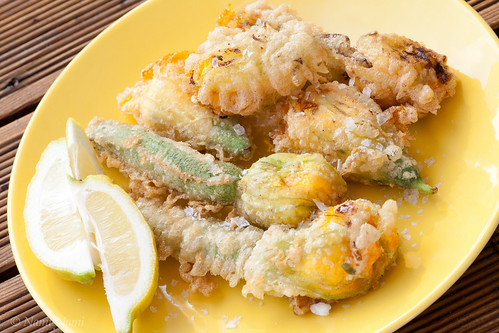
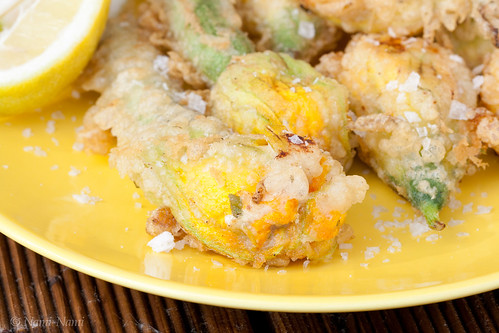
Serve hot, sprinkled with some Maldon sea salt and lemon wedges on the side.

Here's another close-up:
Stuffed courgette flowers / Täidetud suvikõrvitsaõied

Monday, October 22, 2012

Some pictures from Nami-Nami garden, October 2012

My dear K. took some pictures of our beautiful garden last weekend. The gardening season is more or less over for this year - we picked our last tomatoes and aubergines/eggplants a fortnight ago, this weekend we harvested the last of beets, carrots and potatoes, as well as Jerusalem artichokes (the latter could stay in the ground until the Spring, but we wanted them out from a certain raised bed).

Despite the cold nights and heavy rains, the garden still has some amazing colours on display.

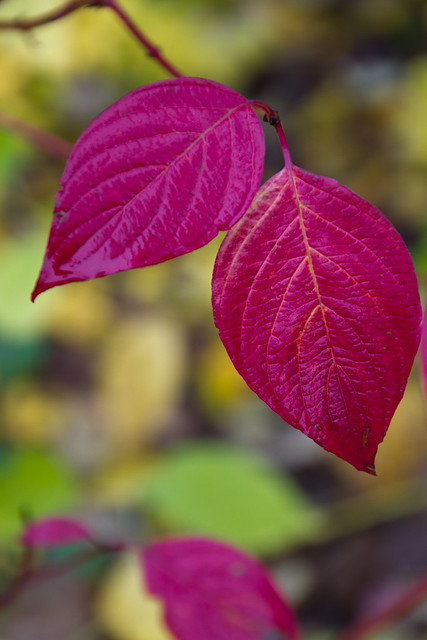
Cornus alba "Sibirica" aka red bark dogwood or red twig dogwood:
 IMG_2824.jpg

Quercus rubra aka northern red oak or champion oak:IMG_2862.jpg

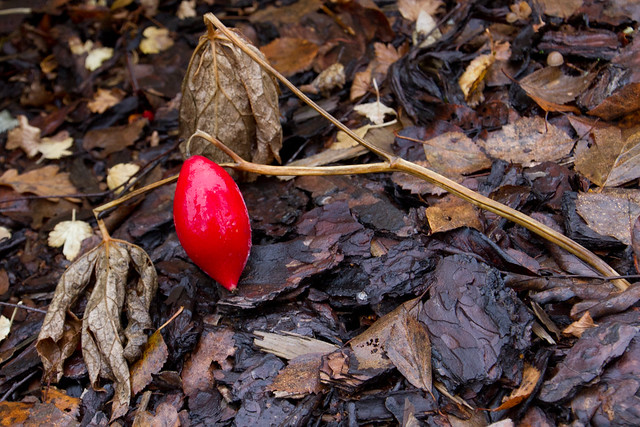
The bright red and ripe fruit of Podophyllum emodi aka Himalayan mayapple or Indian may apple:
IMG_2854.jpg

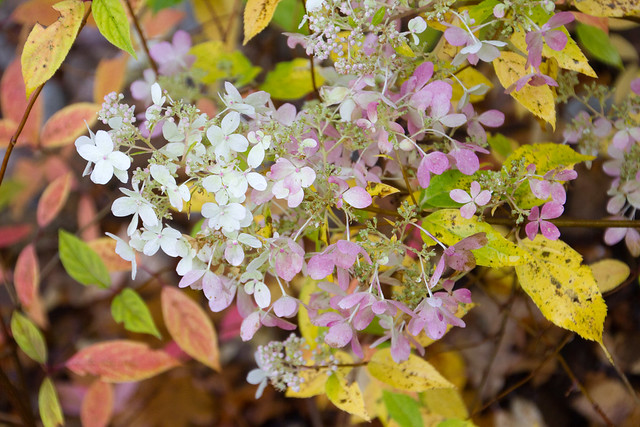
Hydrangea paniculata 'Grandiflora' aka panicled hydrangea:
IMG_2856.jpg

The autumn look of Ligularia stenocephala aka leopard plant:
IMG_2821.jpg

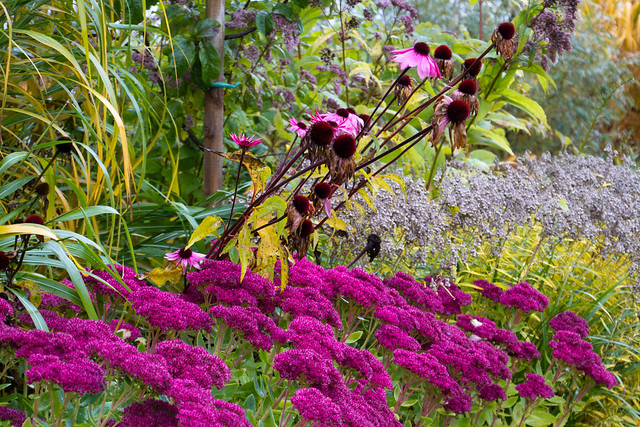
Hylotelephium spectabile (Sedum spectabile) aka showy stonecrop or ice plant in its full glory, Echinacea purpurea aka Eastern purple coneflower or purple coneflowe is finally loosing its beautiful colour:
IMG_2817.jpg

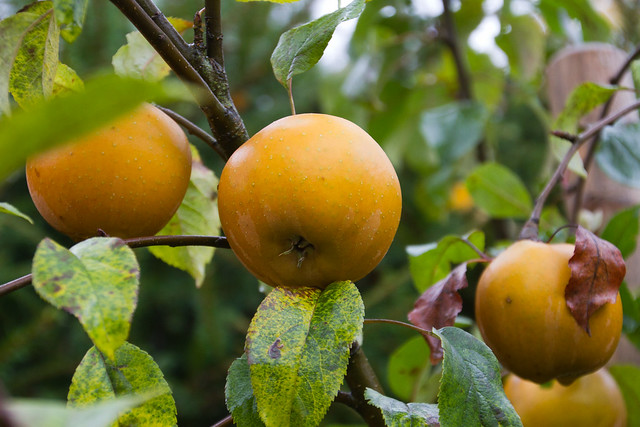
One of my favourite apples back in Scotland was Egremont Russet - perhaps because it's very dissimilar to all the popular apple varieties in Estonia. The russet apple is often described as having a sweet and dry "nutty" flavour, and I agree. When establishing our garden 4 years ago, we ordered two Egremont Russet plants from  England to complement some of our local varieties. Although we got 2 beautiful ripe apples last year, then this year we've been blessed with almost twenty large and perfect russet-coloured dessert apples:
IMG_2807.jpg

Egremont Russet
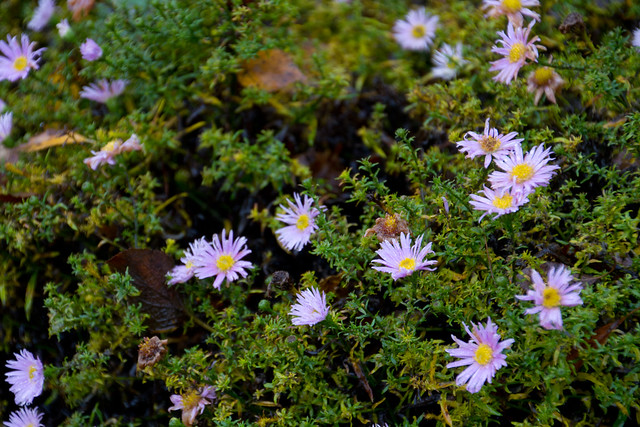
Aster novae-angliae aka aster "New England" is still looking pretty:
IMG_2816.jpg

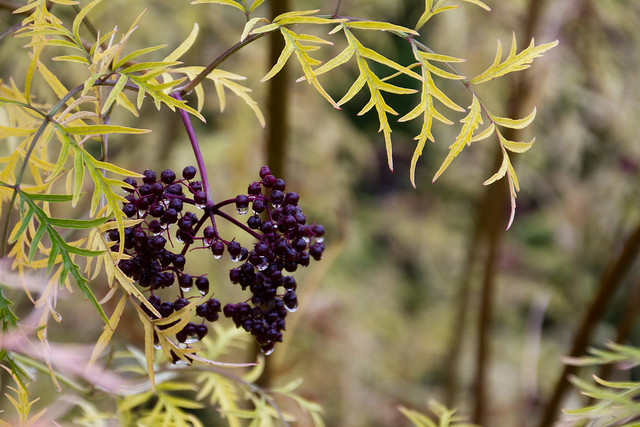
Sambucus nigra or black elder (lace black elder), variety 'Dissectum', has really been thriving in our garden. Earlier this year I used the blossoms to flavour raspberry jam and make several bottles of cordial for the forthcoming winter. Now the berries are ripe and I hope to make some black elderberry jam next weekend:
IMG_2803.jpg

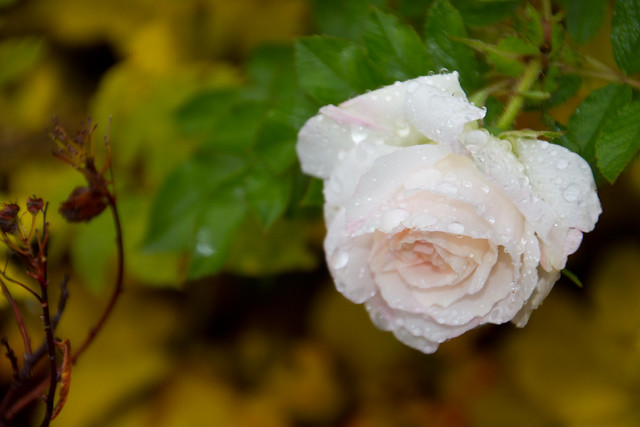
And last, but not least - our beautiful Rosa rugosa aka rugosa rose "Ritausma" has began to blossom again, for the third time this season, if I'm not mistaken:
IMG_2796.jpg

Here's the garden update from May 2012, and here's the garden update in Estonian.