Sunday, March 30, 2025

Nami-Nami Easter Brunch 2024

Easter last year was on March 31st in 2024, exactly a year ago (well, one year tomorrow). As I am planning the menu for this year's Easter on April 20th, it's a good to time to look back to the previous brunch. 

We've been hosting an Easter brunch on an Easter Sunday for over a dozen years now and it's one of the entertaining highlights for me. I love Christmas, don't get me wrong, but while Christmas is all about family, then Easter is all about friends, so they are two very different occasions. Also - while Christmas traditions seem to be more set in stone, sorry, traditions, then Easter gives much more opportunities to try something new. I think the only Easter constant is the traditional pashka dessert :) 

Here's the Facebook event cover from 2024 - we had 27 people around, including ourselves:


And here's the menu (in Estonian):


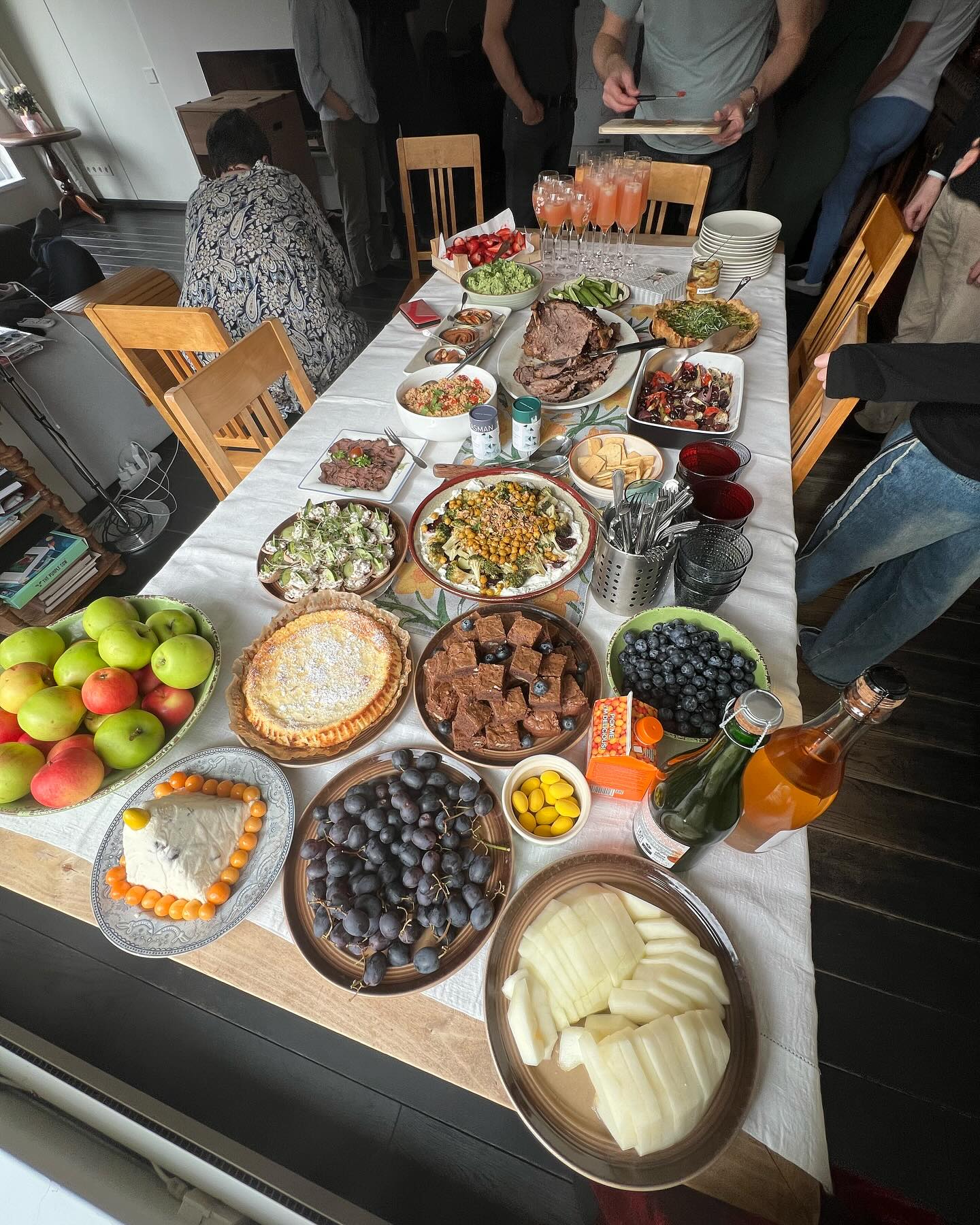
We usually set the whole table at once, so it's buffee-style or "Swedish table", as we say in Estonian ("rootsi laud"). Not the best of photos, but you get an idea. 


We started with some cold cuts and starters. We had some fish preserves from our skiing trip to Ruka, Northern Finland. Our friend Piret brought along some of her home-made and delectable cep/porcini mushroom preserves. 

I made some rye canapes with smoked tofu and cucumber (on the photo at 2 o'clock from the apples, recipe in Estonian here). A really nice vegan canapé - I used a local smoked tofu, a Fiinish fermented oat cream, some red onion, lemon and some seasoning. Tastes a bit like a smoked fish salad and looks really nice garnished with fresh cucumber and some micro greens. (See yourself here).

There was a big bowl of fresh cabbage salad with Green Goddess dressing. (Pictured on the top left corner above)I know some versions of this dressing also use anchovy, but I make a vegetarian version with either sour cream or Greek yogurt, avocado, garlic and different herbs (usually basil, parsley, cilantro/coriander). Again, you'll find the recipe in Estonian here.

Two of the dishes were inspired by Yotam Ottolenghi, as recommended in the Guardian (see here). One was vegetarian, a fennel and pepper gratin, which I served sans cheese and bread crumb topping;


(Recipe in Estonian here; in English here).

The other was a spiced Easter lamb with marmalade glaze, which was absolutely wonderful and flavoursome. We often serve lamb at our Easter brunch and this did not dissappoint. (You'll find recipe in English here and in Estonian here).


When I was still living and working in Scotland, but already dating K, we met up in Paris for a romantic getaway May 2006 - almost 19 years ago. The date went well, obviously, as I decided to move back to my homeland 5 months later - and we're still living together 19 years on, parenting our three lovely kids etc. Anyway, during that weekend in Paris, we had a delicious spinach and smoked salmon quiche at a small deli-cafe near Luxemburg garden. I later recreated that quiche and we still make it regularly - and it always brings back nice memories of that first trip to Paris. (We went back to Paris to celebrate our tenth anniversary and since then we've been there with our kids as well.)

I have shared the recipe on this blog


One of my favourite dishes at the brunch was this warm roast beetroot and broccoli salad with spicy chickpeas - a recipe from an Estonian food writer Rita Osa (recipe in Estonian here).


I had planned to make Nigella Lawson's cherry tomato couscous, but had run out of couscous, so used fine bulghur instead. It worked really well (recipe in Estonian here).


For sweets, I made pecan brownies, using my regular - and favourite brownie recipe.


We also had some fresh fruit and berries on the table, as well as cheese. My friend Liina brought along a curd cheese cake (kohupiimakook) and of course we had home-made pashka


For drinks we had Virgin Palomas (recipe in Estonian), sea buckthorn and lemonade Semusas (recipe in Estonian) and some delicious non-alcoholic drinks from Öun Drinks, a local producer of fine beverages. 

So, have you started thinking of this year's Easter menu already? What dishes are on the long list at the moment? Let me know in the comments.  

From the archives:

We've hosted an Easter brunch for friends annually since 2007 (I moved back home to Estonia and in with K. from Scotland in October 2006, so it's 'our thing'). I see I have a lot of catching up to do :)


Thursday, March 19, 2020

IKRA - Russian eggplant caviar/Russian aubergine caviar

Someone was looking for a "soft aubergine/eggplant spread with tomatoes" and I knew exactly what they were talking about. There's a dish in Russia, our Eastern neighbour, which is called IKRA or fake caviar.

I got this recipe from Russian friend Galina back in Edinburgh sometimes around 2000. Still makes a regular appearance in our kitchen.  It's lovely on a slice of toast, or as a condiment or spread on a mezze-table.


Russian aubergine spread IKRA


1 large aubergine/eggplant
1 large onion
2 garlic cloves
2 tomatoes
1 Tbsp olive oil or vegetable oil
2 Tbsp white wine vinegar or lemon juice
salt and freshly ground black pepper
fresh parsley or dill

Prick the aubergine with a fork here and there, then place into a preheated 200C/400F oven and bake for about 60 minutes, until fully cooked and slightly charred on the outside. Flip over once or twice during baking.

Remove from the oven, let it cool. Then cul half lengthwise and scoop out the flesh. Place into a cutting board and chop finely. Place into a medium-sized bowl.

Peel the onion, cut into halve and then chop finely. '

Peel the tomatoes (make a small X-cut at the bottom, place into a boiling water for about 30 minutes, drain and peel). Dice the tomatoes finely.

Mince the garlic.

Mix the aubergine, onion, tomatoes and garlic in the bowl, add the oil and vinegar/lemon juice. Season to taste with salt and pepper.

Cover the bowl with a clingfilm and put the ikra into the fridge for a few hours, so the flavours can mingle and develop.

Sprinkle with chopped fresh herbs just before serving.

Tuesday, April 16, 2019

Dyeing Easter Eggs with Onion Skins, Estonian style

This was originally posted in 2011. You'll find all my Easter recipes here

Easter eggs / Lihavõttemunad

We don't really 'do' chocolate eggs for Easter here in Estonia, but real, chicken eggs. Dyeing eggs for Easter is very popular, and using onion skins is probably the most popular method. Using onion peels gives you most beautiful dyed eggs, each one unique and special. Here are some photos of the process that I took few years ago.

Pille, onion skins

Here's what you need to do:

* Few weeks before Easter start collecting onion peels. Yellow ones are better than red onion skins, as they give a nice colour.

* You need white eggs for doing this (this gives the shops a chance to sell specially packaged white eggs for a much higher price before the festivities).

Dyeing Easter eggs

* Take an egg and neatly put few onion peels around it:

Dyeing Easter eggs

* Take a piece of mesh/muslin/kitchen foil or even an old nylon stocking and wrap it around the egg to keep the onion peels on place. I used foil here:

Dyeing Easter eggs

* Boil as usual. Cool, then unwrap and unpeel.

Here's the result - each egg is unique and gorgeous:

Easter eggs / Lihavõttemunad

Natasha describes a similar, though less complicated way of dyeing eggs with onion peels that's popular in Russia and Ukraine: Russian Easter Eggs. My 91-year old grandmother uses the same method - she says she's too old to "play around" with the onion peels too much :)

Sunday, July 08, 2018

Estonian layered curd cheese cake (kihiline kohupiimakook)

The photo is from January 2008 


We love our curd cheese cakes in Estonia - and you'll find at least five curd cheese cake recipes here on my blog. This particular one is one of the most common curd cheese cakes out there. It uses a shop-bough yellow cake mix ("Juubeli tordipulber" or "Jubileum cake mix"), making it super-quick to assemble, and many Estonian cooks would have a packed somewhere in the kitchen drawer, just in cake. I'm an avid baker, love baking from scratch, and I do, just in cake :)

I'm posting it here, as someone was looking for the English recipe and I realised I hadn't shared it yet.

It's lovely when enjoyed lukewarm, with a glass of cold milk, but it's also really nice when completely cooled and accompanied with a cup of coffee or tea or cacao.

Layered curd cheese cake

(Kihiline kohupiimakook)
Feeds 6 to 8

400 g creamy curd cheese
200 g sour cream (20% fat content is perfect)
4 eggs (L)
4 Tbsp caster sugar
1 yellow cake mix (450 g)
50 g butter
a handful of seedless raisins (optional)

Break the eggs into the mixing bowl, add sugar and whisk until thick, pale and frothy. Gently fold in the curd cheese and sour cream (and raisins, if using).

Butter a Ø 26 cm (10 inch) cake tin or springform tin.

Sprinkle 1/3 of the cake mix (still dry, in its powder form!) onto the base, then scatter small dots of butter on top.

Gently pour or spoon half of the wet mixture into the tin. Now scatter half of the remaining dry cake mix into the tin, cover with the rest of the wet mixture and then the rest of the dry cake mixture. Scatter the remaining butter on top.

Bake in the middle of a pre-heated 200 C oven for 35-40 minutes, until the cake is golden brown and cooked through.

Let it cool before serving.

Sunday, April 01, 2018

Nami-Nami Easter Brunch 2018

Happy Easter, everyone!


 Easter fell on April 1st this year. Here are some of the dishes from our Easter party:


Fresh pea quiche:


Some kind of salad:


Nigel Slater's sweet and sticky chicken wings:


Matjes herring bites with lemon and trout roe: 


I found this fun meatball and beetroot salad recipe from the Swedish ICA.se site:


Raisin buns:


Sweet rolls, dusted with icing sugar:


Of course, pashka:


From the archives:

We've hosted an Easter brunch for friends annually since 2007 (I moved back home to Estonia and in with K. from Scotland in October 2006, so it's 'our thing'). I see I have a lot of catching up to do :)


Friday, November 24, 2017

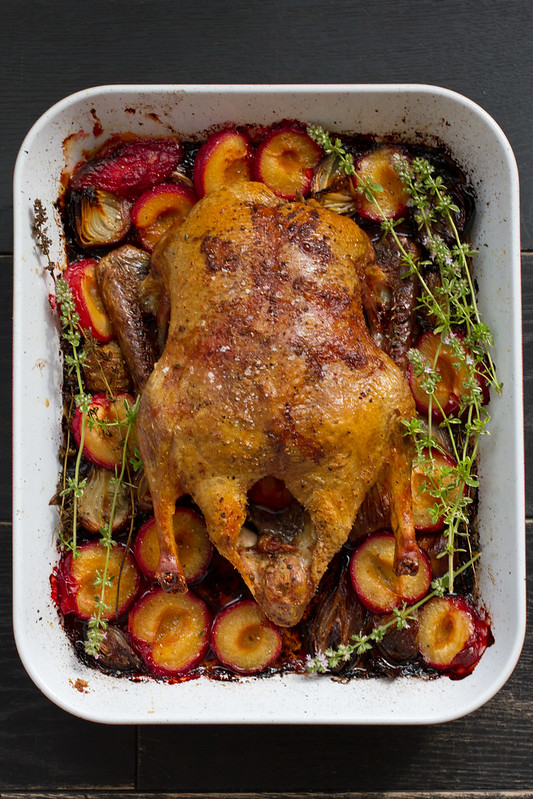
Oven-roasted duck with plums and red onions

Ahjupart ploomidega. Duck with plums.


We love duck in our house. It's just as easy to cook as your regular Sunday chicken roast, but because it's less common, somewhat pricier and much bitter, it has a more festive feel to it. We don't cook duck for weeknight dinners, but for weekend roasts and entertaining at home, it's such a worthy bird.

Here's a version I cooked a few times this autumn, trying to perfect it for a magazine photo shoot :)

Serves around 6


Oven-roasted duck with plums and red onions

(Ahjupart ploomide ja sibulaga)

1 whole duck (ca 3-3,5 kilograms; I prefer chilled to frozen)
salt and freshly ground black pepper
300-400 ml of hot water
5-6 smallish red onions
few decent garlic cloves
4 cloves  (the spice)
1 kilograms large red plums
3-4 fresh thyme sprigs

Preheat the oven to 180 °C/350 °F.

Season the duck with salt and pepper, both inside and out. Place into a good-sized oven dish (I used a lasagne dish on the photo, but a wide dutch oven would do as well). Pour  hot water into the dish, place the dish into the preheated oven and roast for an hour.

While the duck is roasting, peel the onions, halve lengthwise. Peel the garlic cloves.

Remove the duck from the oven and place the onions, garlic cloves, cloves (the spice) and thyme sprigs around the duck. Return to the oven for another hour.

Halve the plums, remove the stones. Take the duck out of the oven, and place the plum halves around the duck.

Increase the heat to 220 °C/425 °F.  Return the duck into the oven and roast for another 30 minutes or until the duck skin in deliciously golden brown and crispy. The meat thermometer should read 73-74 °C/163-165 °F when pierced into the middle of the thickest part of the duck leg.

Remove the duck from the oven and let rest of 10 minutes. Pour the pan jus through the sieve, place into a small saucepan and cook until slightly thickened. 

Then carve the rested duck into portions and serve with roasted plums, onion and garlic and the reduction.

Sunday, April 16, 2017

Nami-Nami Easter brunch 2017

 Easter was on April 16th this year and of course we had friends over for our traditional Easter brunch on that day. Here's what we served :)

There was duck with pomegranate seeds and mint - a recipe from Nigella Lawson's book "Nigella Express" (2007; recipe in Estonian here). 


There was carrot and sunflower seed salad - a recipe from now-defunct blog "Our Four Forks", who had adapted it from "The Rose Bakery" cookbook (recipe in Estonian here):


I made a salad with sweet potato and feta cheese (recipe in Estonian here):


For our main dish this year, I baked a leg of lamb with rosemary and juniper berries, inspired by this BBC recipe:


I baked a large cottage cheese and Väasterbottensost cheese tart:


Our friend Liisa contributed this cheese quiche:


One of my staple crostini recipes for years now - and for years to come - is this little thing from Tesco UK - Brie and grape crostini. Goes beautifully with wine, by the way, and can bridge the savoury and sweet courses:


Of course, there was pashka - this time made by our friend Kristiina: 


Hope you all had a lovely Easter with your friends and family.

From the archives:

We've hosted an Easter brunch for friends annually since 2007 (I moved back home to Estonia and in with K. from Scotland in October 2006, so it's 'our thing'). I see I have a lot of catching up to do :)


Thursday, March 30, 2017

TOP 10 highlights from my trip to Australia in January 2017


I'm a slow girl, a typical northener, you see. Back in January I had the opportunity to visit Australia, courtesy of the Australian winemaker, Jacob's Creek, and it's probably about time I shared some of the highlights from that whirlwind tour.

First of all, I almost didn't go, meaning I almost turned down the offer to visit. Leaving our three small kids in charge of my busy partner in the middle of the school term seemed a bit daunting, but he was more than happy to accept the challenge and let me go on a business trip for a change. Our girls were 4 and 7 in January, our boy turned 6 on the day of the departure - and there was school for the oldest and kindergarten for the two younger ones, violin practices, ballet classes, basketball and football/soccer sessions and so on and so on to be followed. On hindsight, he did a great job, my dear K, so next time such an exciting opportunity arises, I'll accept it without hesitation :)

Meeting new friends


Jacob's Creek invited two Estonians to participate at their first international Our Table event. I was travelling with a well-known Estonian wine expert, Kalev Vapper, whom I knew only from the TV screen. He used to host several TV shows few years ago, and is now the wine buyer for one of the big supermarket chains here in Estonia.

A trip to Down Under is not an easy one, when travelling from such a small country far north. We met at the Tallinn Airport late on a Sunday evening and hopped over to Helsinki in Finland - that's less than 30 minutes up in the air. We then had a few hours to chat in Helsinki, then spent the next 11 hours on a Finnair plane from Helsinki to Singapore. Another few hours of waiting, then 8 more hours on a rather, well, cramped Jetstar carrier to Melbourne. Factor in the different time zones - and here we are, all exhausted and bleary-eyed after arriving in Melbourne on Tuesday morning:


Catching up with old friends #1

While my travel companion headed straight to the hotel, I had a date at the airport. Back in 1992-1993 I spent a year in Denmark as an exchange student, part of an AYUSA programme. It was at the beginning of the programme that I met Anthony, a guy from Melbourne. He actually spent his exchange year in Sweden, but the orientation programme for all the Estonians, Americans and Australians was in Denmark. We've kept touch over the years, and Anthony has actually been to Estonia twice.

I was of course looking forward to catching up with Anthony while in Melbourne, but as it happened, he was due to go on a family holiday in Tanzania on exactly the same dates. We did manage to meet a at the airport, however, and I'm extremely happy about that.


room picnic with Heidi Gruyere from Tasmania, potato crackerthins (Valley Produce Co.), mushroom and verjuice pate (@maggie_beer) also a bottle of @puntrdwines 2015 Pinot Noir from Yarra Valley and some mineral water :) #hotelroompicnic

Melbourne welcomed me with a soaring 33 Celsius - little did I know that this was only the beginning!

Lovely, lovely food #1 (Sezar, Melbourne)


After waving goodbye to Anthony, his lovely wife Maryanne and their two kids, I headed to the hotel. Although the initial plan was to unpack, refresh and get out to explore the city, I  succumbed to sleep and only woke up before the first meal. Our Table group (rather big, 40+) was bussed toGlen Waverly, a suburb of Melbourne, for a welcome dinner and drinks at a trendy Sezar, a restaurant specialising on Modern Armenian food.  I love Armenian food - although there's just lone recipe on this blog -  with its heavy use of lamb, aubergines/eggplants and soft lavosh flatbreads, and I adored the food at Sezar. Served family-style, subtly spiced, well seasoned, cooked to perfection - That lamb! That pumpkin! The place was crowned, the buzz was overwhelming and I left the place very satiated indeed.


 Here's a list of my three favourite dishes from Sezar:

Roasted Pumpkin, Red Pepper Paste, Crispy Bulghur, Sheep's Milk Cheese
*
Kataifi Wrapped Lamb Neck and Sesame Mayo
*
Slow Cooked Lamb Shoulder, served with Sour Cherry Sauce, Garlic Yogurt and Tahini Yogurt
*
Twice-Cooked Chicken Wings with Pomegranate Glaze, Pistachio and Coriander

(I'm also a lucky recipient of recipes of all those dishes - thank you, Kora & the Sezar team!)


This being a wine tour, we drank lots of good wine. Our wine ambassador for the night was Stockholm-based Australian musician/oenophile Richard Doumani (see @clarinet2claret), and he had paired the food at Sezar with Reserve Chardonnay Pinot Noir (Vintage 2016), Adelaide Hills Reserve Chardonnay (Vintage 2015), Limited Release Mataro Rosé (2016), Adelaide Hills Reserve Pinot Noir (Vintage 2015), Double Barrel Shiraz Barossa 2015 (which ended up being one of the favourites during the trip). Lots of good Australian wine, lots of it :)


Visit to Steingarten Wineyard, where it all began


Pille Petersoo ja Kalev Vapper @ Steingarten vineyards, Barossa valley, VIC, Australia

To be continued...

Monday, December 19, 2016

Traditional Christmas roast (oven-baked pork shoulder with honey, mustard and rosemary)

From the recipe archives (originally posted in December 2012. Still my favourite Christmas roast). My traditional Christmas roast / Traditsiooniline jõulupraad
Photo by Juta Kübarsepp for the December issue of Kodu ja Aed magazine, 2012 

What's your traditional Christmas roast (assuming you're eating meat)? Turkey? Goose? Duck?

In Estonia it's definitely pork, though roast poultry has become more popular during recent years. I've been flirting with roast goose and actually served duck leg confit on Christmas Eve this year. It was delicious.

However, for years I've been serving pork roast - a pork shoulder (kaelakarbonaad in Estonian) in a mustard-honey-garlic-rosemary marinade, to be more precise. I love that it's a pretty fool-proof recipe, simple to make, with lots of flavour. And - as an added bonus - any leftovers are excellent on top of rye bread on the days after the party, or as part of a salad. So if you're not making it for a big family feast, you can still make the same amount and simply make several meals out of it.

So here you go. Nami-Nami's traditional Christmas roast. On the photo above, it's accompanied by black pudding ('blood sausages') - another traditional Christmas dish.

Wish you all a lovely festive season!!!

Traditional Christmas roast
(Ahjupraad karbonaadist)
Serves about 10

2 kg boneless pork shoulder (Boston butt)
3-4 Tbsp honey
3-4 Tbsp Dijon mustard or Estonian Põltsamaa mustard
2-3 fresh rosemary sprigs (leaves only)
3 large garlic cloves
2 tsp sea salt

Finely chop garlic cloves and rosemary leaves, then mix with honey and mustard until combined.
Season the meat generously with salt, then spread the mustard-honey mixture all over the pork shoulder and massage into the meat.
Place the pork shoulder into a large ovenproof dish, cover with foil and place into a fridge or cold larder for 1-2 days.
Bring back to the room temperature about an hour before you plan to cook the meat.
If you have a meat thermometer, then stick it into the thickest part of the meat (you can do this through the kitchen foil).
Roast the meat in a pre-heated 160 C / 320 F oven for about 2,5 hours or until the meat thermometer has reached 82-85 C/ 180-185 F.
If you plan to serve gravy with your meat, then pour a cup of hot water into the baking tray half-way through the cooking. 
When the meat is cooked, remove the foil, season the meat once more lightly with salt and then bake for another 10-15 minutes at about 200-220 C/ 390-425 F, just to brown the meat  a little.

Remove the roast pork from the oven, cover again with a kitchen foil and leave to rest for 20-30 minutes before carving into thin slices.

This recipe was also included in my latest cookbook, Jõulud kodus ("Christmas at Home"), published in Estonian in November 2011. 
I also included the recipe in the December 2012 issue of Kodu & Aed magazine. 

Wednesday, November 23, 2016

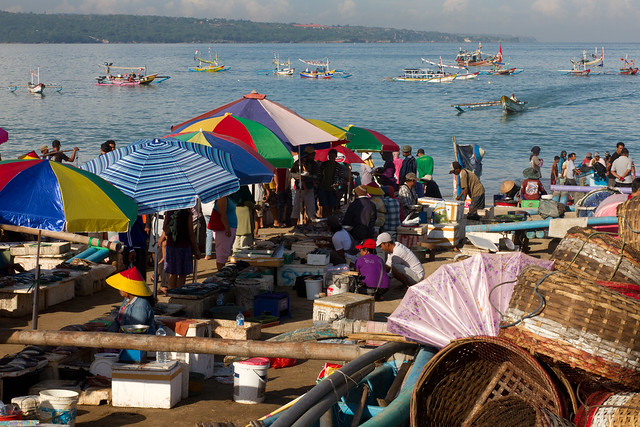
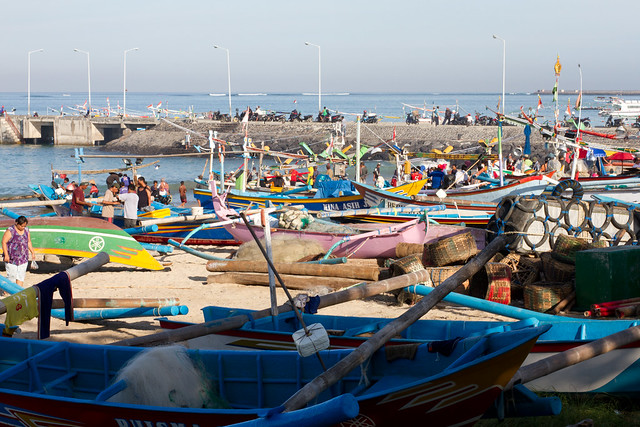
Exploring the Fish Market in Jimbaran, Bali

Our little family of five spent three weeks exploring the beautiful Island of the Gods aka Bali earlier this year. We began our family vacation in Jimbaran, then stayed in the quaint artists' village of Penestanan just outside Ubud, then explored Northern Bali from Dencarik on Lovina beach and ended our holiday with a short stay in Canggu on the West coast again. Although the kids - then 3, 5 and 7 - were the one setting the pace and nature of our vacation, we did cram in quite a few food-related activities as well.

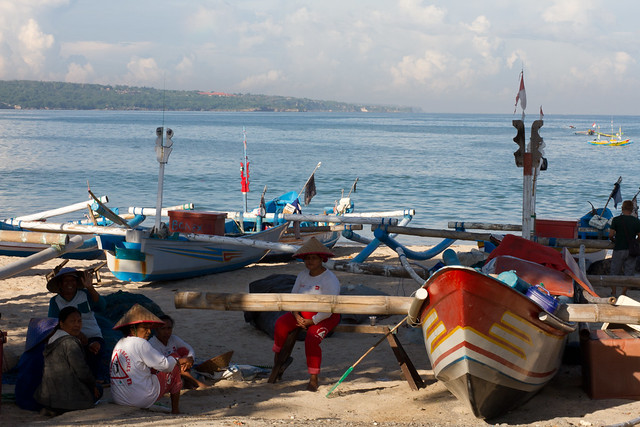
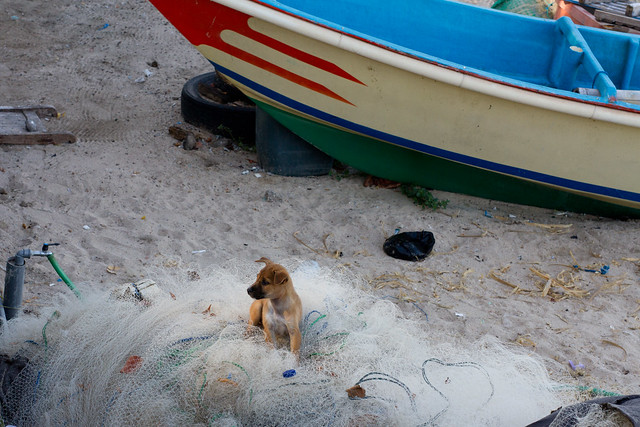
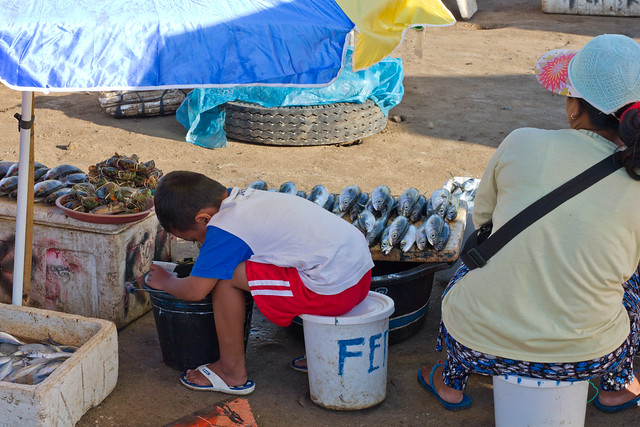
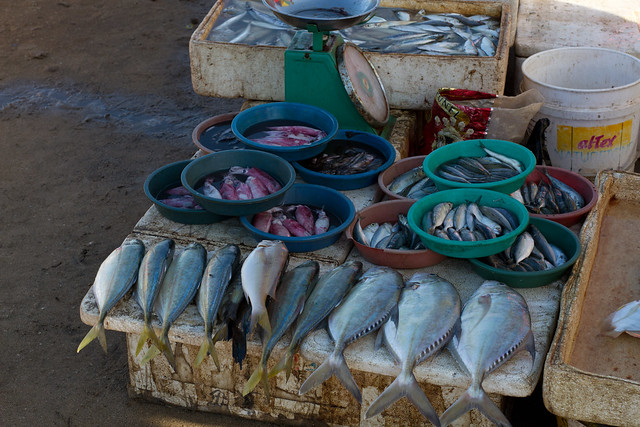
Visiting the famous fish market in Jimbaran was one of them.

We relied on local taxis to get around on Bali, as the local traffic was somewhat intimidating to a Northern European like me. So I'm unable to give you exact instructions re: how to get to the market - just ask your cab driver. But do get there early - the market opens around dawn at 6 am - for the best selection of fish and liveliest action, even if you are there just for window-shopping.

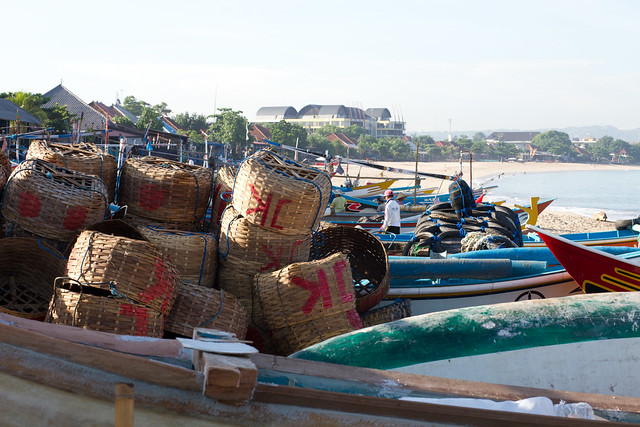
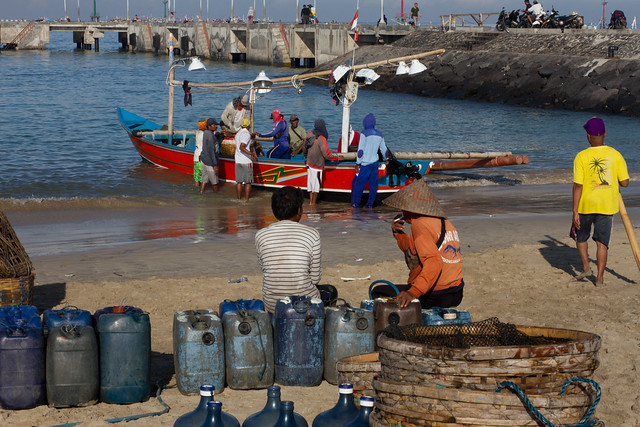
Traditional fish baskets drying in the sun:
Jimbaran Fish Market, Bali

Jimbaran Fish Market, Bali

Jimbaran Fish Market, Bali

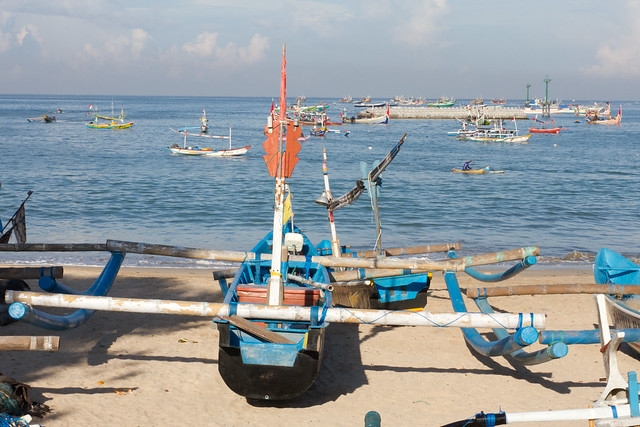
Balinese jukung, below, is a small wooden outrigger canoe, and they are always very colourful and highly decorated. These are traditional fishing boats on the island, though modern uses include transporting scuba-divers and whale-spotters as well :)

Jimbaran Fish Market, Bali

Jimbaran Fish Market, Bali

Jimbaran Fish Market, Bali

Jimbaran Fish Market, Bali

Jimbaran Fish Market, Bali

One of the many fish restaurants at the market:


Jimbaran Fish Market, Bali

Jimbaran Fish Market, Bali

Jimbaran Fish Market, Bali

Jimbaran Fish Market, Bali

Jimbaran Fish Market, Bali

Jimbaran Fish Market, Bali

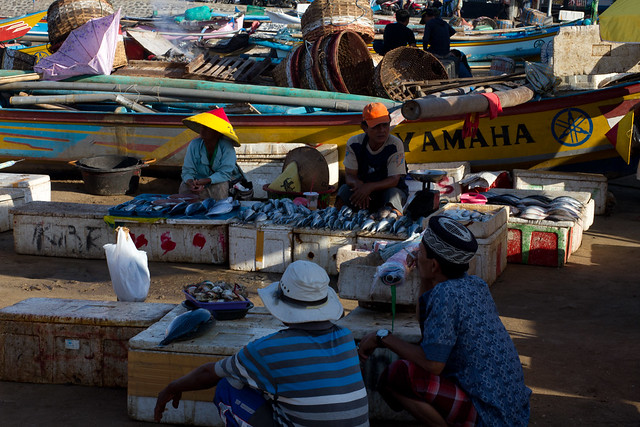
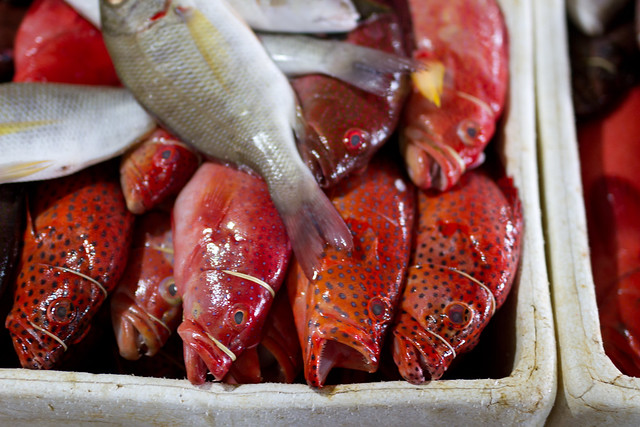
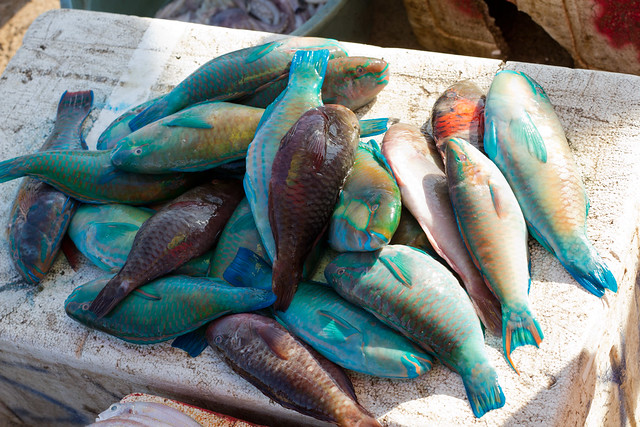
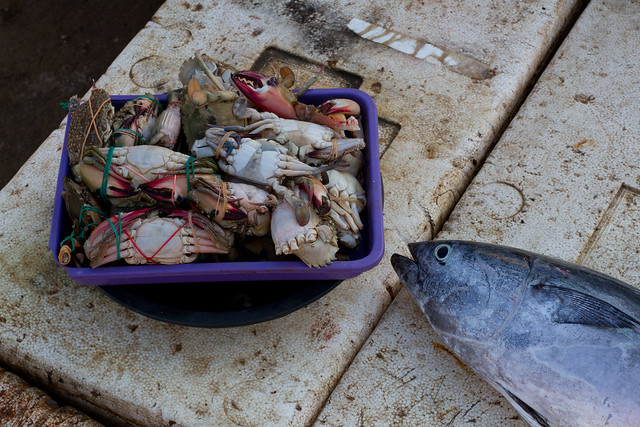
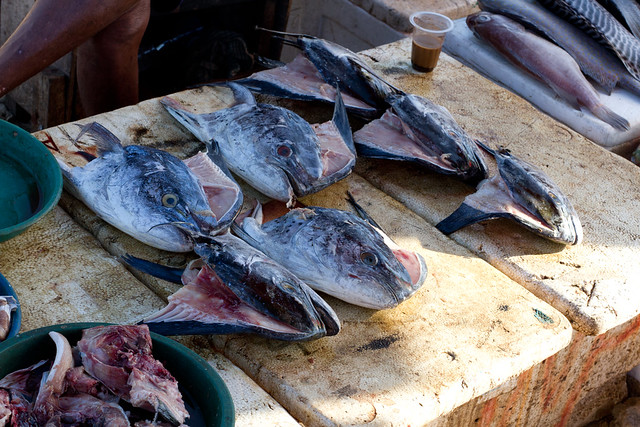
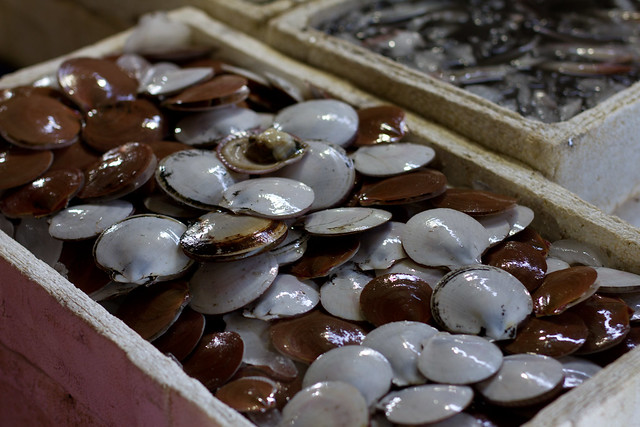
While we did manage to identify all the fruit we ate while on the island and put an English and an Estonian name to all of them (post coming soon), we quickly gave up any hope of identifying the seafood. Just look at the selection - the colours are like I've only seen in a goldfish tank, not at your local fishmonger.

Jimbaran Fish Market, Bali

Jimbaran Fish Market, Bali

Jimbaran Fish Market, Bali

Jimbaran Fish Market, Bali

Jimbaran Fish Market, Bali

Jimbaran Fish Market, Bali

Jimbaran Fish Market, Bali

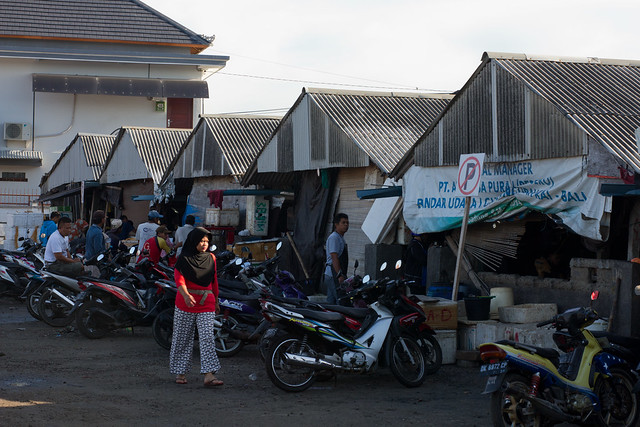
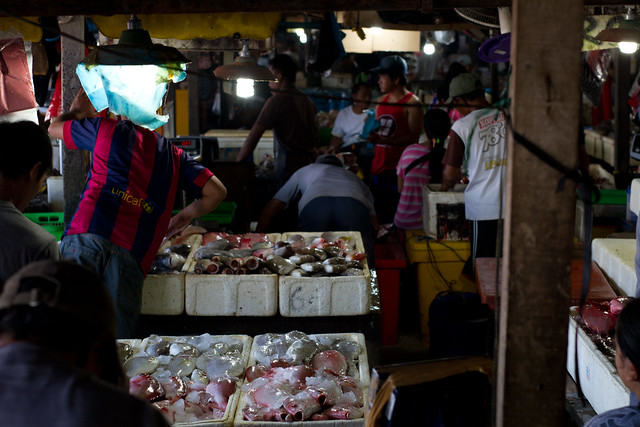
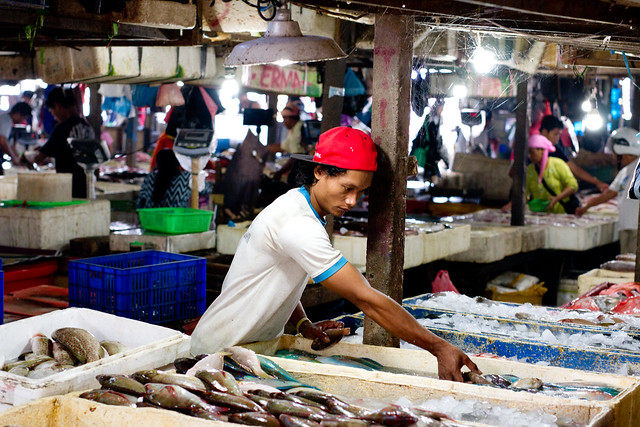
Although a lot of the trading takes place outside, just next to the incoming fishing boats, there is a large covered area, which is packed with vendors. There's no room to swing a cat in there - or "Kilud karbis," we'd say in Estonian - but there were plenty of transactions taking place. Unfortunately it was way too dark to take proper photos, and the kids felt somewhat uneasy in there - the noise, the smells, the sheer amount of funky-coloured fish and a number of people can seem intimidating when you're just three or five, I imagine :)

Jimbaran Fish Market, Bali

Jimbaran Fish Market, Bali

Have you been to Bali? Did you have a chance to enjoy some local seafood?