Showing posts with label Recipes: Cakes/Muffins/Cookies. Show all posts

Monday, March 15, 2010

Scottish Lemon Cake

Scottish lemon sponge / Šoti sidrunikeeks

I've been busy testing recipes for two Georgian cookery classes taking place this week, hence the silence on the blog. I cannot yet blog about any of the Georgian dishes, so instead you'll get a recipe for this simple lemon cake. It's based on a recipe from a Scottish food writer, Claire MacDonald. It's a nice, lemony, moist and crumbly small cake that's perfect with a cup of tea on a cold afternoon. We still have LOTS of snow over here, so cakes like this are totally justified and even more, needed :)

You'll get a small cake that feeds five to six.

Scottish Lemon Sponge Cake
(Mahlane šoti sidrunikeeks)

120 g unsalted butter, softened
150 g caster sugar
150 g plain flour
1 tsp baking powder
a pinch of salt
2 large eggs, lightly whisked
5 Tbsp milk (75 ml)
grated zest of 1 lemon

Lemon syrup:
1.5-2 lemons, juiced
6 Tbsp confectioners sugar/icing sugar

Cream the butter and sugar until pale and creamy.
Sift flower, baking powder and salt into another bowl, mix with grated lemon zest.
Add the dry ingredients, milk and eggs to the butter mixture and stir thoroughly until combined.
Spoon the batter into a buttered loaf tin or bundt pan.
Bake in the middle of a pre-heated 180 C oven for about 40 minutes.
Remove from the oven and let cool for about 5 minutes. Then carefully lift the cake out of the tin and place on a large piece of foil.
Mix lemon juice with icing sugar and drizzle over the warm cake. Wrap into the foil and let cool completely before serving.

Tuesday, February 23, 2010

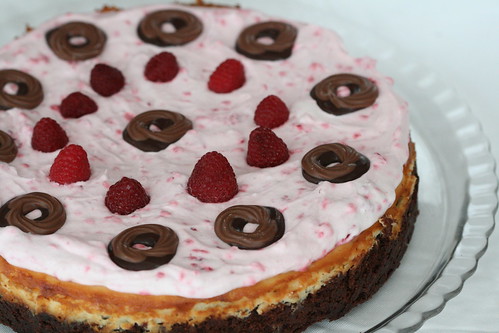
Raspberry Cheesecake Brownie a la The Hummingbird Bakery

Hummingbird's brownie-cheesecake-raspberry torta / Hummingbirdi šokolaadi-toorjuustu-vaarikatort

The Hummingbird Bakery is the bakery in London at the moment, specializing in American-style cakes and sweets. It's a brainchild of Tarek Malouf that opened in 2004, and the book - The Hummingbird Bakery Cookbook - featuring their most popular cakes and pastries was published in 2009. It's a gorgeous book, full of inviting and appetizing recipes, though the only one I've made so far is this Raspberry Cheesecake Brownie. And I've made it three times during the last month or so - for K's mum's birthday (twice) and for our daughter's first birthday party as well. I've followed the recipe more or less - replacing the icing sugar with caster sugar, topping up the amount of cheesecake to suit our local 150 g packs of cream cheese, and baking it in a round cake tin instead. I might reduce the sugar content in the brownie layer next time, as the cake is rather sweet (though the slight acidity of the raspberry layer balances it all out nicely).

The interesting thing about this cake is that the cheesecake and brownie layers are cooked at once - and this can be made a day or even two days before serving. A great cake for making in advance, as all you have to do before serving is topping it with raspberry whipped cream.

Raspberry Cheesecake Brownie
(Vaarikatega šokolaadi-toorjuustukook)

Serves 12

Hummingbird's brownie-cheesecake-raspberry torta / Hummingbirdi šokolaadi-toorjuustu-vaarikatort

Brownie layer:
200 g dark chocolate, roughly chopped
200 g unsalted butter, softened
250 g caster sugar
3 large eggs
110 g plain flour (200 ml)

Cheesecake layer:
450 g cream cheese, softened
150 g caster sugar
1 tsp vanilla extract
2 large eggs

Raspberry topping:
200 ml whipping cream
100 g caster sugar
200 g raspberries

Butter a 26 cm springform tin, line the base with a sheet of parchment paper.

For the brownie layer:
Melt the chocolate in a heatproof bowl placed over a pan of simmering water.
Cream the butter and sugar, then whisk in the eggs one at a time. Sift and fold in the flour and finally fold in the slightly cooled melted chocolate.
Pour the chocolate mixture into the cake tin.

For the cheesecake layer:
cream the softened cream cheese with sugar and vanilla extract until combined, then whisk in the eggs one at a time.
Pour the cheesecake mixture carefully over the uncooked brownie mixture.

Bake in the middle of a pre-heated 170 C / 325 F oven for 30-40 minutes, until the cheesecake is firm to the touch and light golden around the edges. (The cheesecake layer will firm furthen when cooling).

Remove the cake from the oven and let cool for at least 4 hours, preferably overnight.

Before serving whisk the cream and sugar until soft peaks form, then fold in the fresh or frozen (defrost and drain first!) raspberries. Spread the raspberry cream over the cheesecake and decorate with chocolate and extra raspberries.

Tuesday, February 16, 2010

Delicious Lenten Buns with Marzipan and Raspberries (Vastlakuklid)

Lenten buns with marzipan & raspberries / Vastlakuklid vaarikate ning martsipaniga

It's Shrove Tuesday here in Estonia today, which means that people eat copious amounts of vastlakuklid aka Lenten buns aka semlor today. For the past decade I've been baking my own Lenten buns using this excellent recipe of mine. However, this year I decided to be a bit more adventurous, so I flirted with chocolate Lenten buns and marzipan-raspberry buns. Both were excellent and worth sharing with you. I start with the pink ones (after all, the pink-and-red-filled Valentine's Day has just passed).

The recipe is very slightly adapted from the Finnish Kotiliesi. Note that these can be on your table within two hours from starting. But when I mixed the dough on Sunday morning I realised that I didn't actually have the time to bake and fill the buns. So instead of quick-rising the dough in a warm place, as usual, I transferred the bowl to a very cool garage, where it had about 24 hours time to prove and rise slowly. It did wonders to the dough, I must admit - the flavour was even better than usual, so I'll be slow-proving my yeast doughs in the future as well.

Decadent Lenten Buns, filled with marzipan and raspberries
(
Vaarikased vastlakuklid)
Makes about 16

Lenten buns with marzipan & raspberries / Vastlakuklid vaarikate ning martsipaniga

Yeast dough:
300 ml milk
25 g fresh yeast or a sachet of dried instant yeast
85 g sugar (100 ml)
a pinch of salt
1 tsp ground cardamom
half of a beaten egg
450 g all-purpose/plain flour (about 800 ml)
75 g unsalted butter, softened

For brushing:
half of a beaten egg

Filling:
150 g marzipan
2-3 Tbsp milk
200-250 ml whipping or double cream
2 tsp vanilla sugar (or ordinary caster sugar and 1 tsp vanilla extract)
200 g raspberries (frozen are fine)

If using instant yeast, then mix flour, sugar, yeast, cardamom and salt in a mixing bowl. Add the lukewarm milk, whisked egg and mix until you've got a soft dough. At the end add the softened butter and knead into the dough. Cover the bowl with a clingfilm and place into a warm and draft-free place for about an hour. The dough should rise nicely and about double in size during this time.
Dust your working board with some flour and roll the dough into a long "sausage". Cut that into 15-16 chunks and form these into a nicely-shaped round balls (see my previous post for one way of doing this).
Place the dough balls onto a large baking sheet that has been covered with parchment paper. Cover the buns with a kitchen towel and let rise another 15-20 minutes.
Brush with the rest of the egg, then bake in the middle of a pre-heated 225 C oven for about 15 minutes, until the buns are lovely golden brown.
Remove from the oven and transfer to a metal rack to cool.
When cool, then cut off a top from all the buns. Using a teaspoon, scoop a small hole into the middle of each bun.
Put the scooped-out bun pieces into the food processor alongside the marzipan and some milk. Process until smooth, then spoon the marzipan filling back into the buns. Like this:

Lenten buns with marzipan & raspberries / Vastlakuklid vaarikate ning martsipaniga

Whisk the cream and sugar until thick and fluffy. Gently stir in the raspberries (use a slotted spoon to add the raspberries - you don't want the "raspberry juice" you get when defrosting the berries). Spoon or pipe the cream onto the buns, then replace the "lids".
Dust with icing sugar and serve.

Friday, January 22, 2010

Time for cake: Lingonberry Cake with Crispy Tosca topping

LIngonberry Tosca cake / Toskakattega pohlakook

What's a weekend without a cake? I know that fresh lingonberries aren't available at the moment - the season only lasts from July till September, but luckily lingonberries freeze beautifully. I suggest you take them out from your fridge (or if you failed picking your own last summer, then buy a punnet from the nearest shop) and bake this Tosca cake. Tosca cake, ever so popular in Sweden and elsewhere, is a rich pound cake with a crispy almond topping. Adding a generous layer of tart lingonberries between the cake and the topping makes this popular cake even nicer, and there are some spices in the cake batter to make it even more heartwarming during the cold winter season.

Lingonberry Cake with Crispy Tosca Topping
(Toskakattega pohlakook)
15 to 20 pieces

Lingonberry Tosca cake / Toskakook pohladega

125 g butter, melted
3 large eggs
170 g caster sugar (200 ml)
220 g plain flour (400 ml)
1.5 tsp baking powder
1 tsp ground cinnamon
0.25 tsp ground cloves
100 ml milk
200 g fresh or frozen lingonberries (400 ml)

Tosca-topping:
75 g butter
125 g caster sugar (150 ml)
2 Tbsp plain flour
50 ml milk (4 Tbsp)
100 g flaked almonds

Make the sponge cake first.
Whisk eggs and sugar until pale and thick. Combine flour, baking powder, cinnamon and cloves, then fold into the egg mixture alongside melted butter and milk.
Line a smaller baking sheet (30x40 cm) with parchment paper, then pour the batter onto the tray. Scatter the lingonberries on top, then bake in a pre-heated 175 C oven for about 25 minutes.
To make the crispy Tosca topping, measure all ingredients into a small saucepan. Heat on a low heat, stirring regularly, until butter has melted and everything is combined.
Spoon the Tosca mixture onto a partially baked cake. Return immediately to the oven and bake in a slightly hotter oven ( 200 C) for another 15 minutes, until the Tosca topping is nice and golden brown.
Cool, then cut into small squares.

Monday, January 18, 2010

A Brilliant Lemon Cheesecake (and a Lemon Mousse)


I must confess - it's been a while since I made this cake. But it's been suddenly popping up on various Estonian foodblogs recently, so I thought I'll 'reclaim' it :D The original recipe was in BBC Good Food, but I've tweaked it a little.

In general, there are cheesecakes you bake and cheesecakes you set with gelatine. This one is neither - but yet it sets beautifully overnight - as long as you use good-quality cream cheese and a good-quality condensed milk (sweetened, of course). The consistency is beautifully creamy, almost mousse-like.

If you don't feel like making a cake, make the topping anyway. It makes a delicious lemon mousse of its own right (see the photo below).

Lemon Mousse Cheesecake
(Hõrk sidrunikreemitort)
Serves 8


Base:
100 g Divestive biscuits (about 10)
50 g butter, melted
2 Tbsp sugar (optional)

Lemon Mousse Topping:
200 g cream cheese
400 g sweetened condensed milk
200 ml whipping cream, whipped
juice of 2-3 lemons (+ finely grated lemon zest, if you want a more pronounced lemon flavour)

Place the cookies into the bowl of your food processor and process until you've got fine crumbs. Stir in melted butter and sugar, if using. Press onto the base of Ø 24 cm springform tin.
Cream the cheese with a wooden spoon until soft, then stir in the condensed milk and lemon juice (+ zest, if using). Finally fold in the whipped cream.
Pour the filling over the Digestive base, smooth the top.
Place into the fridge to set for at least 12 hours (24 hours, if possible).
To serve, transfer the cake gently onto a serving plate and cut into slices.

Friday, January 08, 2010

Gingerbread Ricotta Cheesecake


This recipe is targeted more to my Northern European readers, who just might have a small disc of gingerbread dough hiding in the back of the fridge. (You know, for those who were just too busy during Christmas to "bake through" all the home-made gingerbread dough they made in early December). This is a great way to use up any leftovers. I've made it with both proper curd cheese and the ricotta that's becoming widely available here in Estonia, and actually prefer using ricotta here. Instead of individual spices, feel free to use a mixed spice, apple pie spice, pumpkin pie spice or gingerbread spice of your choice.

The cake is excellent with some lingonberry jam.

Gingerbread Ricotta Cheesecake
(Kohupiimakook piparkoogipõhjal)
Serves eight to ten


about 350 g gingebread dough
500 g ricotta cheese
4 large eggs
85 g caster sugar (100 ml)
0.5 tsp ground cinnamon
0.25 tsp ground cloves
a sprinkling of cardamom

Roll out the gingerbread dough into a circle about 28 cm across, then use this to line a 24 cm buttered and lined springform dish.
Whisk eggs and sugar until pale and frothy, fold in the ricotta and the spices. Spoon the filling over the gingerbread base.
Bake in a pre-heated 200 C oven for about 40-45 minutes, until the filling looks more or less set (yet still slightly wobbly - it'll cool and set once out of the oven).
Cool completely before cutting into slices and serving with lingonberry jam.

Thursday, December 17, 2009

Nice Christmas Fruitcake


I say 'nice' in the title, as I cannot remember eating a Christmas fruitcake that I really liked when I lived in the UK (and I tried quite a few during my seven years there), but I LOVED this one. I know you're supposed to bake your fruitcake weeks in advance, and let it age and develop in a cool storage before eating it. I baked the one on the photo on Monday, and am dangerously close to having none left by tomorrow evening. That's why bought another several bags of dried fruit today, mixed them with booze. Will be baking another one of this tomorrow, just to make sure I have some to take along to the first of the many Christmas parties this weekend...

The type of dried fruit you use is entirely up to you. I used dried sweetened cherries, seedless raisins, dried apricots and dried pineapple pieces on Monday. At the moment I've got all these plus dried papaya pieces macerating away. As for the booze, anything rum-based will work best, I think. I've used rum-based Blossa glögg, Havana Club rum or even Vana Tallinn rum-based liqueur (those who've been to Estonia know what I'm talking about :)) If you don't like rum, use brandy instead.

English Christmas Fruitcake
Makes one large loaf or two smaller ones


250 g butter, at room temperature
200 g caster sugar (225 ml)
4 large eggs
275 g plain flour (500 ml/2 cups)
2 tsp baking powder
150 ml brandy or rum
600 g of dried fruit of your choice (about 1 litre/4 cups)

Chop the dried fruit into smaller pieces, if necessary, and pour over the brandy or rum. Leave to macerate and soften for at least few hours, preferably overnight.
Cream soft butter and sugar until pale. Whisk in the eggs, one at the time, incorporating each egg before adding the next one.
Mix flour and baking powder, then stir into the egg and butter mixture.
Fold in the dried fruit (plus any booze that's left in the bowl).
Spoon the batter into a buttered large (2-quart) baking tin.
Bake in a preheated 175 C oven for about one hour, until a toothpick inserted in the middle comes out clean.

Cool, then wrap into a parchment paper and foil and leave to age for a few weeks (or a day, if you're like me:))

Wednesday, December 16, 2009

Holiday baking: Rugelach with prune filling


It's been a over a year since I made some delicious rugelach-cookies with hazelnut filling. After seeing a very talented young American pastry chef, Heidi Park (now based here in Tallinn), sharing her recipe for rugelach-cookies in a local food magazine, I felt the urge to make these again. I used my old recipe, and adapted the filling from Martha Stewart's recipe for Prune Rugelach.

Very pleased with the final result, so sharing it with my dear readers :)

Rugelach with Prune Filling
(Rugelach-küpsised ploomitäidisega)
Makes 32 small pastries

For the pastry:
200 g butter, softened
200 g full-fat Philadelphia cream cheese, softened
2 tsp caster sugar
200 g all-purpose/plain flour, sifted
a pinch of salt

For the filling:
200 g dried plums/prunes
100 ml brandy or cognac

Breadcrumb mixture:
4 Tbsp breadcrumbs
4 Tbsp caster sugar
0.5 tsp cinnamon

For glazing:
1 egg white, beaten with a little water

On the night before:
Pour brandy over the prunes and let soak for up to 24 hours.

Cream the warm butter and cream cheese until well blender. Beat in the sugar, then stir in the flour and salt. Mix until the dough begins to hold together, press into a ball, wrap in clingfilm and chill overnight in the fridge.

On the day of baking:
Combine the breadcrumbs, sugar and cinnamon.

Puree the prunes with the brandy until smooth.

Divide the dough ball into two and return the other half into the fridge. Roll out the pastry on a slightly floured surface into a thin circle about 25 cm /10 inches in diametre. Using a sharp knife or a pizza-wheel, cut into 16 equal wedges.

Brush the surface of the wedges with half of the prune puree, then sprinkle half of the breadcrumb mixture on top, spreading evenly as you go. Using your hand or a rolling pin, press the filling tightly down into the dough (there seems to be a lot of filling, but it'll make the pastries only nicer!).

Carefully roll up each wedge tightly, starting from the wider, outside end. You'll end up with 16 mini croissants. Brush with egg white wash.

Cover a baking tray with parchment paper and bake at the middle of a preheated 180 C/350 F oven for 20-30 minutes, until the rugelach are golden brown.

Leave to cool slightly, then transfer to a wire rack.

Repeat with the second half of the pastry - even straight away or on the following day.

Tuesday, December 08, 2009

Almond and Clementine Cake, Claudia Roden style


Christmas and clementines go together. At this time of the year, the shops are flooded with tiny clementines from Morocco and slightly larger specimens from Spain, and I keep buying wooden trays of the orange fruit. Mostly we simply eat them au naturel, but I've been experimenting with few dessert and cake recipes as well.

There's a lovely recipe for flourless almond and orange cake in Claudia Roden's excellent book on Jewish food that I had been wanting to make for ages. The idea of boiling whole oranges and using the whole lot - zest, pith, fruit - in a cake sounded intriguing. Nigella Lawson has adapted the recipe and uses clementines, but I followed Claudia's original instructions here. However, I used clementines instead of oranges, and an excellent Swedish clementine-flavoured glögg Blossa instead of orange flower water. We loved the resulting cake a lot - slightly bitter (from the zest and pith), very moist and just rather unusual. We'd definitely make this again - and perhaps try the original version with oranges as well. (Mmmm - perhaps even those gorgeous red 'blood oranges' when they appear in the shops in a few months?).

You want clementines with thin skin here and as little white pith as possible. That's why I chose the thin-skinned Maroc-clementines here. Oh, and it'll be a much easier job if the clementines have no or just a few seeds.

Almond and Clementine Cake
(Mandli-mandariinikook)
Serves 10

400 g clementines (about 8-9 small fruit, preferably organic and unwaxed)
6 large eggs
250 g sugar
250 g blanched ground almonds
1 tsp baking powder
2 Tbsp orange flower oil or citrus liqueur

Wash the clementines carefully in hot water. Place in a saucepan and cover with cold water. Bring into a boil and simmer on a low heat for about 60-90 minutes, until the clementines are soft.
Drain the clementines and cool a little. Cut into halves, remove any seeds. Place the clementines into a food processor and blend into a coarse purée.
Whisk the eggs and sugar into a thick and pale foam.
Blend ground almonds with baking powder, then fold into the egg foam.
Stir the orange flower water or Blossa glögg into the clementine mixture, then gently fold into the rest of the ingredients.
Pour the batter into a buttered and lined 26 cm springform tin.
Bake in a preheated 180 C oven for about 45 minutes, until the cake is golden brown on top. Test for doneness with a wooden toothpick - it should be clean after inserting into the middle of the cake.
Cool before transfering the cake onto a serving tray.

Friday, December 04, 2009

Caraway teacake


Adding caraway seeds to your teacake does not seem like an obvious idea, but it works. Caraway seeds are much beloved in the Northern and Eastern Europe. In Estonia we add them liberally to rye bread, to oven-baked potato wedges, into sauerkraut soups and side dishes. We usually do not add them to desserts, but there's something about the spicy earthiness of caraway seeds that complements the rich flavour of this typical Estonian teacake.

The recipe below results in a flavoursome cake with nice, dense and moist crumb. Perfect with a cup of afternoon tea..

Caraway Cake
(Köömnekeeks)
About 10 slices

180 g butter, melted and cooled
2 large eggs
170 g caster sugar (200 ml)
250 g all-purpose flour (450 ml)
1 tsp baking powder
a pinch of salt
2 Tbsp whole caraway seeds
200 ml sour milk or kefir or fermented buttermilk

Whisk the eggs and sugar until pale and thick. Stir in the kefir or fermented buttermilk.
In a medium bowl, combine flour, baking powder, salt and caraway seeds, then gently fold into the egg mixture.
Finally stir in the cooled melted butter.
Pour the batter into a lined 1-litre cake tin.
Bake in a pre-heated 180 C oven for 40-50 minutes, until the cake is golden brown and a toothpick inserted in the middle remains clean.
Cool before cutting into slices.

Monday, November 30, 2009

Chocolate Pecan Pie


Last night I attended my first ever Thanksgiving dinner. Few days late, I know, but for various logistic reasons, our Tallinn-based American hosts, Rachel & Stefano, decided to throw a party on Sunday night instead. Four couples, four kids and lots of good food (including a locally sourced non-frozen 8 kg turkey!). Rachel had asked me to bring along a Pecan Pie, and as I couldn't decide which recipe to choose, I decided to make a non-traditional pie instead. I liked it - a pre-baked pie crust is covered with dark chocolate ganache that hides a cup of caramelized crunchy pecans - an idea I got from a Finnish Ruokamaailma magazine. Truly chocolaty - and thus a 10-inch cake easily feeds a dozen!

Chocolate Pecan Pie
(Šokolaadi-pekanipähklikook)
Serves 10-12

Pastry:
100 g unsalted butter, softened
85 g caster sugar (100 ml)
200 g all-purpose/plain flour
1 large egg
a pinch of salt

For praline:
100 g pecans, very coarsley chopped
4 Tbsp muscovado sugar

Ganache:
300 g dark chocolate
150 ml whipping cream
100 g unsalted butter, softened

Using the food processor, blend butter, flour, sugar and salt until fine crumbs form. Add the egg, pulse couple of times. Then press the dough into the base and sides of a 24 cm springform tin.
Blind bake in a preheated 200 C oven for 15-20 minutes, until the dough is baked and nicely golden brown.

For the praline, mix the sugar and nuts on a frying pan and heat on a moderate heat, until the sugar melts and sticks onto the nuts. Remove from the heat.

For the ganache, bring the cream almost to a boil. Add chopped chocolate and stir, until melted. Stir in the soft butter. Stir, until combined and uniform, then fold in the pecan praline.

Pour the ganache over pre-baked crust (decorate with some toasted pecans, if you wish). Place into a cool storage or fridge for at least 4 hours for the chocolate pecan filling to harden.

Saturday, November 21, 2009

Chocolate Cheesecake Recipe


My dear K. celebrated his umpteenth birthday last Friday. He wondered if I'd bake him a cake that he could take along and share with his colleagues during the day. At first he asked me to bake my Manhattan cheesecake, but then we remembered how much his colleagues had enjoyed a dense chocolate and lingonberry cake I made few weeks ago, and decided to try a chocolate cheesecake instead. The recipe below is based on a chocolate cheesecake recipe published in the November issue of Food & Travel, but I've changed the base completely, as trust me, there is such thing as too much chocolate :)

It was delicious, very rich and dense. It's rather sweet, so you should serve this with some nice raspberries or perhaps a generous spoonful of spicy crab-apple marmalade (on the photo) to counter-balance the sweetness a bit.

Chocolate Cheesecake
(Šokolaadi-toorjuustukook)
Serves 10 to 12

Crumb base:
175 g Digestive biscuits
2 Tbsp cacao powder
75 g butter, melted

Topping:
4 large eggs
100 g sugar
800 g full-fat Philadelphia cream cheese, at room temperature!
1 tsp vanilla extract
200 g dark chocolate (min 70% cocoa solids)

Process the cookies until fine crumbs, mix with cocoa powder and melted butter. Press onto the base of a lined 26 cm springform tin.
Cut the chocolate into small pieces, then melt in a bowl set over a barely simmering water, until chocolate is melted (stir every now and then). Cool a little.
Whisk the eggs and sugar until thick and pale foam forms. Then add the soft cream cheese, vanilla extract and finally stir in the melted chocolate. Stir, until combined, then pour over the crumb base.
Bake in a prehreated 160 C oven for one hour, until set.
Remove from the oven and let cool completely before serving.

Thursday, November 19, 2009

Thanksgiving in Estonia: baking a pumpkin pie without Crisco and canned pumpkin


A selection of pumpkins at Tallinn Central Market, September 2007

Last week I got an email from a young American women who had recently moved to a small town in South-West Estonia. She wants to host a Thanksgiving dinner to her family and local friends, but didn't know where to get a whole turkey (not the most popular poultry bird here in Estonia) nor did she had a recipe for pumpkin pie that didn't use canned pumpkin and Crisco. I promised to post a recipe for an "Estonian" version of the American pumpkin pie, using the widely available yellow pumpkin, just like the one pictured above on the left.

This is for you, Laura W. :)

Pumpkin Pie
(Ameerika kõrvitsapirukas)
Serves 10


For the pie crust:
175 g plain flour
2 Tbsp sugar
125 g butter
1 egg yolk

Filling:
300 g coarsely chopped yellow pumpkin
2 eggs
175 g caster sugar
1 tsp cinnamon
1 tsp powdered ginger
a pinch of salt
2 Tbsp plain flour
200 ml whipping cream (35%)

For serving:
whipped cream and cinnamon

Make the pie crust first, by mixing flour, sugar and butter with a knife until crumbs for. Add egg yolk and knead until the pastry forms a ball. Line a 24-26 cm pie dish with the pastry (either rolling the pastry and transferring to the pie dish, or simply pressing it into the dish with your fingers). Place to the fridge for 30 minutes to relax.
Place cubed pumpkin into a small saucepan, pour over enough water just to cover. Add a pinch of salt and bring to the boil. Simmer for 8-10 minutes, until the pumpkin is soft. Drain thoroughly!!! Cool a little, then pureé with a blender.
Whisk the eggs slightly, then mix with cooled pumpkin alongside with other ingredients.
Pour the filling onto the pie crust.
Bake in the lower part of a 200 C / 400 F oven for 40-50 minutes, until the filling is golden brown and almost set.
Cool completely before serving with some whipped cream and a dusting of cinnamon.

Tuesday, November 03, 2009

Banana muffins with pecan nuts

Banana muffin / Banaanimuffin

Have you ever bought a bunch of bananas that, well, just don't taste right?

This happened to me last week. I had bought a small bunch from a local supermarket, so I could give some to our daughter and eat some as a quick afternoon snack. However, these tasted extremely bland, somewhat mushy and rather floury, and were just left hanging in the kitchen. Still, I didn't want to throw them away, so I compared some of my muffin recipes and banana bread recipes, and ended up making these banana muffins. Surprisingly, these tasted really well, so I'll keep that recipe on hand for next time I need to get rid of some bananas and want to eat some muffins.

I used pecans, but walnuts would work just as well (for the fraction of the cost)!

Banana Muffins with Pecans or Walnuts
(Banaanimuffinid)
Makes 12

3 medium-sized ripe bananas, peeled
2 large eggs
175 g plain/all-purpose flour
100 g caster sugar
2 tsp baking powder
2 tsp vanilla extract or sugar
a pinch of salt
100 g unsalted butter, melted
50 g pecans or walnuts, coarsely chopped

Mash bananas in a large bowl with a fork. Stir in the eggs.
Measure flour, sugar, salt, baking powder and vanilla sugar into another bowl, stir and then add to the banana mixture together with cooled melted butter.
Fold in the chopped nuts and stir until just combined - DO NOT OVER-STIR!
Divide into lined medium-sized muffin cups.
Bake in a pre-heated 200 C / 400 F oven for about 20 minutes, until muffins are golden brown on top and cooked.
Transfer to a metal rack to cool.

Monday, October 19, 2009

Lingonberry cheesecake


If you're stuck for lingonberry recipe ideas, then let me suggest you this creamy lingonberry cheesecake. A friend of mine came over for a coffee about a fortnight ago, bringing me a large tub of lingonberries she had picked herself. Although I've got some good stand-by lingonberry cake recipes (some of them here on the blog: lingonberry and chocolate cake, Swedish lingonberry cake), I wanted to try something new and different. Using my regular cheesecake filling, I came up with this lingonberry cheesecake recipe.

As all cheesecakes, this is best made a day before you want to serve it, so it is completely cool and set.

Lingonberry cheesecake
(Pohla-toorjuustukook)
Serves 6 to 8

Pastry:
100 g butter, softened
85 g caster sugar (100 ml)
1 large egg
175 g plain flour (300 ml)
0.5 tsp baking powder
a pinch of salt

Filling:
450 g full-fat cream cheese (1 pound)
85 g caster sugar (100 ml)
2 large eggs
0.5 tsp vanilla extract
finely grated zest of half a lime

Topping:
100 g lingonberries (about 1 cup)

First, prepare the pastry. Cream butter and sugar. Mix the dry ingredients, then mix into the butter mixture together with egg. Press the pastry onto the base and sides of a buttered 26 cm springform tin. Put into the fridge to rest for 30 minutes.

Prepare the filling: Mix all ingredients - if you wish, you can use an electric mixer for that (though stirring thoroughly with a wooden spoon does the job as well, as long as the cream cheese and eggs are at room temperature). Pour into the pastry base.

Scatter the lingonberries on top.

Bake in a pre-heated 180 C /350 F oven for 30-35 minutes, until the filling is almost set and the cake is light golden brown on top.

Let cool completely before trasnferring onto the serving plate.

Saturday, September 19, 2009

Spicy Crabapple Marmelade Recipe


Rememer the Crabapple Cake? Well, some of you wanted to know how to make canned crabapples and the recipe for crab-apple jam. If you've got a crabapple tree in your back yard, then now is your chance to make this gorgeously red jam out of them. I've made two batches already - the second one was using apples from a different tree, and the marmelade wasn't as bright red, rather dark pink, but the taste was still lovely. As you're using unpeeled apples, there's plenty of pectin in the marmelade, giving it a lovely spreadable texture.

Crab Apple Marmelade
(Vürtsikas paradiisiõunapüree)

1 kg red crabapples
200 ml water (just under a cup)
1 cinnamon stick
2 cloves
250 g caster sugar

Wash the apples, place into a saucepan with water, cloves and cinnamon. Bring into a boil and simmer on low heat, stirring every now and then, until apples are soft.
Using a wooden spoon, press the soft apples through a sieve (try to get as much of the apple fruit and peel through as possible).
Return to the saucepan, add the sugar and bring to the boil. Simmer gently for another 7-10 minutes.
Spoon the jam into hot sterilised jars.
Keep in a cold storage.

Wednesday, September 09, 2009

Crab Apple Cake (or Apple Cake from Paradise)


Crab apples (Malus paradisiaca) are quite popular in Estonian gardens, as they're rather decorative throughout the year - gorgeously pink blossoms during the spring and early summer, attractive tiny red fruits during the autumn (don't you agree?). However, their use is rather limited - they're too tart for eating as a dessert apple, they're a pain to clean for preserving. The traditional way of preserving them is pickled whole in a sweet-and-sour marinade and used as a garnish on various dishes during winter. Not bad, but a bit boring IMHO.

A sweet soul brought me two kilograms (that's just over four pounds) of crab apples the other week, and I wanted to make a jam according to a recipe given to me years ago. I began quartering and coring the tiny apples, and quickly gave up. Way too much hassle, you see. I decided to do something different and a lot easier - a crab apple spread. (You can see the result here). I fell immediately in love with the colour - and the flavour - of that spread. So when a local newspaper asked me to provide an apple cake recipe for one of their forthcoming issues, I knew I'd be patient enough and quarter and peel those tiny apples anyway.

I quickly sourced another batch of crab apples, and used them in one of my good and trusted apple cake recipes instead of regular apples. I think that simple cake looks simply spectacular because of the crab apples.

Crab apples, by the way, are known as 'paradise apples' in Estonian. So I could call this a Paradise Cake or Apple Cake from Paradise:)

Crab Apple Cake
Serves about 10


The pastry:
200 g unsalted butter
200 g sour cream
350 g all purpose/plain flour
0.5 tsp salt

The filling:
about 400 g crab apples (cleaned weight)
sugar, according to taste (I used 4 Tbsp)
cinnamon

Also:
1 egg white, for brushing

Melt the butter, then mix with sour cream, flour and salt until combined. The dough is very soft at this stage. Cover the bowl with a cling film and place to the fridge to rest for 30 minutes.
Meanwhile, quarter and core the crab apples.
On a lightly floured surface, roll the very nicely malleable dough into a large rectangle (about twice the size of your small to medium sized baking sheet). Carefully lift the dough and transfer half of it onto your baking sheet, leaving the other half to hang over the edge.*
Spread the apples over the pastry, then season with sugar and cinnamon. Fold over the other half of the pastry, and press the edges firmly together.
Brush with a egg white.
Bake in the middle of a pre-heated 200 C/400 F oven for about 35-40 minutes, until the apples are cooked and the cake is lovely golden brown on top.
Remove from the oven and leave to cool a little before cutting into squares.

* You can also simply divide the dough into 2 pieces and roll into 2 rectangles - one for the base and the other for the top.
PS You can obviously make this cake with regular apples instead - it'd be just as tasty, if not looking just as spectacular.

Tuesday, September 01, 2009

Rustic Apricot Tart


We ate quite a few of those delicious Bergeron apricots while in France, and back home, I was craving for more. So I made this ridiculously easy rustic apricot tart. This is the only free-form tart I've ever made, but I've made it several times, so it's quite a favourite. Once you've got the pastry out of the way, it's really just the matter of piling the fruit on top of it.

Note that this is just as lovely, if not better, on the following day. The apricot might look slightly worse for wear, but the pastry improves from some standing, as the moisture in the air makes it nicely crumbly and soft.

Delicious with either a scoop of vanilla ice cream or a dollop of whipped cream.

Rustic Apricot Tart
(Aprikoosipirukas)
Serves six to eight


Pastry:
150 g unsalted butter, at room temperature
100 g caster sugar
1 large egg
a pinch of salt
250 g all purpose/plain flour
0.5 tsp baking powder

If using a food processor, place sugar, salt, baking powder and flour in the processor and blitz to combine. Add butter and process until fine crumbs form. Add the egg, pulse couple of times until the mixture looks moist. Take out of the processor and knead with your hands until combined. Press into a flat disk.
Place the pastry on a baking sheet covered with parchment paper and a light dusting of flour. Roll out into something reminding you of a circle, about 5-6 mm (1/3 inch) thick.

Topping:
10-12 large apricots, stoned
100 ml all-purpose/plain flour (just under a cup)
100 ml caster sugar (just under a cup)
100 ml ground almonds/almond meal (just under a cup)

Mix flour, sugar and ground almonds until combined, pour into the middle of the pastry circle, leaving about 5 cm (2 inches) clean border around it.
Now layer the apricots of top, making about three layers, each one smaller than the one just under it.
With the help of the baking paper and floured hands, fold the edges of the pastry over the apricots (see the picture below).
Bake in a preheated 200 C / 400 F oven for about 20-25 minutes, until the apricots are soft and the pastry golden brown and cooked.
Remove from the oven, let cool a little and then gently transfer onto a cake plate.


Monday, August 17, 2009

Redcurrant Meringue Pie


What do you usually do with redcurrants? I always make some redcurrant jelly, and redcurrant juice makes excellent cordial. But there aren't too many redcurrant cake recipes in my cake repertoire, I must admit. I had a recipe for a redcurrant meringue pie that I had picked up several years ago from one of the supermarket recipe stands (Selver, in this case). Several readers of my Estonian site had praised it, but I didn't get around to making it until last week. As usual, I changed some quantities and tweaked the procedure, and was very pleased with the resulting meringue pie. The ruby redcurrants add a lovely spark, the sweet meringue and the slightly sour filling are an excellent match as well.

Redcurrant Meringue Pie
(Beseekattega punasesõstrakook)

Serves 6 to 8


Pastry:
130 g plain/all-purpose flour (250 ml/1 cup)
30 g oats (100 ml)
2 Tbsp sugar
125 cold butter, cut into cubes
2 Tbsp cold water

Filling:
250 g sour cream
3 Tbsp caster sugar
grated zest of half a lemon
150 g redcurrants, cleaned (1 cup)
1 Tbsp potato starch or cornflour

Meringue topping:
2 large egg whites
85 g caster sugar (100 ml)

Pastry: mix the dry ingredients, add cubed butter and pulse couple of times, until the mixture is fine and crumbly. Add the water, pulse again briefly. Press the mixture into a dough, then use your fingers and press the dought into a 26 cm pie dish.
Place to rest in a fridge for 30 minutes, then blind bake at 200 C for 15 minutes.
Reduce the heat to 175 Celsius.
Mix sour cream, sugar and grated lemon zest, spread on pre-baked pie base.
Gently mix potato starch/cornflour with the cleaned redcurrants and sprinkle on top of the cream layer.
Whisk egg whites and sugar until thick and white, then spread over the filling (or, for an even prettier effect, use a piping bag).
Bake at 175 C oven for about 15 minutes, until the meringue is light golden brown.

Tuesday, August 11, 2009

Cherry Marzipan Tart

Kirsi-martsipanipirukas
Photo updated in October 2010

The cherry season is in full swing in Estonia. Every market stall sells both sweet and sour cherries - the latter being more easily available these days. I love using sour cherries in various cakes, much more than sweet cherries which are often too bland in flavour. Here's a nice recipe with sour cherries and sweet marzipan and crunchy flaked almonds. You can substitute sweet cherries, but I'd use some more lemon zest to spike things up a bit.

Cherry Marzipan Tart
(Martsipani-kirsipirukas)
Serves 6 to 8

Cherry Marzipan Tart / Kirsi-martsipanikook

Pastry:
175 g plain/AP flour
3 Tbsp caster sugar
0.5 tsp salt
125 g cold butter
1 egg

Filling:
200 g marzipan, grated
0.5 lemon (grated zest only)
300 g pitted sour cherries
3 large eggs
250 g creme fraiche or sour cream
2 Tbsp sugar
1 tsp vanilla extract
30 g sliced almonds

For the pastry, cut flour, salt, sugar and butter into fine crumbs (it's easiest when using your food processor). Add the egg and press the pastry into a ball. Pressing with your fingers, line a 25 cm (10 inch) pie form with the pastry. Put into a fridge for 30 minutes to rest, then blind bake at 200 C for 15 minutes.
Spread the grated marzipan and lemon zest onto the pastry base. Top with cherries*
Whisk sour cream, sugar, egg and vanilla extract until combined, then drizzle over the cherries. Top with sliced almonds.
Bake at 200 Celsius for about 25-30 minutes, until the pastry is cooked and the almond topping light golden brown.
Cool before cutting into slices.

* If using frozen cherries, then defreeze them first and drain thoroughly.


Cherry Marzipan Tart / Kirsi-martsipanikook