Showing posts sorted by relevance for query lenten. Sort by date Show all posts

Tuesday, March 08, 2011

Chocolate lenten buns (semlor recipe)

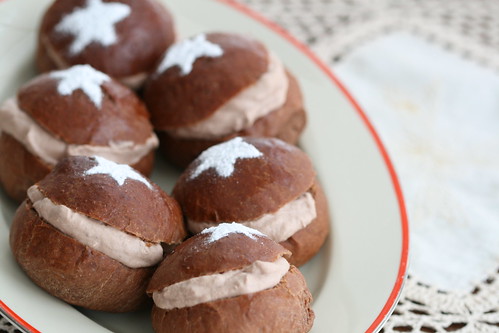
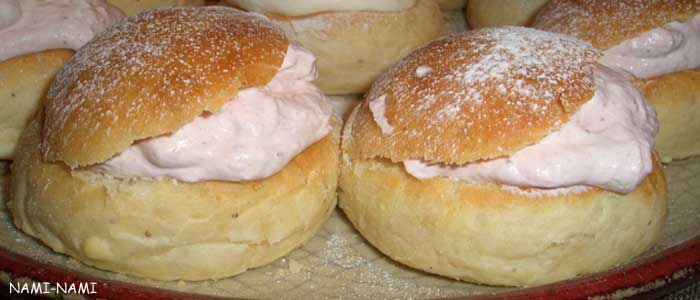
Chocolate Semlor / Chocolate Lenten Buns / Tõmmud vastlakuklid

Today is Shrove Tuesday or Pancake Tuesday in many parts of the world, but Estonians and Scandinavians are celebrating lenten bun day or semla day instead. I've been baking my own semla buns for umpteen years now and even shared two of the recipes with you - perfect simple buns and decadent lenten buns with marzipan and raspberries. I've just finished baking a batch of the former and will be stuffing them with lots of creme chantilly once the buns are cool enough. Cannot wait to devour them!!!

However, last year I also tried dark lenten buns, inspired by a recipe in a Finnish food magazine Ruokamaailma. There's chocolate everywhere - in the yeast dough, in the whipped cream, in the marzipan filling, so if you're into chocolate, you'll love this. I'd happily make them again (photos here are from February 2010), but I think I'd skip the marzipan-chocolate filling step completely.

Chocolate semlor recipe
(Tõmmud vastlakuklid)
Makes about 16 buns

Chocolate Semlor / Chocolate Lenten Buns / Tõmmud vastlakuklid

Dark yeast dough:
350 g plain/all-purpose flour
50 g caster sugar
0.5 tsp fine salt
35 g Dutch-processed cocoa powder (75 ml/5 Tbsp)
one sachet of fast-acting instant yeast
75 g butter, softened
250 ml lukewarm milk (one cup)
egg, for brushing

Filling (optional):
50 g dark chocolate
75 g marzipan

Cocoa Creme Chantilly:
200 ml whipping cream
1 Tbsp Dutch-processed cocoa powder
1 Tbsp caster sugar

icing sugar/confectioner's sugar, for dusting

Mix flour, cocoa powder, sugar, salt and dry yeast in a large bowl. Add the butter and using your fingers, work it into the flour mixture.
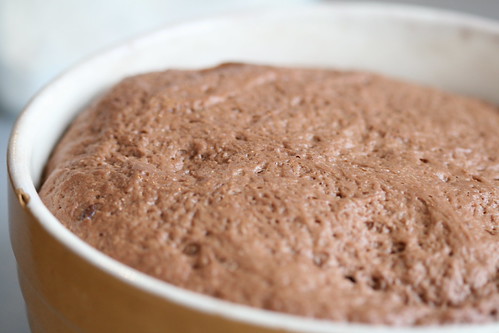
Pour in the milk and work the mixture into a nice yeast dough that doesn't stick to your hands and the bowl. Cover the bowl with a clean kitchen cloth or clingfilm and place into a warm and draught-free place to rise. Leave until doubled in size:

Chocolate Semlor / Chocolate Lenten Buns / Tõmmud vastlakuklid

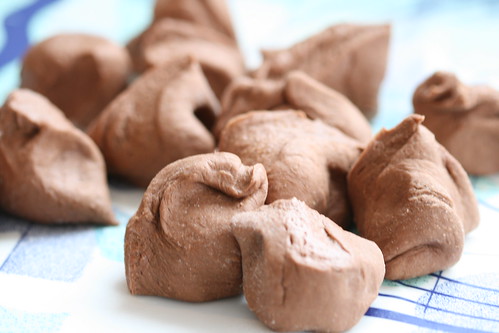
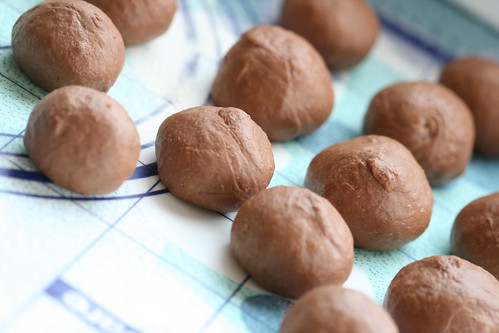
Knead the dough lightly, then roll into a large 'sausage' and divide into about 16 equal-sized chunks:

Chocolate Semlor / Chocolate Lenten Buns / Tõmmud vastlakuklid

Roll into small round balls, place onto a cooking sheet and leave to rise for another 15 minutes.

Chocolate Semlor / Chocolate Lenten Buns / Tõmmud vastlakuklid

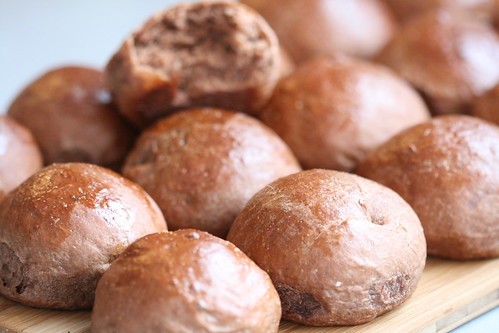
Now brush with a beaten egg wash and bake in a preheated 220 C/430 F oven for about 15 minutes, until the buns are nicely cooked. Transfer onto a metal rack to cool, and cover with a kitchen towel (this keeps the buns soft and moist).

Chocolate Semlor / Chocolate Lenten Buns / Tõmmud vastlakuklid

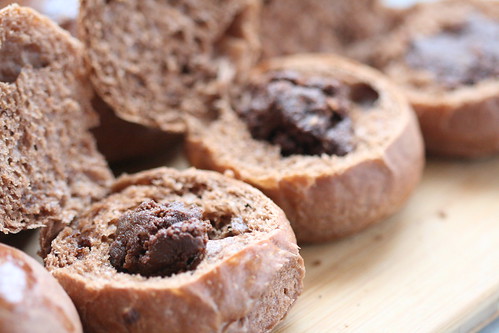
Cut a top off each lenten bun.

If you are making the marzipan and chocolate filling, then scoop out about a heaped teaspoonful of the bun. Melt the chocolate, add finely chopped marzipan and the scooped-out bun parts and combine. Distribute the mixture into the hollowed-out parts of the buns.

Chocolate Semlor / Chocolate Lenten Buns / Tõmmud vastlakuklid

Combine sugar and cocoa powder in a mixing bowl. Add the cream and whisk until thick and fluffy. Spoon onto the filled buns and top with the cut-off slices of buns. Dust with icing sugar and serve.

Tuesday, February 16, 2010

Delicious Lenten Buns with Marzipan and Raspberries (Vastlakuklid)

Lenten buns with marzipan & raspberries / Vastlakuklid vaarikate ning martsipaniga

It's Shrove Tuesday here in Estonia today, which means that people eat copious amounts of vastlakuklid aka Lenten buns aka semlor today. For the past decade I've been baking my own Lenten buns using this excellent recipe of mine. However, this year I decided to be a bit more adventurous, so I flirted with chocolate Lenten buns and marzipan-raspberry buns. Both were excellent and worth sharing with you. I start with the pink ones (after all, the pink-and-red-filled Valentine's Day has just passed).

The recipe is very slightly adapted from the Finnish Kotiliesi. Note that these can be on your table within two hours from starting. But when I mixed the dough on Sunday morning I realised that I didn't actually have the time to bake and fill the buns. So instead of quick-rising the dough in a warm place, as usual, I transferred the bowl to a very cool garage, where it had about 24 hours time to prove and rise slowly. It did wonders to the dough, I must admit - the flavour was even better than usual, so I'll be slow-proving my yeast doughs in the future as well.

Decadent Lenten Buns, filled with marzipan and raspberries
(
Vaarikased vastlakuklid)
Makes about 16

Lenten buns with marzipan & raspberries / Vastlakuklid vaarikate ning martsipaniga

Yeast dough:
300 ml milk
25 g fresh yeast or a sachet of dried instant yeast
85 g sugar (100 ml)
a pinch of salt
1 tsp ground cardamom
half of a beaten egg
450 g all-purpose/plain flour (about 800 ml)
75 g unsalted butter, softened

For brushing:
half of a beaten egg

Filling:
150 g marzipan
2-3 Tbsp milk
200-250 ml whipping or double cream
2 tsp vanilla sugar (or ordinary caster sugar and 1 tsp vanilla extract)
200 g raspberries (frozen are fine)

If using instant yeast, then mix flour, sugar, yeast, cardamom and salt in a mixing bowl. Add the lukewarm milk, whisked egg and mix until you've got a soft dough. At the end add the softened butter and knead into the dough. Cover the bowl with a clingfilm and place into a warm and draft-free place for about an hour. The dough should rise nicely and about double in size during this time.
Dust your working board with some flour and roll the dough into a long "sausage". Cut that into 15-16 chunks and form these into a nicely-shaped round balls (see my previous post for one way of doing this).
Place the dough balls onto a large baking sheet that has been covered with parchment paper. Cover the buns with a kitchen towel and let rise another 15-20 minutes.
Brush with the rest of the egg, then bake in the middle of a pre-heated 225 C oven for about 15 minutes, until the buns are lovely golden brown.
Remove from the oven and transfer to a metal rack to cool.
When cool, then cut off a top from all the buns. Using a teaspoon, scoop a small hole into the middle of each bun.
Put the scooped-out bun pieces into the food processor alongside the marzipan and some milk. Process until smooth, then spoon the marzipan filling back into the buns. Like this:

Lenten buns with marzipan & raspberries / Vastlakuklid vaarikate ning martsipaniga

Whisk the cream and sugar until thick and fluffy. Gently stir in the raspberries (use a slotted spoon to add the raspberries - you don't want the "raspberry juice" you get when defrosting the berries). Spoon or pipe the cream onto the buns, then replace the "lids".
Dust with icing sugar and serve.

Tuesday, February 21, 2012

Estonian recipes: Barley with Smoked Pork (vastlapuder)

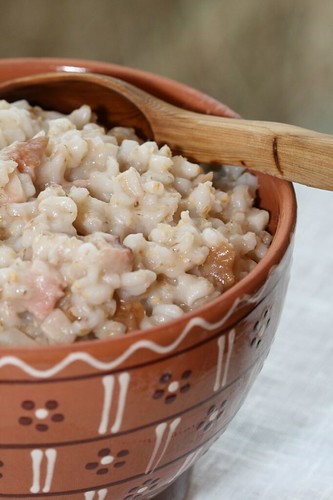
Lenten porridge (Barley porridge with bacon) / Vastlapuder / Kruubipuder suitsulihakuubikutega
February 2012

It's Shrove Tuesday today, and I'm sharing a traditional Estonian Shrove Tuesday recipe with you. You'll need exactly three ingredients - pearl barley, smoked pork and water (and some salt to taste, if necessary). Cheap, simple, filling, flavoursome, and surprisingly delicious :)

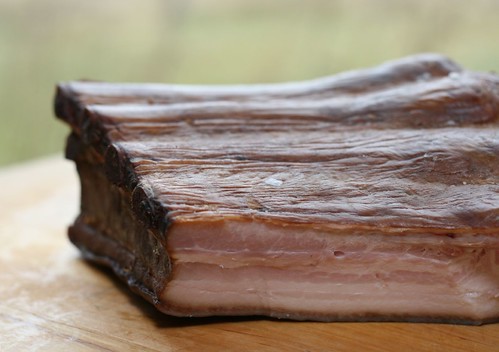
You'll need a good chunk of smoked pork - ribs are perfect, though I've often used a fattier smoked cheek. This particular piece of meat is called maasuitsuribi (country-smoked ribs) in Estonian:

Smoked pork ribs / Maasuitsuribi

Note that this porridge reheats rather well - just slowly warm it until piping hot on your frying pan. I like to serve this with some sour cream.

Barley Porridge with Smoked Pork
(Vastlapuder)
Serves four to six

Lenten porridge (Barley porridge with bacon) / Vastlapuder / Kruubipuder suitsulihakuubikutega

200 g smoked pork (rib, cheek or thickly cut bacon)
175 g pearl barley, rinsed and drained
1 l boiling water
salt, to taste

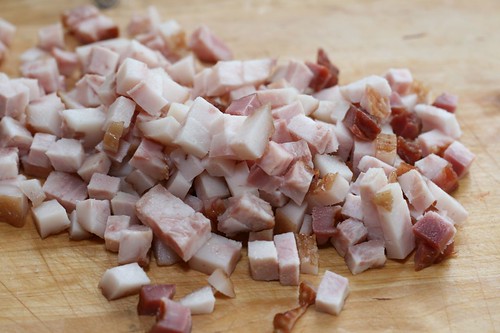
Cut the smoked pork into dice:

Cubed smoked pork cheek / Suitsupõsk, vastlapudru jaoks

Fry the pork cubes in a heavy saucepan over moderately high heat, until browned and slightly crispened. (Drain off the excess oil, if necessary - various cuts of pork are rather different. Leave about a tablespoon or two of pork fat).
Add the pearl barley and sauté for about a minute, stirring.
Add the boiling water. Reduce heat, cover the pan with a lid. Simmer on a low heat for about an hour, stirring couple of times, until the barley is just ever so lightly al dente (you don't want it to go too mushy).
Taste for seasoning, add some salt, if necessary.

Lenten porridge (smoked pork cheek, barley) / Vastlapuder
February 2008

MORE DELICIOUS SHROVE TUESDAY RECIPES @ NAMI-NAMI:
Yellow split pea soup with smoked pork
Traditional lenten buns
Lenten buns with raspberries and marzipan
Chocolate-y lenten buns

Tuesday, February 20, 2007

Perfect buns (re-posting)

Today (February 20, 2007) is vastlapäev or Shrove Tuesday again. All youthful Estonians are sledding down the hills tonight, eating copious amounts of bean or pea soup and maybe even some pig's trotters afterwards, followed by several fluffy cream-filled lenten buns. Not me, however. I'm skiing on the slopes of Italian Alps, checking out the restaurants in Valle d'Aosta and stuffing myself on Italian food. Life is good.

The post below originally appeared on March 1, 2006. I'm re-posting it to 1) mark the folk calendar occasion and 2) convince you to bake these. Believe me, these buns are perfect indeed!


Last night was supposed to be Shrove or Pancake Tuesday, but if you had visited any Nordic foodblogs, you'd realise that it wasn't Pancake Tuesday, but Bun Tuesday. There were buns all over the place. In Finland, Pastanjauhantaa and Axis of AEvil wrote about laskiaspulla. In Sweden, Dagmar, Clivia and Kinna blogged about semlor. And every single Estonian had one vastlakukkel - or two - during yesterday. Most schools would have included them in lunch, and many offices order trayfuls of lenten buns to savour during the day.

The Swedes have known the semlor-buns since the late 1600s, back home in Estonia it's a more recent treat. The Estonian vastlakukkel, Finnish laskiaispulla, Swedish semla, and Danish fastelavnsbolle are pretty similar. Lenten buns are basically fluffy yeasted caramom-scented buns, where the dough is enriched with eggs and butter. In Estonia, they are served with whipped cream alone. The Swedes include almonds, the Finns either marzipan and/or jam. Some Swedes eat them in a bowl of milk (and then call it hetvägg). Since learning that the Swedish King Adolf Fredrik died in 1771 after eating 14 of these semlor-in-milk (after a subtantial multi-course meal), I'll keep having mine without milk..

Here is a recipe I've used to make my lenten buns for the last few years, adapted from an old Estonian cookbook.

Vastlakuklid: Estonian lenten buns
(Hõrgud vastlakuklid)
Yields about 24

Buns:
500 ml lukewarm milk
50 grams fresh yeast
800 grams plain flour (soft), sifted
3 Tbsp sugar
1 tsp salt
1 tsp ground cardamom seeds
200 grams butter, melted and cooled
2 eggs, whisked

Filling:
500 ml whipping cream (35-38%)
2-3 Tbsp sugar
200 ml lingonberry jam (optional)

Take all the ingredients to the room temperature about an hour before starting.

First make the dough. Crumble the fresh yeast into a bowl and add the lukewarm milk little by little, stirring with a wooden spoon until the yeast has dissolved. Add the sugar and about half of the flour, stir with the spoon. The dough is rather wet at this point, so no need to use your hands.

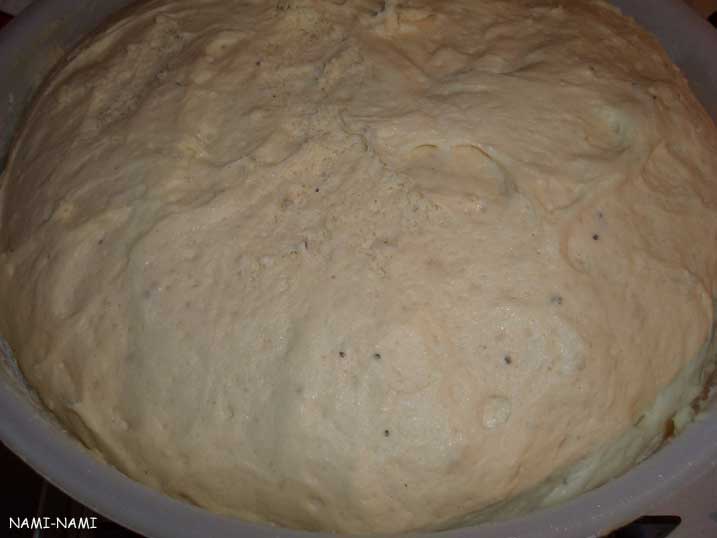
Cover the dough with a clean kitchen towel* and put in a warm place to prove. Make sure there is no draught in the kitchen! Let the dough double in size (about 30-45 minutes, depending on the kitchen conditions). It will look like the picture on the right, with small air bubbles on the surface.

When doubled in size, add the salt, cardamom, melted butter and whisked eggs. Stir in most of the flour and start kneading. You will have to knead the dough for about 10-15 minutes, until it's shiny and elastic and doesn't stick to the bowl anymore.

Now cover again with the kitchen towel and leave to double in size in a warm place. This should take about 45-60 minutes. Knock the dough back and leave to rise again. By this time the dough will look nice and all puffed up, quite dry in consistency.

After about half an hour you can start the rolling. Every cook probably has their own trick for making perfect buns. Here's what I do. I twist off a small piece of dough (about the size of a small to medium egg), put it onto a large piece of parchment paper, cupping my hand over the piece of dough. A bit like holding the mouse (the computer mouse, I mean), with fingers touching the working surface as well. Then I start rolling "the mouse" on the table in small, firm circles. After about 10 seconds or so, you should end up with a beautiful and perfectly shaped ball under your cupped hand. Like this:

Transfer to a baking sheet. Let rise again for about 30 minutes.

Brush with milk or whisked egg (both are fine, the latter results in a shinier bun) and bake at 200-225˚C oven for about 15-20 minutes, until you have beautifully golden brown lenten buns.

[Just to recap: you pre-prove the dough, then add the rest of the ingredients and let the dough rise twice. Then you form the buns and let them rise a bit again. Then you bake:)]

Take out of the oven and cover with a kitchen towel to soften the tops. This is essential, as otherwise you'll make a mess when you start eating the cream-filled buns!

Make the filling. Whisk the cream with some sugar. I like to include some lingonberry jam in my cream filling, as this adds a nice tart touch to the otherwise very sweet bun.

Cut a small slice off the bun and fill with some cream. Put the "lid" back on.


Serve. Especially delicious after a night out on a snowy hill.

* It's a good idea to cover the bowl loosely with a cling film first, so if the dough rises very high, you won't end up with a sticky kitchen towel.

Tuesday, February 09, 2016

It's not Pancake Day, it's Shrove Tuesday cream bun day soon ;)

Vastlakuklid 2014
Photo by Juta Kübarsepp for the March 2014 issue of Kodu ja Aed magazine. 

It's time for semlor or lenten cream buns again soon - February 9th, to be precise. Remember, instead of pancakes, in Estonia and other Nordic countries cream-filled buns are eaten (semlor in Swedish, vastlakuklid in Estonian, laskiaispulla in Finnish). I've got three different recipes here on Nami-Nami, all delicious :)

Recipe for classic lenten buns
Recipe for chocolate lenten buns
Recipe for raspberry and marzipan lenten buns

So, are you having pancakes or cream buns next week? ;)

Tuesday, February 12, 2013

Lenten buns aka semlor aka vastlakuklid 2013

Vastlakuklid 2013 / Lenten buns 2013

It's Shrove Tuesday or Fat Tuesday today, which means pancake feasts in many places across the world. In Estonia and other Nordic countries, however, this means eating lenten buns (semla, vastlakukkel) instead. I baked a batch of these wonderful buns, filling them with whipped sweet cream this year. No marzipan, no jam.

You'll find all my Lenten recipes here., including recipes for barley and bacon porridge and split pea soup with smoked pork.

Tuesday, February 05, 2008

Hõrgud vastlakuklid aka Lenten buns 2008, still perfect

May I introduce you to our Shrove Tuesday or Lenten buns 2008:


Same old recipe, same perfect shape, same excellent flavour, same pretty looks.

Eestikeelne vastlakuklite retsept siin.

Monday, February 11, 2013

Estonian recipes: yellow split pea soup with smoked pork (hernesupp suitsulihaga)

Originally posted in February 2012, slightly edited.
Estonian split pea soup with smoked ham / Hernesupp

It's Shrove Tuesday tomorrow, and before feasting on delicious Lenten buns (I've blogged about the classic ones, chocolate ones and luscious raspberry and marzipan ones), Estonians eat split pea soup. Thick, hearty, well-flavoured (smoked pork!) and textured (peas + pearl barley) - all the elements of a substantial and delicious winter soup are present. Here's a recipe that I've been using for years to make a big (I mean it!) pot of delicious soup.

It's a fusion recipe, of a kind. You see - apparently in the Southern Estonia, they used to put barley in the split pea soup; in the North, they replaced the pearl barley with cubed carrots and potatoes. I use them all, so it's a meet-me-in-the-middle soup :)

Note that the soup reheats very well. As it thickens when cooling, you may need to add some water when reheating it, and adjusting the seasoning again, if necessary. 

Estonian Yellow Split Pea Soup with Smoked Pork
(Hernesupp suitsulihaga)
Serves eight to ten

Split pea soup with smoked pork rib / Hernesupp suitsuribiga

200 g yellow split peas
150 g pearl barley
3 litres of water
about 1 kg of smoked pork - rib, cheek or hock
1 large onion
2 to 3 large carrots
2 large potatoes
salt to taste
2 to 3 tsp sharp mustard (or to taste)
fresh herbs (parsley, celery, dill, thyme, savory)

ON THE PREVIOUS NIGHT OR IN THE MORNING:
Pick through the peas and pearl barley to remove any grit. Place into a bowl, pour over enough cold water to cover by couple of centimetres and leave to soak. (This reduces the cooking time considerably).

ON THE DAY:
Place the smoked pork into a large bowl (definitely larger than 5 litres!). Add the 3 litres of water and bring slowly into a boil. Remove any froth and scum that appears on the surface.
Rinse the soaked barley and peas, drain and add to the saucepan. Bring to a boil again, then reduce heat, cover with a lid and simmer gently for about an hour.
Meanwhile, peel and chop (or grate coarsely) the onion, carrots and potatoes. If you wish, you can sauté the onion and carrots in some oil - this enhances the flavour.
Add the vegetables to the soup and continue simmering for about half an hour, until the meat and vegetables are fully cooked.
Take the pork out of the soup, remove the meat from the bones and chop finely. Return the chopped meat into the saucepan.
Season the soup with mustard and salt, add some herbs of your choice and serve.

Friday, December 31, 2010

Culinary overview of 2010

Inspired by similar posts by Alanna and Anne.

JANUARY 2010

Poulet aux quarante gousses d'ail / Chicken with 40 cloves of garlic / Kana 40 küüslauguküünega

I blogged about many of my favourite dishes back in January - chicken with 40 gloves of garlic (photo above) and dulce de membrillo and coconut & beetroot soup, to name just a few. Our beautiful daughter Nora Adeele turned one, and we celebrated it with marzipan-topped Princess cake.

FEBRUARY 2010
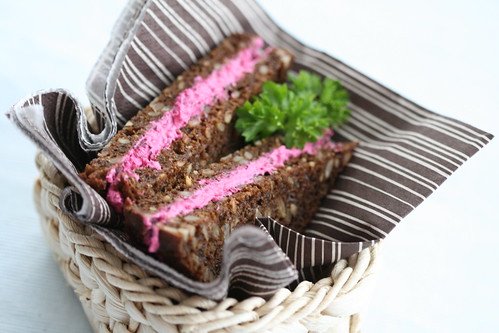
Cream cheese with beetroot and horseradish / Peedi-toorjuustukreem mädarõikaga

Favourite recipes back in February were colorful quinoa salad with lobster tails and avocado, cream cheese spread with horseradish and beetroot (photo above), yummy chocolate muffins, decadent Lenten buns with raspberries, Hummingbird's raspberry cheesecake brownie. It was a loooong, cold and snowy month, hence the number of baked cakes :P

MARCH 2010
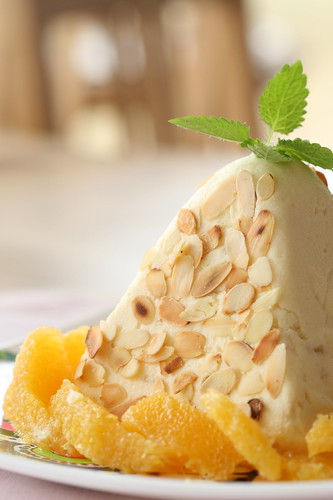
Easter paskha / Pasha (2009, nr 3)

In March I loved the caramelised rye bread ice cream and ate lots of Georgian food (incl. fried Suluguni cheese and egg and walnut salad). Anticipating the Easter, the month ended with another lovely pashka recipe (photo above).
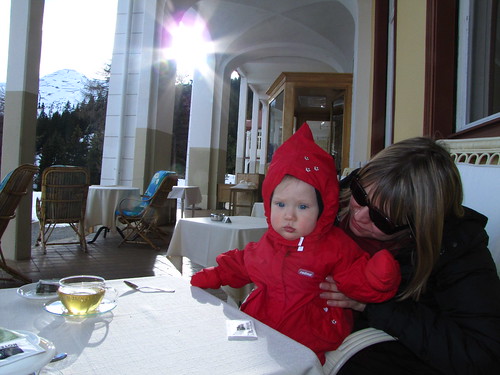
Davos, Switzerland

At the end of the month we spent a week in Davos, Switzerland. Unfortunately I was down with a nasty cold most of the time, so I missed many of the culinary delights on offer. I did manage to try some spätzle and raclette, of course, as well as some of the local cakes.

APRIL 2010
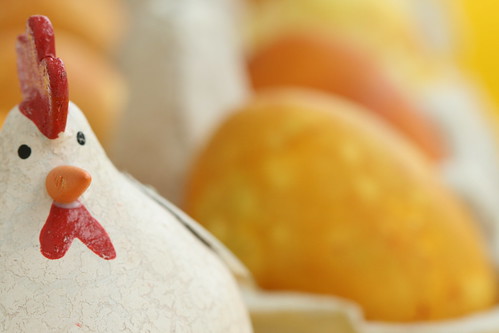
Easter eggs / Lihavõttemunad

The highlight of the month was our traditional Easter brunch. As the cold and snow melted away, I fell in love with light salads again. I loved the quinoa salad with beetroot and fennel, Ottolenghi's cucumber salad with poppyseeds. I've made the Georgian spiced and creamy mushrooms on several occasions - and it's been a great hit with Estonian foodbloggers as well ;)

For my birthday at the end of the month I made three different birthday cakes, including my usual mocca cake and the popular Brita cake.

Last, but not least - in April we got four new pets, called Evita, Carol, Daisy and Madame Fifi. Here are the first three (a pure or mixed Araucanas):
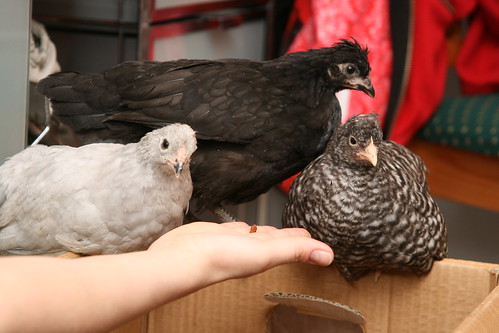
Evita, Carol, Daisy

and here's Madame Fifi (a French Marans) posing in front of their cool bright orange Eglu:
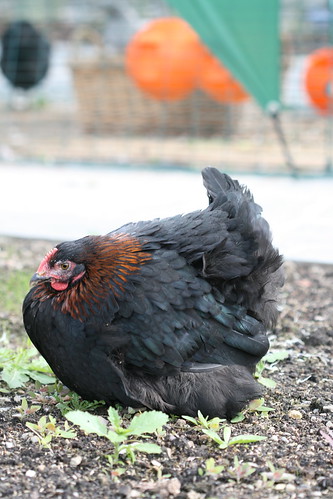
Madame Fifi

(And they do belong to the culinary overview of the year, as these lovely chicken have been providing us with free-range eggs that come with a dark yellow yolk and are hidden inside a beautiful pale blue or olive green egg shell :))

MAY 2010
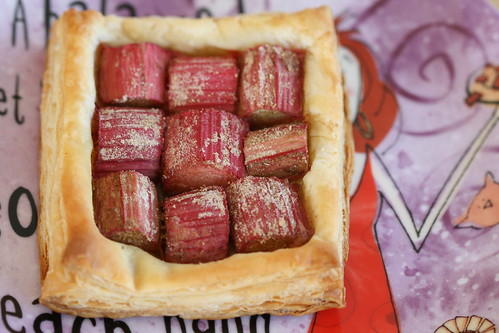
Rhubarb tarts /Rabarbrikoogid

In May I shared more lighter recipes - gnocchi Puttanesca, wild garlic tzatziki, chickpea and tuna salad. Oh, and I provided some ideas for Estonian snacks to help you host an Eurovision fan party - the idea came to me after several e-mail requests for such post :)

JUNE 2010
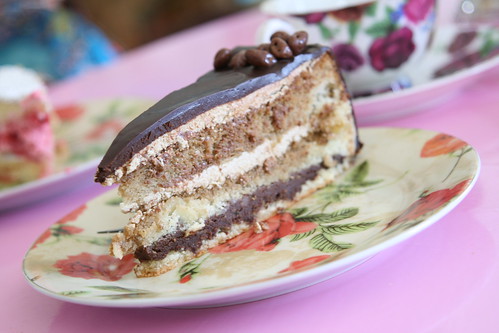
Supelsaksad, Pärnu

As the summer season began, I blogged about a new cool café in Pärnu, the "summer capital" of Estonia (one of their popular cakes is pictured above). We loved the cooked whole fish under a salt-crust, and Ottolenghi's roasted eggplant/aubergine with saffron yogurt. The Italian tonnato mayonnaise was a frequent dish on our table during the summer, and the Estonian pork shashlik was a must-try on our Midsummer table.

We also celebrated Nami-Nami's 5th birthday, asking you to name your favorite recipes on the blog. You gave fantastic feedback, thank you!

JULY 2010

Kama with berries / Kama marjadega

July was hot! hot! hot! I almost stopped cooking during the month, as the temperatures were simply too high for a Northern girl like me :D I did blog about grilled chicken liver with sherry and honey marinade, and then moved on to pretty much uncooked dishes. Cottage cheese and egg salad, Danish sweet buttermilk soup with summer berries, watermelon salad, cold beetroot soup, harissa-spiked hummus.

And of course, as any other true Estonian, I ate lots of kama with local wild and cultivated berries (photo above) :)

We also took a daytrip to Helsinki, visiting Café Stringberg for a coffee (our little must-do in Helsinki) and having lunch at one of the hottest eateries in town, Juuri (they're famous for their Finnish tapas, sapas, but these weren't served during lunch-time, unfortunately):
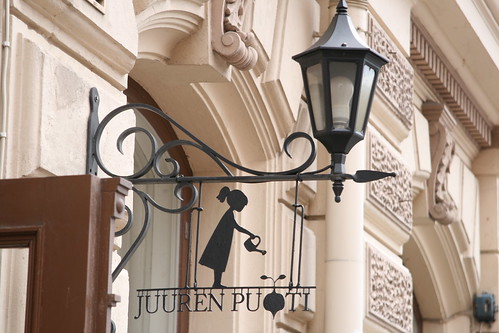
Juuri, Helsinki

AUGUST 2010

Our beets / Meie oma aia peedid

I August we really reaped the benefits of our vegetable garden. Just look at the beets we harvested (above), coming in all shapes and colours!!! Favourite recipes back in August were this tomato salad (we had LOADS of tomatoes as well), oven-baked zucchini/courgettes and tomatoes with feta cheese, cherry and plum compote (our orchard is too young to pick our own stone fruit just yet, but soon, hopefully). We had some friends over for the first ever Nami-Nami tomato tasting party (photo below; hopefully this will become an annual tradition):
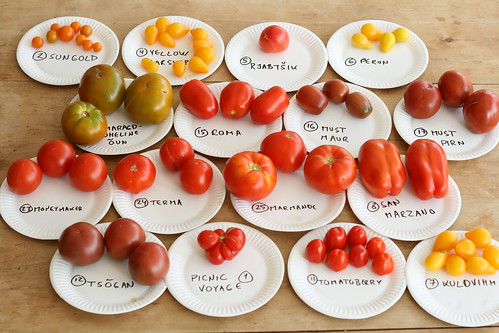
Tomato tasting party / Tomatite degusteerimine

It was an exceptionally good year for wild mushrooms in Estonia this year, and we ate lots of them, of course! If I get hold of some black trumpet mushrooms again next year, I'll be definitely making this black trumpet chantarelle salad again - loved the flavour and the bite! I also shared a recipe for lovely simple scones and Snickerdoodle cookies.

SEPTEMBER 2010

September was eventful. In the beginning of the month we spent over a week in Germany and France (with a short detour to Switzerland), attending our friend Margit's wedding in Köln. Of course we sampled lots of culinary delights on the trip, most memorable being maultaschen in Heidelberg:

Maultaschen @ Heidelberg

a proper Schwarzwalder Kirschtorte in a Bizenberger family café in the Schwarzwald area of Germany:
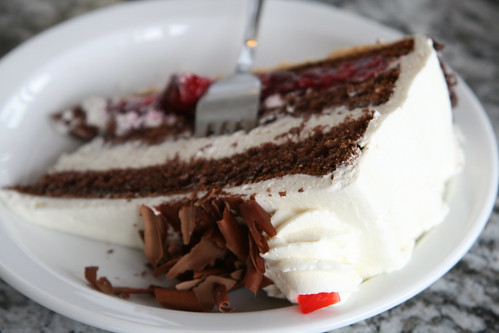
Schwarzwalder Kirschtorte

The traditional and the more modern porcini & parmesan cheese flammeküche at L'auberge Saint-Martin in Kinzberg.
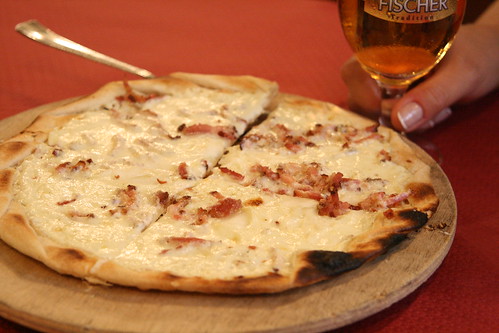
Flammeküche

And last, but not least - a trip to the famous Bernard Antony, Eleveur de Fromages in Vieux-Ferrette was all worth it!
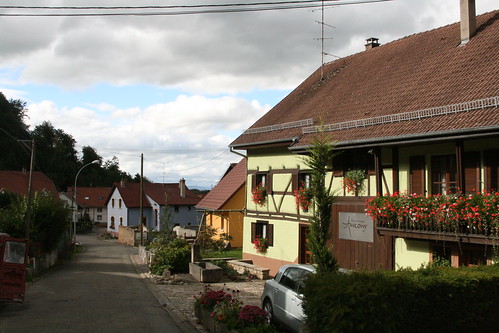
Bernard Antony, cheesemonger

Back home, things were getting exciting, too. Our daughter began attending a small local nursery (luckily, she loves it!), I went back to work after a long maternity leave. We had another tasting party at home, this time getting to know the infamous Swedish "delicacy", surströmming (an event that's NOT going to be repeated any time soon).
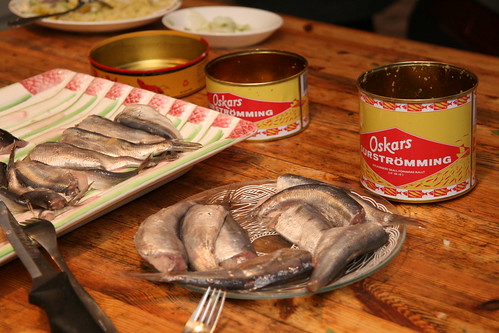
Surstömming party 2010

The garden was still providing us with excellent vegetables - like these beautiful eggplants/aubergines. My favourite recipe back in September was definitely this super-easy but very flavourful cauliflower cheese with lots of mustard.

OCTOBER 2010
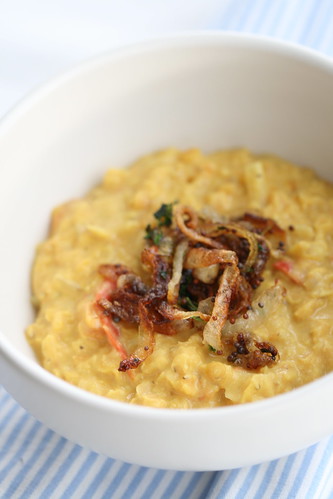
Coconut dhal with crispy onions / Kookospiima-dhal krõbedate sibulatega

October was a good month for good recipes, if I may say so. The American apple pie, pumpkin scones, the Dutch apple cake and this coconut dhal (above) are all worth repeating again and again.

NOVEMBER 2010
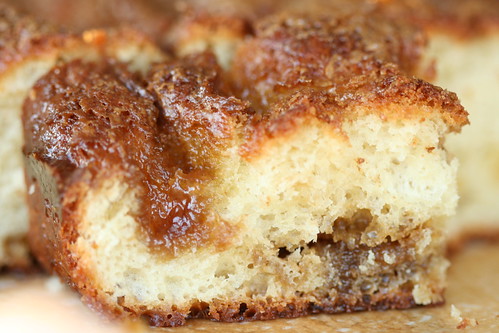
Brunsviger / Danish sugar cake / Taani pärmitaina-suhkrukook

As the nights got darker and days shorter, I began cooking more substantial meals again. I loved this roasted cauliflower with bacon and garlic (thank you, Jaden, for inspiration!), the beet and blue cheese risotto, the Danish brunsviger cake (photo above). I also posted a recipe for a Latvian dish, Kurzeme stroganoff, that hopefully many of you will try.

I took my dear K. for a special birthday dinner at Bordoo, the new restaurant of one my favourite chefs, Tõnis Siigur. The 6-course tasting menu was nothing less than spectacular and I'm looking forward to going again a.s.a.p.

DECEMBER 2010

Nami-Nami kokaraamat (nami-nami cookbook)

The last month of the year just flew by. On December 1st, my first cookbook (photo above) hit the bookshelves here in Estonia, and we had a lovely book launch party that evening (the book has been doing pretty well, thank you for asking ;)). I spoke in several radio channels during December (KUKU, R2, Vikerraadio), and the Estonian print media (and bloggers!) have been very generously reviewing and covering the cookbook as well. I feel so honoured and blessed! (Again - a HUGE thank you to dear Ximena for making the book look so special and beautiful!).

Although December has been very much centered around the cookbook, I did manage to attend a special dinner at NEH and a foodbloggers' lunch at CHEDI (serving excellent modern Asian food), visited the brand new (and very cool!) Sadama turg (Harbour market) and even blog about some dishes (these cheese popovers and soft gingerbread cakei are especially recommended.

We hosted a Christmas Eve dinner to our families again (food was pretty traditional, too). And on the Christmas day we got home two new chickens - a blue and black Orpington (still nameless; these two are to keep Evita and Carol some company over the winter).

Wednesday, March 31, 2010

A creamy Easter paskha with cooked egg yolks

Easter paskha No 3 / Lihavõttepasha nr 3

Some of my American readers may have noticed a recipe for paskha in the April 2010 issue of Saveur. Saveur describes paskha as "a rich, airy sweetened cheese that's traditionally served in Russian homes to break the meat- and dairy-free Lenten fast. ... Made with a Russian farmers' cheese called tvorog, as well as cream, egg yolks, butter, and sugar, the treat is flavoured with vanilla and studded with golden raisins. Then the pashka is pressed into a mold and chilled to set." Although it's not traditionally Estonian, it's pretty popular here.

I happen to love pashka, and have been making it for, well, ages :) I've shared one of my favourite pashka recipes before, but there are several ways of making this dessert. There are cooked versions and uncooked paskhas, paskhas containing raw eggs, cooked eggs or no eggs. Here's one (out of three!) I made last Spring - it's uncooked, contains cooked egg yolks - and is thus quite similar to the recipe printed in this month's Saveur.

Highly recommended. The Saveur article recommends using the Friendship brand farmers cheese instead of tvorog, if you can't get hold of the real thing.

Paskha with Egg Yolks
(Kohupiimapasha keedetud munarebudega)
Serves 8 to 10

75 g unsalted butter, softened
125 g caster sugar
2 hard-boiled egg yolks
500 g curd cheese
100 ml whipping cream, whipped until soft peaks form
0.5 tsp vanilla extract
3 Tbsp candied orange peel
4 Tbsp chopped almonds

toasted almond slices and orange segments, to garnish

Cream the butter with about one third of the eggs. Press the egg yolks through the sieve and add to the butter. Add vanilla extract, the rest of the sugar, curd cheese, whipped cream, candied orange peel and chopped almonds.
Line a pashka tin or a large sieve with a wet cheesecloth square. Spoon the curd cheese mixture into the pashka mold and place the whole thing on top of another bowl or over the sink, allowing the liquid to drain (depending whether you want to catch the whey* or not).
Refrigerate in a cool place for at least 24 hours.
Turn onto a serving dish, remove the cheesecloth. Garnish with toasted almonds and orange segments.

* This can be used instead of milk or water when making yeast buns.

Friday, March 02, 2007

Après-Ski: Italy, Valle d'Aosta, Breuil-Cervinia


I survived my first ever skiing holiday. When K. told me in December that we'll be skiing in Breuil-Cervinia in the Italian Alps in February, my heart sank. Me? Downhill? I know how to ski, obviously, as Nordic/cross-country skiing is a beloved Estonian winter sport and part of the schools' PE curriculum here. But downhill skiing is a different story altogether. It's fast and dangerous and difficult and one could break all four limbs and it's cold 'up there' etc. I was terrified, to put it mildly, and took comfort in choosing a new skiing outfit (well, I didn't really need one in Edinburgh, and the one my mum sewed me some 20 years ago didn't fit any more). I also did research on what to eat and drink while in Valle d'Aosta, in case I did break my bones on the first day and needed to spend the rest of the week in the comfort of my hotel or a nearby cafe..

Well, eventually I enjoyed the holiday a lot. I am still surprised how much I enjoyed it:) We were a group of 10 Estonians, 4 Latvians and 4 Lithuanians, and most of the people were experienced skiiers. Luckily, there was two other persons who had hit the slopes for the first time, so we hired a teacher for two hours on the first morning. I'll save you the embarrassing details about me falling flat on my back on the 'Nuovo Baby Cretaz' carpet lift (khm) on Day 1, and my mis-adventures with proper ski lifts on the second day. It suffices to say that I stayed on the slopes for six days, almost didn't fall on some days, and advanced to the easier red slopes by the end of the trip. Most importantly, I was having a good time, and if invited, I'll happily go again next year.

The food? We stayed in one of the 'sport hotels' in town, and although the menu sounded good, the food was nothing to write home about. To be honest, the food was down-right dissapointing, truly badly executed, including the pompuous Mardi Gras feast on February 20th. If our group only hadn't booked the half-board packet (i.e. breakfast and dinner included), we would have probably never stayed for dinner at the hotel. And unless you enjoy driving up and down narrow and zig-zag mountain roads, you're stuck at the skiing resort without too many restaurant options apart from pizzerias..

We did make an effort to sample as many local salumi and cheeses as possible. Here's a plate of local cheese and ham we enjoyed on the first day of skiing:

Sliced toma cheese, and a white round of tomini; (from left to right) some mocetta ham (made from the mountain goat, I believe), deliciously soft lardo di Arnad (DOP); another local ham (Jambon de Bosses?); with a couple of candied chestnuts in the middle.

And here's a plate of grilled tomini cheese with bacon, enjoyed on the sixth day on one of the slopes, and accompanied by a mug of hot chocolate with rum:


We brought back some local cheese (incl. toma della valle, toma al peperoncino and robiola rustica) and ham which I may mention later on the blog.

We did leave the hotel for a more local foodie experience, to the great bafflement of the hotel receptionist (we still had to pay for our dinner for 20 in absentia, of course). We went to a ristorante tipico, La "Maison de Saussure", where we enjoyed a fabulous spread of antipasti of ham, cheese, roasted vegetables and chestnuts - already a meal in itself! We then familiarised ourselves with some local curiosities like zuppa valpellinentze consisting of cabbage, melted fontina cheese and rye bread in broth. This rustic dish was not everybody's cup of tea, whereas the grand finale, grolla dell'amicizia - the cup of friendship - was enjoyed by all (I'll write about that fortified coffee drink soon) .

There was one really lovely cafe called Bar Le Samovar that I frequented a lot, just in the beginning of the main street. Great music, lovely vibrant atmosphere, an impressive choice of teas and pastries and a good selection of alcohol. I became a 'regular' there, where the waitress didn't even ask for my choice of coffee on the last few days:) Here are a few pictures of various offerings:

A profitrole filled with very citrussy lemon cream; a small scallop-shaped puff pastry with rum cream; a banana-cola tartlet; a chocolate tartlet with a fancy chocolate topping; a small eclaire.

Two Chantilli cakes resembling mini versions of our lenten buns (and indeed, we ordered 40 of these for our group on Shrove Tuesday:); a pear and chocolate tartlet; a small tartlet with chocolate cream and truffle on top.

Lemon profiterole (again:); two ricotta-filled puff pastries; a crispy almon tartlet, among others.


Bar Le Samovar
3, Via Carrel
Breuil Cervinia (Ao)